





A New World on the Cosmic Stage
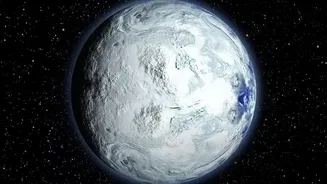
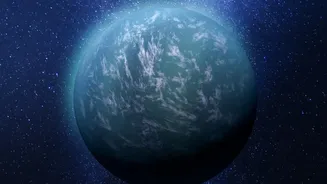
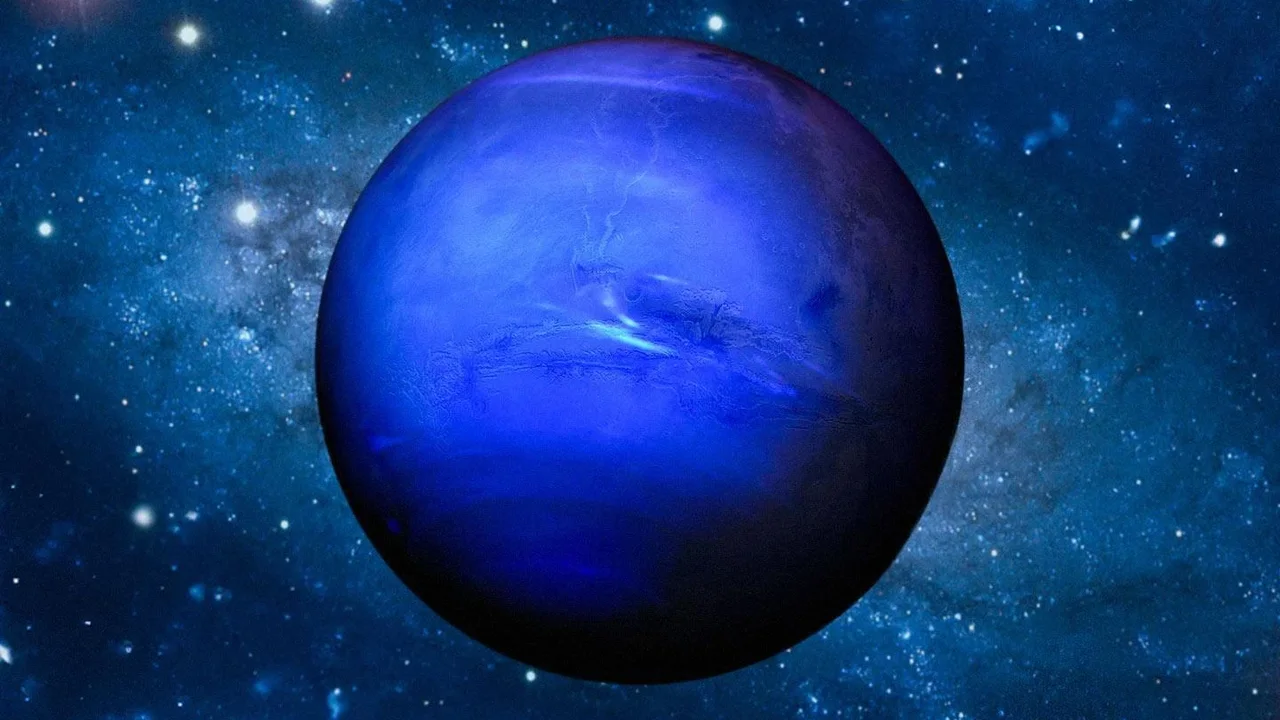
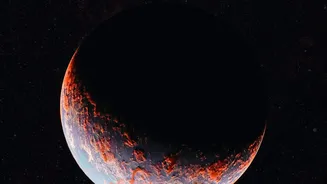
In the vast catalogue of planets discovered outside our solar system, a new name is generating significant buzz: GJ 523b. This recently identified world is classified as a 'Super-Earth', meaning it's more massive than our own planet but lighter than ice
giants like Neptune. Initial observations suggest it has a mass roughly seven times that of Earth and orbits a star slightly smaller and cooler than our sun. What makes GJ 523b particularly intriguing isn't just its size, but its location and composition. It appears to be a dense, rocky world situated in a region of its solar system where, according to conventional wisdom, a planet like it simply shouldn't exist. This discovery joins a growing list of exoplanets that are pushing astronomers to question the very foundations of planetary science. These cosmic oddities are no longer just statistical outliers; they are crucial data points that highlight the stunning diversity of worlds our galaxy has to offer.
The 'Problem' with GJ 523b
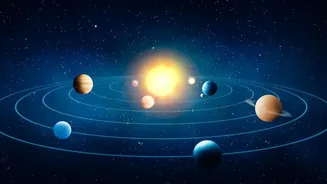
The main issue with GJ 523b is that it doesn't neatly fit the most widely accepted model of planet formation, known as core accretion. This theory posits that planets are built from the ground up. In the swirling disk of gas and dust around a young star, tiny particles collide and stick together, growing into larger bodies called planetesimals. These, in turn, merge to form a solid core. If this core becomes massive enough—around 10 times the mass of Earth—its gravity can rapidly pull in huge amounts of gas to form a giant like Jupiter. According to this model, rocky planets like Earth form close to their star where it's too warm for gas to accumulate, while gas giants form farther out. GJ 523b scrambles this picture. It's a large, seemingly rocky planet found in a 'cold' orbit, far from its star, where astronomers would expect to find a gas giant or no large planet at all. Its existence challenges the neat dividing lines our models have drawn.
When Theories Meet a Stubborn Reality
The mismatch between theory and observation presented by GJ 523b has sent scientists back to the drawing board. Is the core accretion model wrong? Not necessarily, but it may be incomplete. One alternative or complementary theory is the gravitational instability model. This 'top-down' approach suggests that giant planets can form much more rapidly when massive, unstable protoplanetary disks directly collapse under their own gravity to form planetary-mass clumps. This process could potentially explain the formation of large planets at wide orbits. However, this model has its own challenges and is typically thought to produce massive gas giants, not dense Super-Earths. The discovery of GJ 523b, therefore, might point to a hybrid formation process or a more dynamic planetary history than previously assumed. Some experts now speculate that planets can migrate significantly after they form, spiraling inward or being pushed outward by the gravitational influence of other large bodies in the system.
A Universe of Endless Possibilities
Rather than being a problem, planets like GJ 523b are an incredible opportunity. Each 'rogue' planet that defies our models provides a crucial clue. It tells us that the universe has more than one way to build a world. The properties of a planetary system may depend heavily on the mass of the host star, the density of the initial protoplanetary disk, and other factors we are just beginning to understand. For instance, recent discoveries have revealed that the most common type of star in our galaxy—small, cool M-dwarfs—tend to host Super-Earths but very few 'sub-Neptunes', a finding that directly contradicts what is seen around Sun-like stars and challenges our theories. These findings are forcing a major rethink, moving scientists away from a one-size-fits-all model toward a more nuanced understanding that embraces planetary diversity.