





An Ocean on the Red Planet
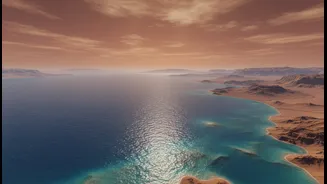
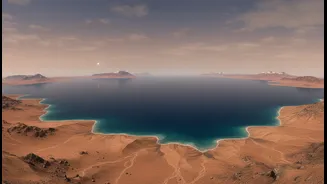
For decades, scientists have debated the existence of an ancient ocean on Mars. The planet's northern hemisphere is suspiciously low and smooth compared to the heavily cratered southern highlands, a feature that would make sense if it was once a massive
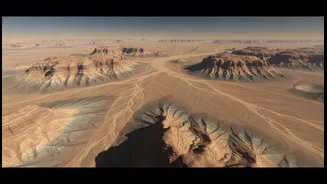
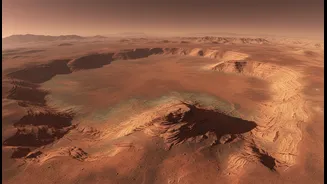
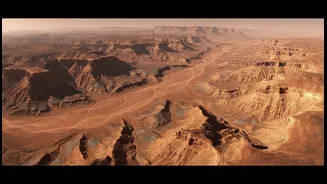
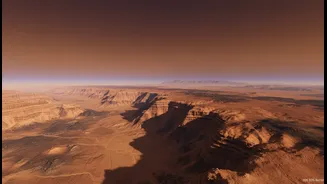
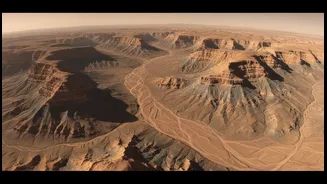
seabed. Recent studies have added significant weight to this idea. Using high-resolution imagery from orbiters like the Mars Reconnaissance Orbiter, researchers have identified what appear to be ancient shorelines and river deltas. One study, focused on the vast Valles Marineris canyon system, found classic fan-shaped deltas suggesting rivers once emptied into a large, standing body of water. These findings point to an ocean that may have been as extensive as Earth's Arctic Ocean, covering a huge portion of the planet's northern hemisphere roughly three billion years ago.
The Telltale Signs of a Delta
Finding a delta is more than just finding a riverbed; it's about finding proof of long-term stability. A river delta, like the one at the mouth of the Mississippi River on Earth, forms when a river carrying sediment enters a large, slow-moving body of water like a lake or an ocean. The river slows, and the sediment it carries settles onto the floor, building up land in a characteristic fan shape. This process isn't instantaneous. It requires a stable body of water and a flowing river over a considerable period. Identifying these delta structures on Mars is a geological smoking gun. It tells scientists not just that water was present, but that it was present for long enough to sculpt the land in ways that are still visible today, billions of years later.
From Fleeting Floods to Lasting Lakes
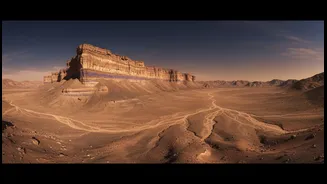
The conversation around Martian water is shifting. Early discoveries focused on evidence for catastrophic floods that carved massive channels in short, violent bursts. While dramatic, these events don't necessarily create habitable environments. The new focus is on finding evidence of persistent water. Research in regions like Arabia Terra and craters such as Jezero and Gale has been crucial. In Arabia Terra, an ancient, cratered landscape, scientists have mapped thousands of miles of what look like fossilized riverbeds. Ground-penetrating radar from the Perseverance rover in Jezero crater has even revealed a buried ancient delta, confirming the crater once hosted a lake fed by a river. This moves the story from fleeting water to something more sustained—a stable hydrological cycle with rivers, lakes, and potentially even rain.
Why This Matters for Life
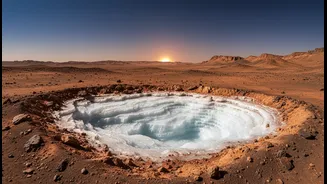
The ultimate question driving this research is whether Mars was ever home to life. While we have not found direct evidence, the presence of long-lasting water is the single most important factor in the search. Life as we know it requires liquid water. Environments with stable bodies of water, like river deltas and the shorelines of ancient oceans, are considered prime locations for life to emerge and thrive. They offer a stable supply of water, and rivers would have carried nutrients into the larger body of water, creating a rich chemical stew. These delta deposits are also excellent at preserving evidence. Just as fossilized organisms are found in ancient lakebeds on Earth, Martian deltas are considered top-tier targets for future missions to search for biosignatures—the preserved chemical or physical traces of past life.