




The Nutritional Lowdown
At a glance, mushrooms and zucchini look like they're in the same weight class. Both are celebrated for being low in calories and high in water content, making them excellent for anyone looking to eat healthy without feeling deprived. Per 100 grams, zucchini clocks
in at around 17 calories, while common white mushrooms contain about 22 calories. They share similar carbohydrate and dietary fibre levels, too. But these surface-level similarities hide a wealth of unique benefits that make each a nutritional powerhouse in its own right. Understanding their individual strengths is key to unlocking their full potential in your diet.
The Case for Mushrooms
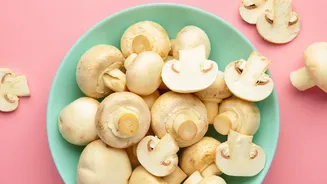
Mushrooms bring a unique, savoury flavour known as umami, which can make meals more satisfying, but their real magic lies in their micronutrient profile. They are a notable source of B vitamins, including riboflavin, niacin, and pantothenic acid, which are crucial for energy production and maintaining a healthy nervous system. Mushrooms are also packed with powerful antioxidants like selenium and ergothioneine, which help protect cells from damage and support immune function. Perhaps their most famous feature is their ability to produce vitamin D when exposed to UV light. While most vegetables have no vitamin D, certain mushrooms that have been treated with UV light can provide a significant portion of your daily requirement, a major plus for bone health. They are also a good source of potassium, which is important for heart health and fluid balance.
Zucchini's Time to Shine
Zucchini, technically a fruit but treated as a vegetable, has its own impressive resume. It is an excellent source of Vitamin C, an antioxidant vital for immune health and collagen production. In fact, zucchini contains significantly more Vitamin C than mushrooms. It is also a good source of Vitamin A, which supports vision and immune function, and contains carotenoids like lutein and zeaxanthin, which are particularly beneficial for eye health. Most of these nutrients are concentrated in its vibrant skin, so it's best to eat it unpeeled. Like mushrooms, zucchini provides a healthy dose of potassium and also contains vitamin B6, which may help regulate blood sugar. Its high water content of around 94% not only makes it low in calories but also very hydrating.
A Side-by-Side Glance
When you put them head-to-head per 100g, the differences become clear. Zucchini is the champion for Vitamin C and Vitamin A, where mushrooms barely register. Mushrooms, on the other hand, lead in B vitamins like niacin and riboflavin and offer that rare plant-based source of Vitamin D (when exposed to UV light), which zucchini lacks entirely. Mushrooms have a slight edge in protein and potassium content, while zucchini is slightly lower in calories and carbs. Both are low in fat and contain about one gram of fibre per 100g serving. This isn't a story of one being definitively 'better' but rather of two complementary profiles.
Better Together
Instead of choosing one over the other, the smartest nutritional strategy is to combine them. Sautéing them together with a bit of garlic and herbs creates a side dish that is greater than the sum of its parts. You get the umami depth and B vitamins from the mushrooms alongside the Vitamin C and A boost from the zucchini. This combination delivers a wider spectrum of antioxidants and minerals than either could provide alone. Think of adding both to pasta sauces, frittatas, stir-fries, or skewers for the grill. By pairing them, you're not just adding variety in flavour and texture; you're creating a more nutritionally complete meal. This approach moves beyond a simple 'versus' debate and into a more holistic view of a balanced diet.