






The Mountain's Daily Breath
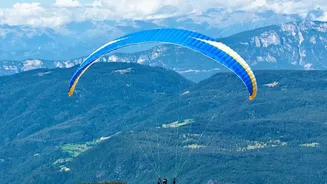
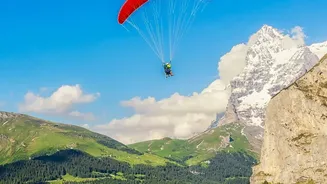
The most fundamental weather pattern to understand in the Alps is the daily cycle of valley winds. Think of it as the mountain range breathing. During the day, the sun heats the slopes, causing warmer, lighter air to rise. This creates an upslope wind,
often called a 'brise de vallée', which flows up the valley. This predictable breeze can provide a gentle, steady lift for pilots. However, as the day progresses, this flow can become powerful and turbulent, especially in narrower valleys. In the evening, the process reverses. The higher elevations cool faster, and the denser, cooler air sinks back down the slopes and into the valley, creating a downslope 'katabatic' wind. Understanding this daily rhythm is the first step to timing your flights safely.
Riding the Invisible Elevators
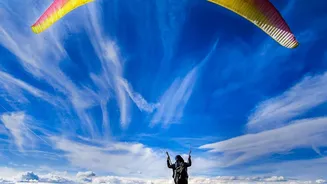
Thermals are the engine of cross-country flying. These are columns of rising warm air created when the sun heats specific ground features, like rocky outcrops or fields, more quickly than the surrounding area. Flying into a thermal is like finding an invisible elevator, allowing pilots to gain significant altitude. In the Alps, these thermals can be exceptionally strong. While they are key to long flights, they also require active piloting skills to manage. The tell-tale sign of a good thermal is often a fluffy white cumulus cloud with a flat base. However, pilots must watch for signs of overdevelopment, where these clouds grow into large, cauliflower-shaped giants, which can indicate instability and the potential for thunderstorms.
Beware the Foehn: A Pilot's Warning
One of the most notorious and dangerous wind phenomena in the Alps is the Foehn (or Föhn). This is a warm, dry, and extremely turbulent wind that occurs on the downwind side of the mountain range. It happens when air is forced over the mountains, loses its moisture as precipitation on one side, and then rapidly descends and heats up on the other. The result can be severe, chaotic turbulence called 'rotor', making flight impossible and extremely dangerous. Even if the weather on the ground seems calm, a Foehn can bring incredibly strong winds at altitude. Local pilots and weather services will always issue warnings for Foehn conditions, and these warnings must be taken seriously. Flying during a Foehn is never recommended.
Choosing Your Alpine Launch
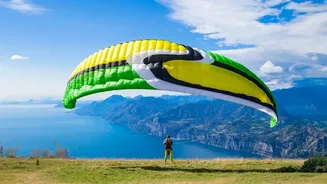
The French Alps are home to legendary flying sites, each with its own character. Annecy is arguably the most famous, with launch sites like Col de la Forclaz and Planfait offering reliable conditions over a stunning lake, making it ideal for beginners and seasoned pilots alike. The lake itself helps create dependable thermal conditions. Chamonix offers a more dramatic and high-altitude experience, with flights starting from sites like Plan Praz or even the Aiguille du Midi, offering unparalleled views of Mont Blanc. These higher launches are generally better suited for more experienced pilots due to the stronger conditions and glacial environment. Before flying any site, new or experienced, it's crucial to seek local advice from schools or clubs and check site-specific rules.
When to Keep Your Feet on the Ground
The most important decision a pilot can make is when not to fly. A rule of thumb in Chamonix is: if you don't see anyone else in the air, there's probably a very good reason. Key red flags include strong or gusty winds at takeoff (generally over 20 km/h is a concern for many), forecasts of rain or storms, and low clouds or fog that impair visibility. Pay close attention to the windsock; if it's unstable or pointing backwards, it's a sign to wait. Always check multiple, reliable weather sources before your flight and have a backup plan. Overestimating your skill level or underestimating the power of the mountains can lead to dangerous situations. Building experience at simpler sites before tackling the deep, committed valleys is a wise approach.