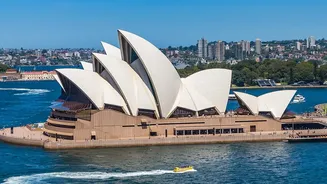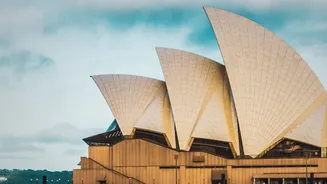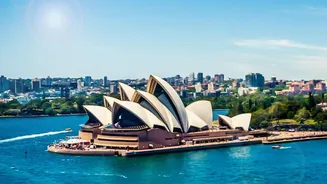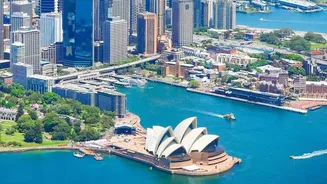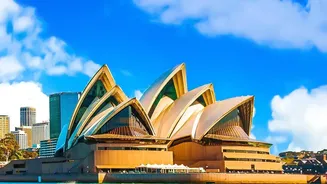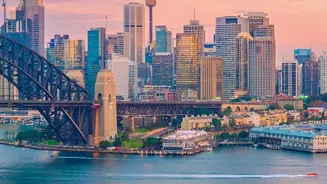




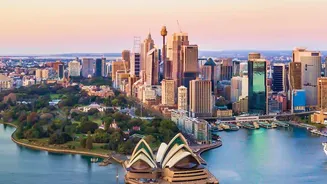
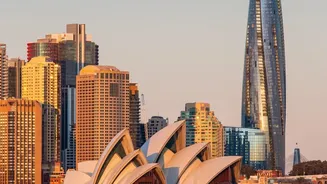
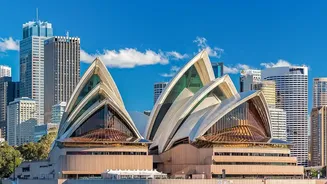
Sydney Opera House & Harbour
The gleaming sails of the Sydney Opera House and the arch of the Harbour Bridge are magnets for visitors, making Circular Quay a bustling hub from mid-morning until after sunset. The peak crush often happens between 11 am and 2 pm, when tour buses arrive
and lunch-hour crowds descend. To reclaim the magic, shift your visit to the edges of the day. An early morning exploration, around sunrise, offers golden light, fewer people, and a serene atmosphere. You can wander the Opera House steps and admire the harbour in relative peace. Weekday mornings are generally quieter than weekends. Alternatively, a late-evening visit, after the theatre crowds have gone inside, allows you to see the city lights sparkle across the water without the daytime hustle.
Bondi Beach
On a hot summer weekend, finding a patch of sand at Bondi Beach can feel like a competitive sport. Peak season runs from December to February, when both locals and tourists flock to the famous crescent of sand. To enjoy the surf and sand without the chaos, timing is crucial. The best moments are often in the early morning. Arriving before 9 am, especially on a weekday, means you'll share the beach with dedicated swimmers and surfers, not thousands of sunbathers. The autumn months of March through May also offer pleasant weather with significantly fewer people. If you're not an early riser, try a late afternoon visit on a weekday when many families and day-trippers have already headed home.
Uluru-Kata Tjuta National Park
Witnessing sunrise or sunset over Uluru is a bucket-list experience, but the designated viewing platforms can become incredibly crowded. While these are popular for a reason, you can find a more personal connection with the landscape. The cooler months from May to September are the most popular due to comfortable walking temperatures, so expect more visitors then. For a quieter experience, consider visiting in the shoulder seasons of October or November. Regardless of the season, sunrise generally draws slightly smaller crowds than sunset. Another great strategy is to hire a bike and ride the base trail early in the morning. Shortly after sunrise, the viewing platforms often clear out, giving you a chance to enjoy the magnificent view in solitude.
The Great Barrier Reef
The world's largest coral reef system is vast, but most tourist activity is concentrated in a few key areas accessible from Cairns and the Whitsundays. Peak season, from May to October, brings the best weather conditions but also the most visitors. To avoid feeling like you're on a crowded underwater highway, choose your operator wisely. Smaller, locally-run tours often have access to less-frequented moorings. Another option is a liveaboard boat, which allows you to visit outer reefs far from the day-tripper boats. If you can, travel during the shoulder season. The conditions are still good, but the crowds are thinner, offering a more intimate encounter with the reef's incredible marine life.
Melbourne's Laneways
The vibrant street art, hidden bars, and boutique cafes of Melbourne's laneways are a core part of the city's identity. Famous arteries like Hosier Lane and Degraves Street can become almost impassable during peak times, particularly on weekends and during lunch hour. To truly appreciate the art and atmosphere, explore them mid-morning on a weekday. The coffee rush has subsided, but the lunchtime chaos has yet to begin, giving you space to wander and take photos. Alternatively, exploring in the evening reveals a different character, as bars light up and the vibe becomes more electric. Many of the most famous laneways have smaller, lesser-known offshoots that offer the same charm with a fraction of the foot traffic.