

Batata Vada: The Heart of Mumbai Street Food
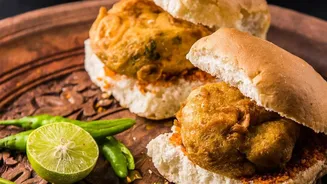
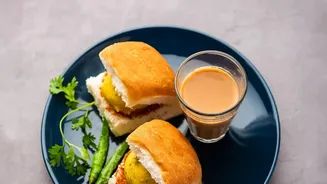
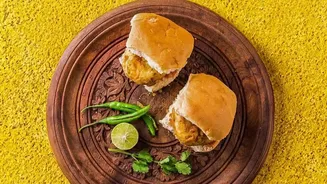
In Maharashtra, the Batata Vada reigns supreme. This Western Indian delight consists of a spiced mashed potato filling, balled up, coated in a thick gram flour (besan) batter, and deep-fried to golden perfection. While delicious on its own, its most iconic
form is the Vada Pav. Here, the hot vada is nestled inside a soft, pillowy bread roll called a pav. This is no simple sandwich. The tradition involves slathering the pav with two key chutneys: a fiery green chutney made with chilies and coriander, and a pungent dry garlic chutney, often called 'shengdana chutney', which adds a delightful texture and nutty spice. Often served with a side of fried green chilies, the Vada Pav is more than a snack; it's a quick, affordable, and deeply satisfying meal that fuels the bustling city of Mumbai.
Medu Vada: The Quintessential South Indian Breakfast
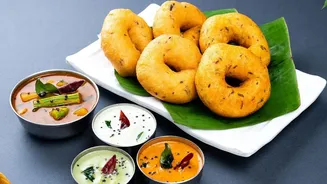
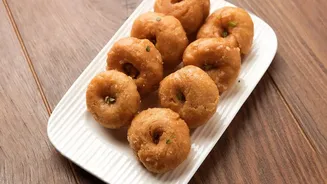
Travel south, and you'll find the Medu Vada, a staple in states like Tamil Nadu, Karnataka, and Kerala. Recognizable by its distinct doughnut shape, this vada has a delightful textural contrast: a crispy, golden-brown exterior giving way to a soft, fluffy interior. It is made from a meticulously ground and aerated batter of urad dal (black gram). The serving tradition here is integral to the experience. For breakfast, it's most famously served two ways. The first is 'Sambar Vada,' where the crispy fritter is dunked into a bowl of hot, tangy sambar (a lentil and vegetable stew), allowing it to soak up the flavourful broth. The second is alongside fresh chutneys, typically a creamy coconut chutney and a spicy tomato or onion chutney. This combination of crispy, soft, tangy, and spicy is a beloved breakfast across the south.
Masala Vada: The Perfect Crunchy Tea-Time Companion
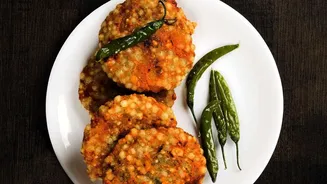
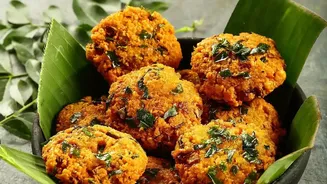
Unlike the soft Medu Vada, the Masala Vada—also known as Paruppu Vadai or Chana Dal Vada—is all about the crunch. Popular across South India as an evening snack, especially during monsoon season, this vada is made from a coarse paste of chana dal (Bengal gram) mixed with onions, fennel seeds, ginger, and curry leaves. The lentils are not ground smooth, which gives the fritter its signature rustic, crunchy texture. It is flattened into a rustic disc rather than shaped like a doughnut. The serving tradition for Masala Vada is beautifully simple. It is often enjoyed hot, straight from the frying pan, with no accompaniment needed other than a steaming cup of chai or coffee. Its spicy, fragrant, and deeply savoury flavour makes it the perfect partner for a hot beverage, embodying the simple pleasures of a South Indian evening.
Maddur Vada: A Crispy, Savory Karnataka Speciality
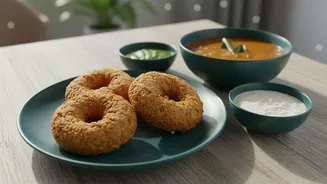
Originating from the town of Maddur in Karnataka, this vada has a unique story and an even more unique texture. Legend says it was invented by a snack vendor at the Maddur railway station who, in a hurry, flattened a pakora mixture to cook it faster for an early train. The result was a masterpiece. Made from a mix of rice flour, semolina (rava), and all-purpose flour, along with sliced onions, curry leaves, and green chilies, the Maddur Vada is distinctively different. It is large, circular, and thin, fried to a deep golden-brown, making it crispy on the outside but still slightly soft on the inside. It is a popular travel snack, especially on the train journey between Bengaluru and Mysuru. Traditionally, it is served hot with a side of coconut chutney, but its complex, savory flavour from the caramelized onions means it is just as delicious on its own.