




1. Money Plant (Pothos)
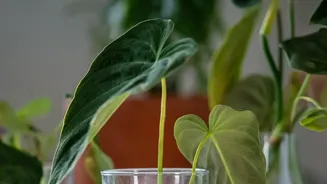
Arguably the most common houseplant in India, the Money Plant, or Pothos, is famously easy to propagate. Its resilience and willingness to grow make it the perfect starting point for any beginner. These trailing vines look beautiful in hanging baskets
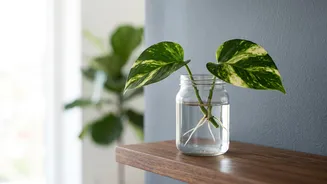
or climbing up a wall, and starting a new plant is incredibly straightforward. Simply take a cutting from a healthy mother plant, ensuring the stem is at least 4-6 inches long and has a few leaves and at least one node—the small brown bump on the stem where new roots will sprout. You can place this cutting directly in a jar of water and watch the roots emerge over a few weeks. Once a healthy root system has developed, transfer it to a pot with soil.
2. Rose
The beloved rose, a staple in Indian gardens, can also be grown from cuttings, though it requires a bit more patience. The best time to take a cutting is in the cooler months when the plant is not heavily flowering. Choose a healthy stem from the current year's growth that is about 12 inches long. Remove the lower leaves and any flower buds, leaving only the top two sets of leaves. Dip the cut end in a rooting hormone to increase your chances of success, although this is optional. Plant the cutting in a pot filled with a well-draining potting mix, burying about two-thirds of the stem. Keep the soil consistently moist and in a spot with indirect sunlight. It can take several weeks, or even a couple of months, for roots to establish, but the reward is a new rose bush that is an exact clone of its parent.
3. Hibiscus
With their large, vibrant blooms, Hibiscus plants are a favourite for adding a tropical touch to any garden. Propagating them from cuttings is surprisingly simple. It's best to take cuttings from new growth, also known as softwood, in the late spring or early summer. Snip a 4 to 6-inch section from a healthy, disease-free stem, making the cut just below a leaf node. Remove all but the top few leaves to reduce moisture loss. You can dip the end in rooting hormone before planting it in a pot with a well-draining mix. To create a humid environment that encourages rooting, cover the pot with a plastic bag and place it in a warm area with bright, indirect light. Roots should begin to form in about four to eight weeks.
4. Snake Plant (Sansevieria)
The Snake Plant is a champion of low-maintenance indoor greenery, known for its air-purifying qualities and striking appearance. It's also incredibly easy to propagate. You can create several new plants from just a single leaf. Using a clean knife, cut a healthy leaf from the mother plant. You can place the whole leaf in water or cut it into several 3 to 4-inch sections. It's crucial to remember which end is the bottom (the part closer to the roots) because only that end will sprout new roots. Let the cuttings dry for a day or two to form a callus, which prevents rot. Then, place them in a jar of water or plant them directly into moist, well-draining soil. New roots and tiny pups will start to appear in a few weeks to a couple of months.
5. Bougainvillea
Famous for its stunning, paper-like bracts of vibrant colour, Bougainvillea is a common sight across India. You can easily create new plants by taking cuttings during spring or summer. Choose a semi-ripe stem—one that is firm and slightly woody but still flexible—and take a cutting that is about 4 to 6 inches long. Remove the leaves from the lower half of the cutting. To encourage root growth, dip the cut end in a rooting hormone powder. Plant the cutting in a pot filled with a sandy, well-draining soil mix. Like the Hibiscus, Bougainvillea cuttings benefit from a humid environment, so covering the pot with a plastic bag can help. Keep it in a warm, bright spot out of direct sun, and with patience, you'll see new growth in about six to twelve weeks.