









The 'Natural Means Safe' Fallacy
One of the most powerful marketing tools for herbal products is the idea that 'natural' equals 'safe'. However, this is a dangerous oversimplification. Everything, from the water we drink to the plants in our gardens, is made of chemicals. Many life-saving
medicines originate from plants, but so do potent poisons. An herbal supplement can contain dozens of chemical compounds, many of which may not be fully understood. For instance, kava, a supplement often used for anxiety, has been linked to severe liver damage. Similarly, ephedra was banned by regulators after being associated with serious heart problems. Just because a product grows from the ground doesn't mean it's free of side effects or won't interact with other medications you're taking. The lack of stringent regulation means that the purity and dosage of herbal products can vary widely, making it even more important to approach them with caution.
Traditional Use vs. Clinical Proof
Many supplements are promoted based on their long history in traditional medicine systems like Ayurveda or Chinese medicine. While this history is culturally significant, it isn't the same as scientific evidence. Traditional use often relies on centuries of observation and anecdotal reports, which can be a valuable starting point for research but doesn't confirm efficacy or safety by modern standards. For a product to be considered scientifically proven, it must undergo rigorous, controlled testing. This often involves randomized controlled trials (RCTs), which are considered the gold standard. These trials compare the supplement to a placebo to see if it causes a real, measurable effect. Many herbs with a long history of traditional use have not held up when subjected to this level of scrutiny.
The Problem with 'Promising' Early Studies
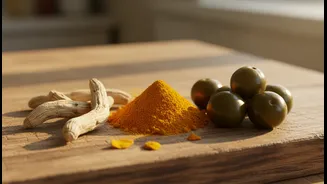
You'll often see claims that an herb is backed by "scientific research." But not all research is created equal. Early-stage studies, often conducted in labs on cells (in vitro) or on animals, are crucial for initial discovery. However, their findings don't always translate to humans. Turmeric's active compound, curcumin, for example, has shown powerful anti-inflammatory and antioxidant effects in lab settings. While some human trials have shown benefits for conditions like osteoarthritis, the results are often dependent on specific, highly bioavailable formulations that may not be present in all over-the-counter products. Many supplements that look promising in small studies fail to show any benefit in larger, more robust human trials. It's important to ask whether the evidence comes from a large-scale human study or a preliminary lab test.
Misleading 'Memory Booster' Claims
Cognitive enhancers are a huge market, with herbs like Ginkgo biloba and Brahmi (Bacopa monnieri) being widely promoted for memory and focus. However, the evidence is often mixed or weak. Ginkgo biloba has a long history of use and has been the subject of numerous studies. Despite this, a major study called the Ginkgo Evaluation of Memory (GEM) study, which involved over 3,000 older adults, found that it did not prevent or slow dementia or cognitive decline. Other studies have also concluded that ginkgo provides no measurable memory benefit to healthy adults. Similarly, while Brahmi has been used in Ayurveda for centuries to improve cognition, systematic reviews of human trials show conflicting and low-quality evidence, with many studies finding no significant difference compared to a placebo. Claims of enhanced mental clarity should be viewed with healthy skepticism.
Why Your Friend’s Experience Isn't Data
A friend swears by Ashwagandha for stress relief, and now you're curious. Personal stories, or anecdotal evidence, can be very persuasive. While these experiences are valid for the individual, they aren't a reliable measure of a supplement's effectiveness. A person might feel better due to the placebo effect—a powerful phenomenon where believing a treatment will work can cause real, positive changes. Furthermore, individual results don't account for other variables like lifestyle changes, diet, or simply the natural course of a condition. Scientific trials are designed to filter out these factors to determine if the supplement itself is responsible for the outcome. While small studies suggest Ashwagandha may help reduce stress and anxiety, much more long-term research is needed to confirm its safety and effectiveness for the general population.