








The Silent Revolution's Problem
For early adopters, the silence of an electric vehicle was a key selling point. The smooth, quiet, and linear acceleration represented a clean break from the mechanical noise and vibration of an internal combustion engine (ICE). It felt futuristic. However,
for a large portion of mainstream car buyers, this silence can be disconcerting. Drivers have spent their entire lives associating the sound of a revving engine and the subtle kick of a gear change with performance and control. The auditory and physical feedback from an ICE car provides a constant, almost subconscious stream of information about speed and power. Without it, the driving experience can feel sterile and disconnected for some, creating a barrier for those hesitant to make the switch.
Simulating the Rumble and Shift
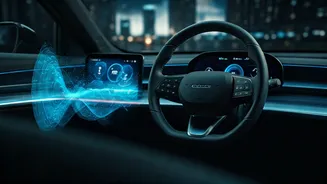
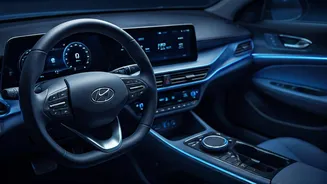
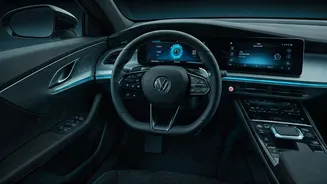
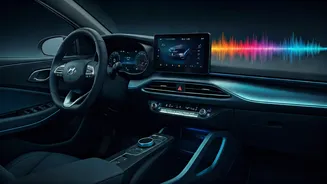
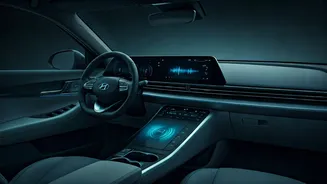
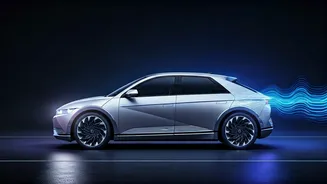
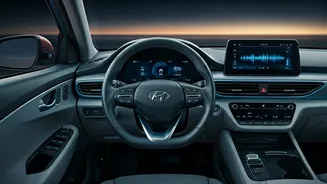
Hyundai’s solution is a suite of technologies designed to reintroduce these familiar sensations, but in a purely digital form. The two flagship features are N Active Sound+ and N e-Shift. N Active Sound+ uses a system of ten speakers (eight internal, two external) to play engineered soundscapes that correspond to the car’s speed and throttle input. These aren't just generic recordings; they are dynamic sounds, with modes like 'Ignition' that mimics a traditional Hyundai N performance engine, or 'Supersonic' which sounds like a fighter jet. Paired with this is N e-Shift, a clever system that uses motor control to simulate the feel of an eight-speed dual-clutch transmission. It creates a noticeable jolt or torque interruption between these virtual “shifts,” which can be controlled with paddle shifters. You can even hit a fake rev limiter if you don't 'upshift' in time.
The Psychology of Familiarity
This strategy is about more than just novelty. It’s a calculated effort to lower the psychological barrier to EV adoption for enthusiasts and traditional drivers. The goal isn't to trick anyone into thinking they’re driving a gasoline car, but to provide an optional layer of engagement that makes the transition feel less alien. By giving drivers familiar reference points—the sound of acceleration, the feeling of a downshift—Hyundai aims to make its high-performance EVs feel more intuitive and exciting to a group that might otherwise dismiss them as soulless appliances. The systems are entirely optional and can be turned off with the press of a button, allowing drivers to choose between a silent, smooth ride or an engaging, sound-filled experience. After seeing positive feedback, Hyundai has confirmed it will expand this technology from its high-performance 'N' models to other powerful vehicles in its lineup, like the Ioniq 9 SUV.
A Bridge or a Step Backward?
The approach has sparked a debate in the automotive world. Critics argue that adding artificial sounds and sensations to EVs is an inauthentic gimmick that holds them back from developing their own unique identity. They contend that the beauty of an EV lies in its inherent smoothness and silence, and that trying to replicate the past is a step in the wrong direction. Proponents, however, see it as a brilliant transitional tool. They argue that driving is an emotional, multi-sensory experience, and that sound and physical feedback are crucial parts of that connection for many people. By offering these features, Hyundai is making the EV tent bigger and more welcoming. Reviews of the Ioniq 5 N and 6 N, where these features debuted, have been overwhelmingly positive, with many journalists noting that the systems, while artificial, are remarkably well-executed and genuinely fun. They make the car more involving to drive, even if it makes the car slightly slower in objective terms.