






Meet EOS-05: India's New Eye in the Sky
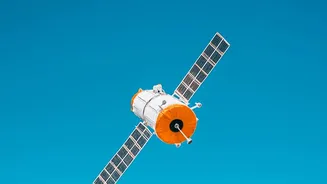
The star of the recent mission is the Earth Observation Satellite, EOS-05. Weighing a substantial 2,367 kg, it is the heaviest satellite to be launched by a GSLV rocket. Unlike many other Earth-observation satellites that circle the planet in Low Earth Orbit,
EOS-05 is destined for a geosynchronous orbit, approximately 36,000 km above the Earth. At this altitude, the satellite's orbital speed matches the planet's rotation, allowing it to seemingly 'hover' over a specific region of the globe. This unique positioning enables near-continuous monitoring of the Indian subcontinent, a significant upgrade from the periodic passes of lower-orbit satellites. Described as a state-of-the-art geo-imaging satellite, EOS-05 is designed to provide real-time images that will serve a multitude of national interests.
The GSLV: A Story of Power and Persistence
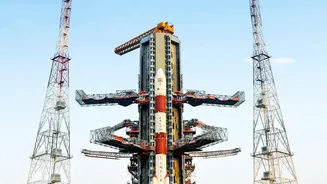
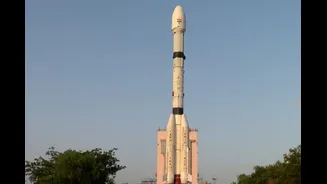
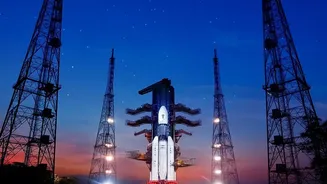
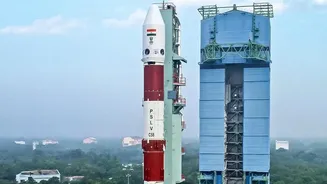
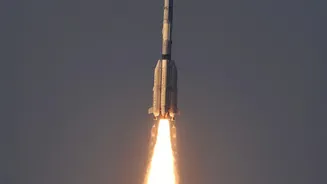
The launch vehicle that carried this historic payload was the GSLV-F17. Standing 51.7 metres tall, the GSLV is a powerful three-stage rocket with a lift-off mass of over 420 tonnes. Its most critical component is the indigenously developed cryogenic upper stage, which uses super-cooled liquid hydrogen and liquid oxygen as propellants. Mastering cryogenic technology is a major technological feat, and this successful launch reinforces ISRO's capabilities in this demanding field. The GSLV has had a challenging history, even earning the nickname 'Naughty Boy' in its early years due to a number of launch failures. However, this successful flight, which marks the nineteenth GSLV mission, underscores the rocket's evolution into a reliable and powerful launcher for India's ambitious space projects.
What Will This Satellite Actually Do?
The capabilities of EOS-05 have far-reaching implications for India. Its primary role is to provide rapid, large-area imaging to aid in monitoring natural disasters like floods, cyclones, and forest fires. The ability to get pictures of the entire Indian landmass every half hour is a game-changer for disaster management and response agencies. Beyond emergencies, the satellite's data will be invaluable for agriculture, helping with crop health monitoring and yield estimation. It will also support urban planning, infrastructure development, water resource management, and environmental monitoring. Furthermore, having a persistent 'eye in the sky' enhances the nation's strategic surveillance and security capabilities, allowing for monitoring of border regions and maritime areas.
A Milestone in India's Space Journey
This successful launch is more than just a single achievement; it is a significant step forward for India's entire space program. It is redemption for the failed GSLV-F10 mission in 2021, which was carrying the similar EOS-03 satellite. The success of the GSLV-F17 demonstrates that ISRO has effectively corrected the cryogenic stage anomaly that caused the previous failure. This mission establishes India as a country capable of placing heavy, sophisticated imaging satellites into high geosynchronous orbits, a capability held by only a few nations. This success provides a major boost of confidence for future flagship programs, including the Gaganyaan human spaceflight mission, which will also rely on ISRO's powerful launch vehicles.