



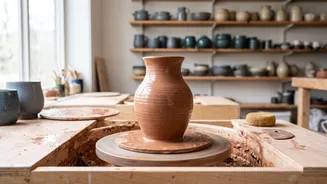

The First Touch: Preparing the Canvas
Every ceramic journey begins not on the wheel, but with a lump of clay and a process called wedging. This is essentially kneading the clay to prepare it for shaping. The primary goal is to achieve a consistent texture and, crucially, to remove any air
bubbles. An air bubble trapped in the clay can expand dramatically during the high-temperature kiln firing, causing the piece to crack or even explode. This initial stage is the potter's first lesson in attention to detail. It’s a physical, repetitive motion that forces you to be present, feeling the clay's temperature and pliability. This isn't just manual labour; it's the foundation of everything that follows, ensuring the material is a uniform, workable canvas for your vision.
The Dance of Pressure and Form
Once the clay is wedged, it’s time for the potter’s wheel, an iconic part of the process. Here, pressure is paramount. The first challenge is 'centering' the clay—applying steady, firm pressure to a spinning lump until it rotates perfectly in the centre of the wheel. This step can be frustrating for beginners, as it requires a calm focus and control. Once centered, the magic begins. Through subtle shifts in hand pressure, the potter 'pulls' the walls of the clay upward, transforming the lump into a cylinder, a bowl, or a vase. It’s a dynamic dance between your hands and the spinning clay; too much pressure and the wall collapses, too little and it won't rise. This stage beautifully illustrates the headline's point: it is a highly technical skill that demands immense concentration and physical control.
From Cylinder to Creation
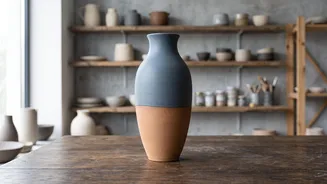
With a basic form established on the wheel, the focus shifts more overtly to shape and creativity. A simple cylinder can become a graceful vase with a gentle curve, or a wide bowl with an elegant lip. The texture also comes back into play, but now as a design element. Potters use various tools—ribs, wires, even their own fingernails—to impart grooves, lines, or smooth surfaces onto their work. This is where artistic intent merges with technique. The shape communicates the object's function and aesthetic, while the texture invites touch and adds character. Even at this stage, the clay demands respect. Work too quickly or add too much water, and the form can lose its integrity. It’s a constant conversation between the creator’s idea and the material’s limits.
The Art of Letting Go
Creating with clay is also a profound lesson in patience. After a piece is shaped, it's far from finished. It must dry slowly to a 'leather-hard' state, where it's firm enough to be trimmed and refined. Then it must dry completely to 'bone dry' before its first firing, known as a bisque firing. After that, glaze is applied, which provides colour and waterproofing. Finally, it goes back into the kiln for a second, higher-temperature glaze firing. Each step takes time and introduces risk. Cracks can appear during drying, glazes can run unexpectedly, and colours can emerge from the kiln completely different than anticipated. This process teaches an acceptance of imperfection and the ability to let go of complete control.
More Than Just Mud: A Mindful Practice
Beyond the technical skills, the immense appeal of pottery lies in its psychological benefits. Engaging with clay is a deeply sensory and meditative experience. The focus required to center clay or shape a delicate rim quiets the mental chatter of daily life, anchoring you firmly in the present moment. Studies and anecdotal evidence suggest that creative activities like pottery can lower levels of the stress hormone cortisol. It engages both sides of the brain, combining creative expression with technical problem-solving. In an increasingly digital world, the act of making something tangible and functional with your own hands provides a unique sense of accomplishment and connection.