


Meet the Ultimate Survivor
The microscopic champion of survival, according to a new NASA-led study, is a fungus called Aspergillus niger. You might know it as common black mould, a persistent pest in damp bathrooms or on old food. While it is a nuisance on Earth, in space, its
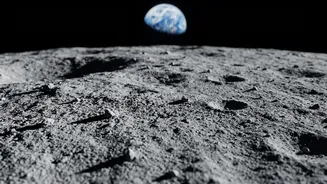
resilience is astonishing. This fungus has been found thriving aboard the International Space Station, proving it can handle the unique stresses of space environments. The latest research, which used sophisticated computer models, pitted several microbes against simulated lunar conditions. Aspergillus niger came out on top, showing a remarkable ability to withstand the harsh ultraviolet (UV) radiation that bombards the Moon’s surface. Its spores, equipped with dark pigments and thick cell walls, act like a natural shield, protecting it from the destructive cosmic rays.
Sanctuaries of Eternal Shadow
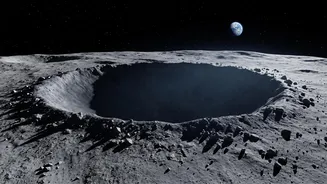
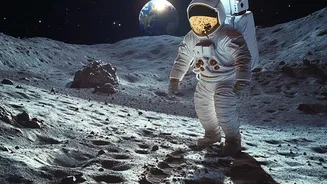
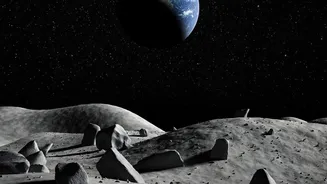
So, where on the Moon could such a microbe survive? The answer lies in the 'permanently shadowed regions' (PSRs) near the lunar poles. These are craters and deep depressions where the sun never shines. Because the Moon’s axis has only a slight tilt, the floors of these craters are locked in an eternal, frigid darkness. Temperatures here can plunge below -200 degrees Celsius. While this extreme cold would kill many organisms, it can act as a preservative for hardy spores, placing them in a deep, dormant state. These shadowed regions are of immense interest to space agencies like NASA and ISRO, as they are believed to hold vast reserves of water ice—a critical resource for future lunar bases. The very conditions that could preserve water ice, however, are also what make these regions potential havens for microbial survivors from Earth.
A Cosmic Hitchhiker Theory
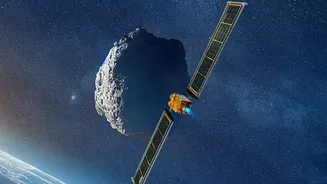
This discovery breathes a little life into a fascinating, if controversial, theory known as panspermia. The core idea of panspermia is that life is not unique to Earth but exists throughout the universe, spreading from one world to another via meteoroids, comets, or asteroids. The finding that fungal spores could persist in the harsh lunar environment makes the concept of life hitching a ride across the solar system seem slightly more plausible. If a microbe can survive the journey and then endure the conditions on a place as hostile as the Moon, it raises the possibility that life could be transferred between planets. It's important to be clear: this study does not prove panspermia. It simply shows that one of the key challenges for the theory—surviving in a new, alien environment—might not be as insurmountable as once thought for the toughest forms of life.
The Contamination Conundrum
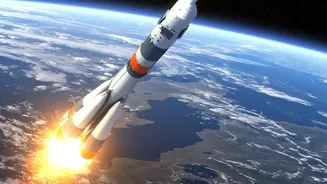
Beyond fascinating theories, the study raises a very practical and urgent issue: planetary protection. As nations like the US, China, and India gear up for ambitious lunar missions, including crewed landings and robotic explorers, the risk of contamination is real. We are going to the Moon's south pole to search for water and analyse pristine lunar soil that has been untouched for billions of years. If we accidentally introduce Earth microbes on our boots, rovers, or scientific instruments, we could corrupt the very science we are trying to conduct. Finding Aspergillus in a lunar sample would be scientifically useless if we were the ones who brought it there. This research suggests that current sterilisation protocols, which primarily focus on bacteria, may need to be updated to account for the incredible resilience of fungi. It means future missions, from NASA's Artemis to a potential Chandrayaan successor, must be even more careful.