






The AI Proficiency vs. AI-Native Divide
A recent report from Nasscom, titled "The State of AI-Native Talent in India," has sent a ripple through the country's technology and education sectors. The findings distinguish between two types of young professionals: the 'AI-proficient' and the 'AI-native'.
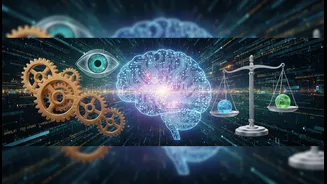
While roughly two-thirds of the workforce are proficient, meaning they can use AI tools effectively, only 23% are considered native. Being AI-native is not about familiarity with prompting or using generative AI for tasks. Instead, it signifies a deeper ability to collaborate productively with AI, critically challenge its outputs, and retain independent engineering judgment when the technology falls short. This distinction is crucial, as Nasscom warns that without addressing this gap, India risks creating a workforce that is merely AI-reliant, unable to innovate or solve complex problems independently.
The Vanishing Rung on the Learning Ladder
One of the report's most critical insights is how AI is inadvertently eroding foundational skills. Traditionally, junior engineers built their expertise by tackling routine, entry-level coding and debugging tasks. However, AI is now automating much of this work. While this boosts productivity, it removes a vital learning stage where young engineers developed their core technical understanding and problem-solving instincts through hands-on experience. The result is a generation of entrants who may be adept at using AI as a crutch but lack the deep-seated technical grounding to build, troubleshoot, or innovate from scratch. Nasscom suggests that educational institutions and companies must now deliberately recreate these learning opportunities that were once a natural part of an engineer's early career path.
A Mandate for Academic Reform
The findings serve as a direct call to action for India's engineering colleges and academic institutions. Nasscom urges a significant pivot in curriculum and teaching philosophy. The recommendation is to move beyond conventional coding instruction, which can be easily outsourced to AI, and instead double down on strengthening core engineering fundamentals, domain-specific knowledge, and critical thinking. Educational bodies are being asked to redesign assessment methods to evaluate genuine problem-solving capabilities and engineering judgment rather than rote memorization of code. The focus must shift from 'how to code' to 'how to think like an engineer' in an AI-augmented world, emphasizing skills like creativity, logic, and systems-level thinking that machines cannot replicate.
Industry's New Role in Forging Talent
The responsibility for bridging this gap doesn't lie with academia alone. The report outlines a clear mandate for the tech industry to evolve its own practices. Companies are encouraged to rethink their hiring processes, moving away from assessments that test basic coding skills toward those that can identify comprehensive AI-native capabilities. Furthermore, onboarding and mentorship programs need a complete overhaul. Industry must create structured environments for new hires to develop independent judgment, perhaps through simulation-based exercises and multi-layered mentorship. The goal is to build foundational capabilities deliberately, ensuring that the decline of routine work does not lead to a decline in deep engineering expertise that has long been the bedrock of India's tech success.
The Path Forward for Students
For students currently in college or preparing for a tech career, this report is a roadmap. The message is clear: mastering an AI tool is not enough. Aspiring engineers should focus on building a robust understanding of fundamental principles in their chosen domain. They must actively seek out opportunities for project-based, experiential learning to sharpen their problem-solving and creative thinking abilities. Rather than simply accepting AI-generated code, students should learn to use it as a collaborator—a tool for accelerating learning and validating ideas, while always applying their own critical judgment. Developing strong soft skills, such as teamwork and communication, is also more important than ever. The future belongs to those who can effectively blend human ingenuity with artificial intelligence.