




The Far Side's Communication Problem
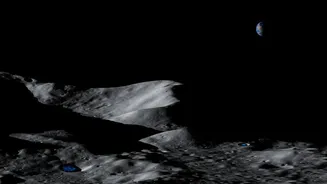
For as long as we have explored space, the Moon's far side has presented a fundamental problem. Because the Moon is tidally locked with Earth, we only ever see one face. The other side is permanently turned away, and the entire bulk of the Moon blocks
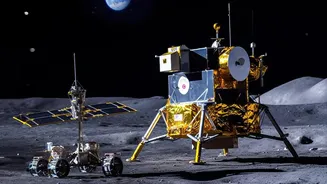
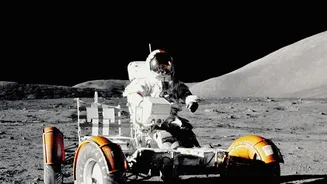
any direct radio signals. During the Apollo era, astronauts orbiting the Moon experienced this firsthand, enduring a communication blackout for nearly an hour on every pass. This barrier makes real-time control of robotic rovers or ensuring astronaut safety incredibly difficult, effectively cutting off the far side from sustained exploration. While China's Chang'e missions successfully used a relay satellite to land on the far side, it was a dedicated solution for a specific mission. NASA's vision is much broader.
Introducing LunaNet: A Lunar Internet
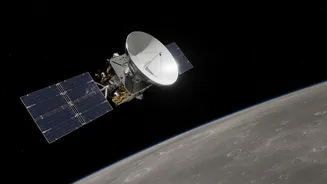
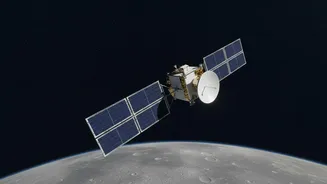
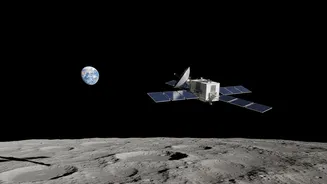
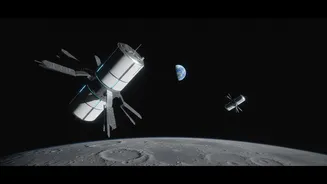
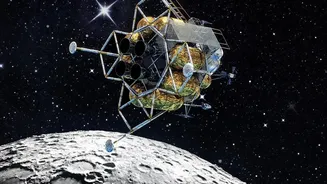
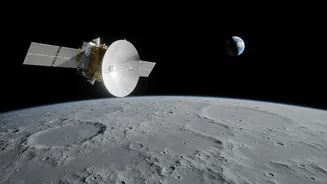
NASA's solution is an ambitious project called LunaNet, an initiative to create a flexible, scalable communications and navigation network for the Moon. Think of it less as a single satellite and more like building an internet service for our celestial neighbour. The plan, part of the broader Lunar Communications Relay and Navigation Systems (LCRNS) project, is to establish a web of small satellites in various lunar orbits. These satellites will act as nodes in a network, capable of relaying data from rovers or astronauts on the surface—even on the far side—bouncing it between satellites and then back to Earth. This creates a persistent connection, eliminating the blackout zones that have hampered previous efforts.
How the Relay Network Will Work
The key is placing satellites in specialized orbits that give them a constant line of sight to both Earth and challenging lunar regions like the far side and the South Pole. One such orbit is a Near-Rectilinear Halo Orbit (NRHO), the same type of orbit used by the Lunar Gateway space station. Other options include positioning satellites at Lagrange points—areas in space where the gravitational pull of the Earth and Moon balance out, allowing a spacecraft to 'hover' in place relative to them. By using a network of these satellites, LunaNet will employ Delay/Disruption Tolerant Networking (DTN), a system designed for space environments where connections might be intermittent. It ensures data gets through, even if it has to be stored and forwarded, much like how the internet handles complex data routing.
Unlocking New Scientific and Exploration Frontiers
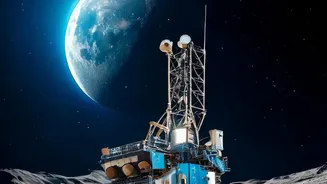
With continuous communication, the possibilities for lunar exploration expand dramatically. Scientists are eager to place radio telescopes on the far side, which is shielded from the constant radio noise of Earth, making it the quietest place in the inner solar system for astronomy. For the Artemis missions, which aim to establish a sustained human presence, the benefits are even more critical. LunaNet will provide high-bandwidth connections for live video from astronaut EVAs, real-time control of robotic equipment, and precise navigation services on a surface where GPS doesn't work and visual landmarks are difficult to distinguish. This enhanced situational awareness and reliable communication is vital for crew safety.
The Business of Building Lunar Infrastructure
Significantly, NASA is not building this network alone. The LCRNS project is heavily reliant on commercial partnerships, with companies like Intuitive Machines contracted to develop and deploy the first relay satellites. This approach is designed to foster a commercial market for lunar communication services, estimated to be worth billions in the coming decade. By establishing a standardized, interoperable framework with LunaNet, NASA is encouraging international partners and other private companies to contribute their own nodes to the network. This creates a shared infrastructure, lowering the barrier to entry for future missions and paving the way for a true lunar economy, encompassing everything from resource mining to tourism.