







Deconstructing the $100,000 OPT Proposal
Recent reports, citing sources familiar with internal deliberations, suggest the Trump administration is considering a staggering $100,000 fee for international students who wish to work in the U.S. after graduation under the Optional Practical Training
(OPT) program. OPT is a crucial pathway that allows students on F-1 visas to gain up to 12 months of work experience related to their field of study. For those in Science, Technology, Engineering, and Math (STEM) fields, this can be extended by an additional 24 months. The proposal, if implemented, would not be a bond but a direct fee, effectively placing a prohibitive price tag on a program that has long been a major draw for attending American universities. While a White House official noted there was no imminent policy change, they did not deny that the plan was under consideration.
The Stated Goal: Curbing Immigration
The reported rationale behind this drastic proposal aligns with the administration's broader crackdown on both legal and illegal immigration. Officials have previously targeted the OPT program, claiming it is susceptible to fraud and encourages visa overstays. By attaching a six-figure cost, the policy would likely deter the vast majority of graduates from utilizing OPT, thereby reducing the number of foreign professionals remaining in the U.S. workforce. However, this view is sharply contested by educators, economists, and business leaders. They argue that international graduates, particularly in STEM, are a vital source of talent and innovation, and that research shows their participation in the workforce does not harm job prospects for American citizens.
Legal Hurdles and Precedent
The feasibility of such a dramatic fee is questionable. Legal experts have already raised doubts about whether the administration could enact such a policy without facing significant court challenges. There is recent precedent for this: in September 2025, the administration imposed a $100,000 fee on certain H-1B visa applicants, but a federal judge later struck down the move, deeming it an unconstitutional tax. To implement a similar fee for OPT, the administration might have to require students to leave the country after graduation and then re-enter to begin work, at which point the fee could be levied. This complex and legally dubious process adds another layer of uncertainty to a proposal that has already caused significant alarm.
The Changes Already Happening in 2026
While the $100,000 fee remains a speculative proposal, other significant changes impacting international students are confirmed and set to take effect on September 15, 2026. The Department of Homeland Security is eliminating the long-standing “duration of status” (D/S) system, which allowed students to stay for the length of their program. It will be replaced with a fixed period of admission, generally for the length of the academic program up to a maximum of four years, followed by a shorter 30-day grace period instead of the previous 60. This means students whose studies or OPT extend beyond their authorized stay must now proactively file for an extension with U.S. Citizenship and Immigration Services (USCIS), a process that involves more paperwork and fees.
What This Means for Indian Students
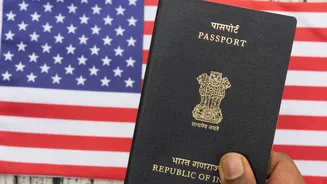
For the hundreds of thousands of Indian students in the U.S., these developments are critical. The OPT program, especially the STEM extension, is a primary reason many choose to study in America, seeing it as a bridge to gaining global work experience and potentially securing an H-1B work visa. A $100,000 fee would make this path impossible for nearly everyone. Even without that proposal, the confirmed changes to visa status rules introduce new complexities. Indian students, many of whom are in longer graduate programs or rely on the full 36 months of STEM OPT to secure H-1B lottery selection, will now face a more rigorous and bureaucratic process to maintain their legal status while working. These shifts demand greater vigilance and careful planning.