



The Grand Ambition
At its heart, the Gaganyaan programme is one of India's most ambitious scientific undertakings. The goal is to launch a crew of Indian astronauts into a 400-kilometre orbit for a mission lasting several days. This achievement would make India only the fourth
nation in the world to independently send humans into space, joining a select club that includes the US, Russia, and China. The programme represents a monumental leap in India's space capabilities, moving beyond robotic missions to the complexities and challenges of human spaceflight. Before astronauts make that historic journey, however, a series of uncrewed test flights are necessary to validate every system and ensure the highest levels of safety.
Why a Launch Pad Needs Special Upgrades
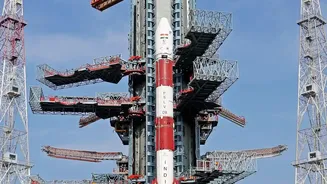
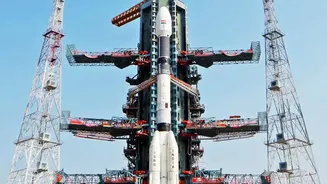
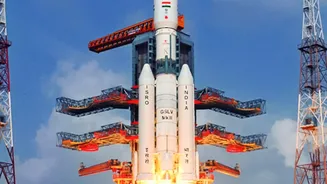
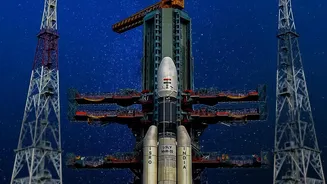
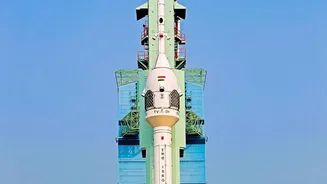
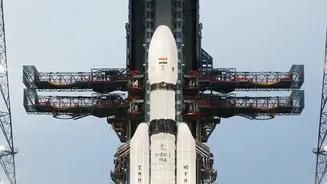
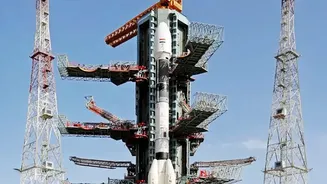
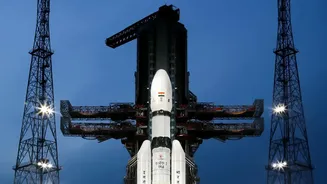
Launching astronauts is fundamentally different from launching satellites. A standard launch pad provides the structural support and propellant lines for a rocket, but a 'human-rated' launch pad is an entirely different beast. The infrastructure must be designed with the ultimate priority in mind: crew safety. This involves creating new systems for astronauts to access the spacecraft, as well as complex, rapid evacuation routes in case of an emergency on the pad. The government recently informed Parliament that the Gaganyaan missions will use the Second Launch Pad (SLP) at Satish Dhawan Space Centre, Sriharikota, which has been undergoing extensive upgrades to meet these stringent human-rating requirements.
What’s Happening at Sriharikota?
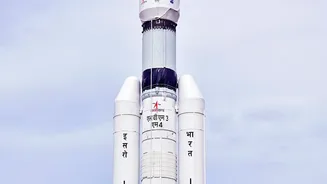
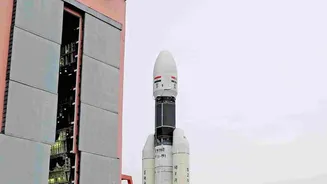
The work at the Second Launch Pad is a clear indicator of the Gaganyaan programme's advanced stage. According to government updates, several critical modifications have been completed. These include changes to the Second Vehicle Assembly Building to accommodate the Human-Rated Launch Vehicle (HLVM3). New infrastructure also includes a special 'Crew Access Arm', which is a movable bridge that allows the astronauts to walk from the launch tower and board the Crew Module at the top of the rocket. These physical structures are part of a suite of new facilities, including a dedicated Gaganyaan Control Centre and an Orbital Module Preparation Facility, that form the ground-based backbone of the mission.
Safety Above All Else
The most critical upgrades are focused on astronaut safety during the perilous moments before and during liftoff. A key component is the Crew Escape System (CES), a rocket-powered system designed to pull the crew module and its occupants safely away from the launch vehicle in case of a catastrophic failure. The launch pad's new infrastructure is built to support this system. Furthermore, new emergency evacuation systems have been installed at the pad itself. These include a 'bubble lift' and a 'zip-line' system, designed to get the crew and ground staff away from the launch area as quickly as possible if an issue arises before launch. These additions, while hopefully never needed, are non-negotiable for ensuring the mission is as safe as humanly possible.
From Concrete and Steel to Countdown
These launch pad preparations are more than just an infrastructure project; they signal that ISRO is entering the final integration and testing phase of the programme. With the ground facilities largely in place, the focus shifts to a series of crucial test flights. The first uncrewed test flight, G1, is targeted for late 2026 and will serve as a full dress rehearsal, validating the performance of the HLVM3 rocket and the orbital module in a real-world flight environment. This will be followed by more uncrewed missions to test all systems, especially the Crew Escape System, before the first crewed flight, which is currently targeted for 2027 or 2028. The completion of the launch pad work is the green light for this critical sequence of test missions to begin, turning years of development into flight-ready hardware.