





A Workout for Your Brain
While dance is clearly a physical activity, its cognitive benefits are profound. Learning and remembering choreography engages multiple parts of your brain at once. This process enhances memory, concentration, and problem-solving skills. Studies have
shown that the combination of movement, rhythm, and spatial awareness can create new neural pathways, boosting neuroplasticity—the brain's ability to reorganise itself. In fact, one landmark study found that dance was the only physical activity significantly linked to a reduced risk of dementia, suggesting its unique mental demands provide a powerful protective effect for the brain as we age.
A Natural Stress Reducer
In a world of constant pressure, finding a healthy escape is crucial. Group dancing acts as a powerful stress reliever on a chemical level. Physical activity, including dance, is known to trigger the release of endorphins, the body's natural mood-boosting chemicals. Simultaneously, it has been shown to lower levels of cortisol, the stress hormone. An excess of cortisol is linked to anxiety and other health issues. By immersing yourself in music and movement, you enter a mindful state that provides an escape from daily worries, leading to a sense of relaxation and improved emotional resilience.
Deeper Social Connection
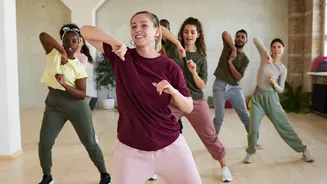
Loneliness has become a significant public health concern, and group dance offers a genuine antidote. Moving in synchrony with others fosters a powerful sense of community and belonging. This shared experience can lead to the release of oxytocin, often called the 'bonding hormone,' which promotes feelings of trust and social connection. Unlike many other social settings, a dance class provides a structured, supportive environment where interaction is a natural part of the activity. This can reduce feelings of isolation, build confidence, and help forge meaningful friendships that extend beyond the dance floor.
Improved Body Awareness and Balance
While you might expect dancing to improve your fitness, a more surprising benefit is the enhancement of your proprioception. Often called our 'sixth sense,' proprioception is your body's awareness of its position in space. Dancing constantly challenges this system, as you learn to control your limbs, maintain posture, and move with precision without looking. This training sharpens your balance, coordination, and agility, which are crucial for preventing falls and injuries, especially as we age. A well-trained proprioceptive system results in more graceful movements and greater physical confidence in all areas of life.
A Boost in Self-Esteem
The journey of learning to dance is a powerful confidence builder. Mastering a new step, completing a routine, or simply feeling more comfortable in your own body provides a tangible sense of accomplishment. Dance classes offer a non-judgmental space to make mistakes, learn, and grow, which teaches resilience. The positive feedback from instructors and peers reinforces this progress. This newfound confidence often translates outside the studio, improving posture and encouraging a more positive self-image in daily life. It’s a creative outlet that allows for self-expression, fostering a stronger sense of identity and self-worth.