




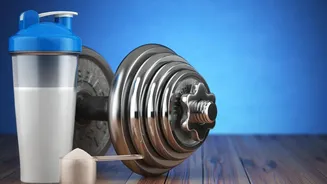

Myth: A Protein Shake Is a Perfect Meal Replacement
This is perhaps the most significant myth and the one that needs immediate clarification. While convenient, a simple scoop of protein powder mixed with water is not a complete meal. A balanced meal provides a complex mix of macronutrients—proteins, carbohydrates,
and fats—along with essential micronutrients like vitamins, minerals, and fibre. Most protein powders are designed specifically to deliver a high dose of protein and often lack sufficient carbs, healthy fats, and the diverse range of vitamins found in whole foods. Formulated meal replacement shakes are different, as they are designed to provide this broader nutritional profile. Using a standard protein shake as a frequent meal replacement can lead to nutrient deficiencies and miss out on the benefits of whole foods, such as improved digestion from fibre.
Fact: You Can Enhance a Shake to Be More Meal-Like
If you are short on time and need a liquid meal, you can fortify your protein shake to make it more nutritionally complete. This involves adding other ingredients to cover the nutritional gaps. For instance, blending your protein powder with milk or a milk alternative, a handful of spinach, a banana or berries for carbohydrates and micronutrients, and a spoonful of almond butter or flax seeds for healthy fats and fibre can transform it. This creates a more substantial, calorie-appropriate, and balanced option that can, in a pinch, stand in for a meal like breakfast. However, the key is the addition of these whole-food components; the protein powder itself remains just one ingredient in a more complex recipe.
Myth: Only Bodybuilders and Elite Athletes Need Protein Powder
This is a persistent stereotype, but protein supplements can be useful for a wide range of people, not just those lifting heavy weights. Protein is crucial for many bodily functions beyond muscle building, including immune response, metabolism, and maintaining healthy skin and hair. Older adults may benefit from supplements to combat age-related muscle loss (sarcopenia). Individuals following vegetarian or vegan diets who struggle to meet their protein needs can also find plant-based powders (like soy, pea, or hemp) very helpful. Furthermore, for busy individuals who may not get enough protein at every meal, a shake can be a convenient way to top up their intake.
Myth: More Protein Automatically Equals More Muscle
Simply consuming vast quantities of protein will not magically result in muscle growth. Muscle building is a two-part process: resistance training creates micro-tears in muscle fibres, and protein provides the amino acids to repair and rebuild them stronger. Without the stimulus of exercise, excess protein is unlikely to build significant muscle. Moreover, your body has a limit on how much protein it can use for muscle synthesis at one time. Studies suggest that consuming more than 30-40 grams of protein in a single sitting offers no additional muscle-building benefit. Excess protein will either be used for energy or, if you're in a calorie surplus, potentially stored as fat.
Myth: All Protein Powders Are Basically the Same
The supplement aisle can be confusing, but the source of protein matters. The most common type, whey, is milk-based and digests quickly, making it popular for post-workout recovery. Casein, also from milk, digests slowly and is often used to provide a sustained release of amino acids. For those who are lactose intolerant or follow a plant-based diet, there are numerous alternatives like soy, pea, rice, and hemp protein, each with a unique amino amino acid profile and texture. Beyond the protein source, it's crucial to read the label for unwanted additives. Some powders contain high amounts of added sugars, artificial sweeteners, or fillers that you may wish to avoid.
Fact: Excessive Protein Can Have Downsides
While protein is essential, it's possible to have too much of a good thing. Consuming extremely high amounts of protein, well beyond the recommended daily allowance, can put a strain on your kidneys, particularly in individuals with pre-existing kidney conditions. Very high protein intake can also sometimes lead to digestive issues like bloating or constipation, especially if your diet lacks fibre. Most adults, even active ones, generally do not need more than 1.2 to 1.7 grams of protein per kilogram of body weight. Getting your protein from a variety of whole food sources ensures you also get other vital nutrients.