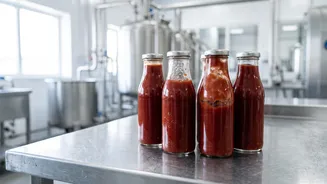








What Happened in Ahmedabad?
In mid-October, health department officials from the Ahmedabad Municipal Corporation (AMC) conducted raids on multiple manufacturing units producing counterfeit tomato sauce. In one raid in the Gota area, authorities seized over 10,600 kg of finished
product and raw materials from a unit named 'Aai Shree Khodiyar Gruh Udyog'. Officials reported the sauce was made without any actual tomatoes. Instead, the recipe allegedly involved a mixture of papaya pulp, potato paste, sugar, and potentially harmful synthetic colours. Another raid in the Behrampura area uncovered 2,000 kg of adulterated sauce sold under the brand name 'Snack Touch Up', which was allegedly made with potato powder and artificial colouring in unhygienic conditions. These products were reportedly being supplied to small fast-food vendors and eateries, meaning consumers of items like sandwiches and burgers may have unknowingly consumed them.
The Anatomy of Fake Sauce
The practice of adulterating tomato sauce is not new and is primarily driven by cost-cutting. Unscrupulous manufacturers often replace the primary ingredient, tomatoes, with cheaper bulking agents. Common substitutes include pumpkin pulp, papaya, and starches like potato powder or arrowroot powder. These ingredients mimic the thickness of real tomato pulp at a fraction of the cost. To achieve the signature red colour without using real tomatoes, producers turn to synthetic food dyes, some of which may be non-food-grade or banned and pose health risks. Substandard acids are also added to create a tangy flavour, while artificial sweeteners and flavouring agents complete the deception. These operations often run in unsanitary conditions, further compromising the safety of the final product.
What the Rules Say
The Food Safety and Standards Authority of India (FSSAI) has specific guidelines for what can be legally called 'Tomato Ketchup' or 'Tomato Sauce'. According to FSSAI regulations, the product must be prepared from tomato juice, puree, or paste. For a product to be labelled 'Tomato Ketchup', it must contain not less than 25% tomato soluble solids. The rules outline permitted preservatives, acidity levels, and require that the product be manufactured in a hygienic environment. The use of undeclared starches, non-permitted colours, or replacement of tomato pulp with other vegetable matter is a clear violation of these standards. The recent raids highlight a gap between regulation and enforcement, especially concerning products supplied to the unorganized food sector.
How Consumers Can Spot a Fake
While identifying adulterated sauce can be difficult, there are a few simple tests and observations consumers can make at home. One of the most common methods is the water test. Add a spoonful of ketchup to a glass of water without stirring. Authentic ketchup, made primarily from tomato solids, will tend to sink and not immediately dissolve or bleed colour. A fake sauce, loaded with artificial colours, will often dissolve faster and quickly turn the water red. Another indicator is texture; if the sauce is excessively thick, sticky, or, conversely, too watery, it may be a sign of added starches or low-quality ingredients. An unusually bright, artificial-looking red colour can also be a red flag. Lastly, trust your taste. A sauce that tastes overly sweet, bitter, or lacks the distinct flavour of tomatoes might not be the real deal.
Making Safer Choices
The most effective way to ensure quality is to buy from reputable brands that adhere to FSSAI standards. Always check the ingredient list on the packaging. The first ingredient should be tomato paste, puree, or juice, not water or starch. Look for the FSSAI license number, which is mandatory for all food business operators in India. Be wary of products with unusually low prices, as this can be an indicator of cost-cutting through adulteration. Pay attention to the 'best before' date and the overall condition of the packaging. When eating out, especially at street food stalls, be mindful of the condiments used. If the sauce looks or tastes suspicious, it is best to avoid it. For those with the time and inclination, making tomato sauce at home from fresh tomatoes offers complete control over the ingredients and quality.