




The Challenge of the Fragile Fruit
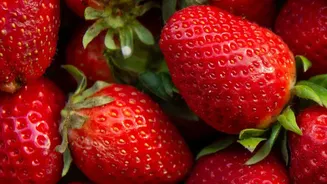
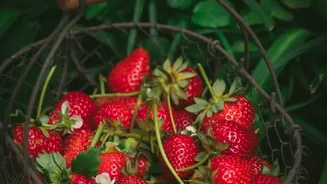
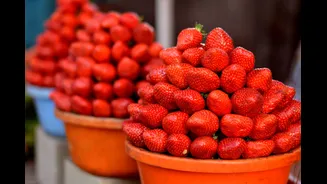
For strawberry lovers and farmers alike, the fruit's charm is matched only by its fragility. With a notoriously short shelf life, strawberries are susceptible to spoilage, fungal decay, and damage from unseasonal rains. This leads to significant post-harvest
losses, financial risks for farmers, and a limited supply for consumers. Much of India's strawberry cultivation, concentrated in regions like Mahabaleshwar, relies on imported plant varieties from the US and Europe. These varieties are not always perfectly suited to local conditions, particularly in the face of heatwaves and unpredictable weather, compounding the risks for growers who invest heavily each season.
Atomic Science to the Rescue
Enter low-dose gamma irradiation. This sounds futuristic, but it's a well-established scientific method called mutation breeding. Scientists at the Bhabha Atomic Research Centre (BARC), in partnership with agricultural universities like Mahatma Phule Krishi Vidyapeeth (MPKV), are using this technique. They expose strawberry plant tissues to controlled, low doses of gamma rays. This isn't about making the fruit radioactive; rather, the energy gently speeds up the natural process of genetic mutation. By creating a wider range of genetic variations, scientists can then select plants that exhibit desirable traits, dramatically accelerating a breeding process that would normally take many years.
Crafting India's Own Strawberry
The primary goal of this research is to develop India's first indigenous, climate-resilient strawberry varieties. Researchers are looking for specific improvements. Top of the list is creating a berry that can natively tolerate Indian heatwaves, a crucial trait for expanding cultivation beyond traditional cool-climate zones. They also aim to match the large fruit size and firm texture of popular foreign varieties, which are key to market acceptance. Another critical objective is extending shelf life. Studies have shown that irradiation can significantly delay fungal decay, allowing strawberries to last longer in storage and transport, potentially reducing waste and ensuring better returns for farmers.
But is Irradiated Food Safe?
The word 'radiation' can be alarming, but leading food safety authorities in India and globally affirm the safety of this technology. The Food Safety and Standards Authority of India (FSSAI) has issued guidance clarifying that irradiated food does not become radioactive, just as a person does not become radioactive after an X-ray. The process kills pests and pathogens without leaving harmful residues. In India, any food treated with irradiation must be labelled with the international 'Radura' symbol, ensuring transparency for consumers. This method is distinct from creating genetically modified organisms (GMOs), as it does not involve introducing genes from other species.
A Boost for Farmers and Consumers
Developing a homegrown strawberry variety would be a game-changer for Indian agriculture. It would reduce the country's dependence on expensive imported mother plants, which currently require quarantine and careful propagation. A hardier, locally adapted plant would lower the risk of crop failure due to weather, a constant threat for farmers. For consumers, this research promises more than just a longer-lasting berry. A stable, domestic supply chain could make strawberries more widely available and potentially more affordable, allowing more people to enjoy this popular fruit. The project is a prime example of how advanced science can provide practical solutions to national agricultural challenges.