


More Than a Single Flight
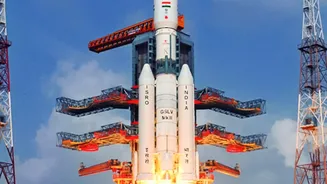
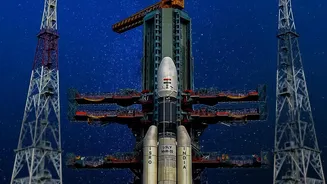
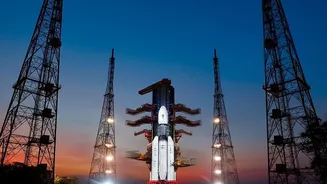
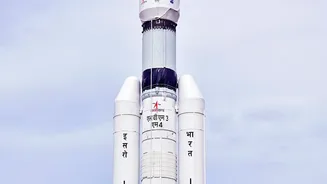
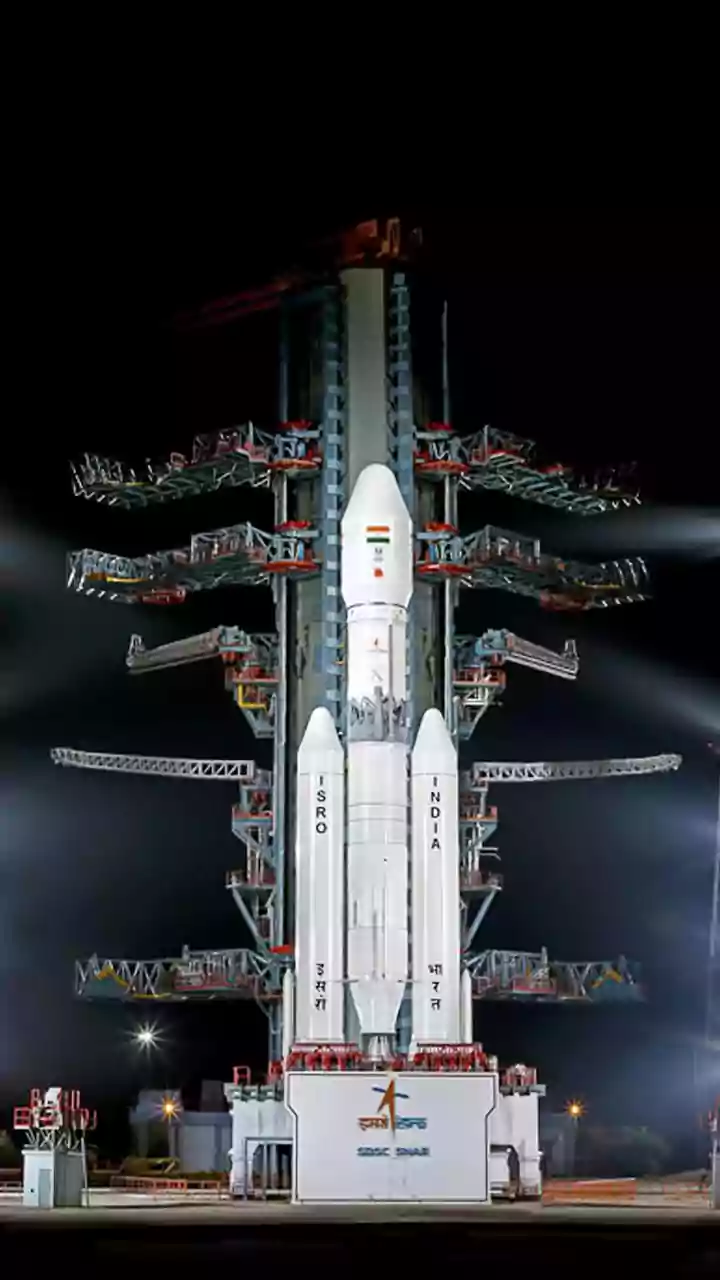
The primary objective of the Gaganyaan programme is to demonstrate the indigenous capability to send a crew of three into a 400 km Low Earth Orbit for a three-day mission and bring them back safely. This makes India only the fourth nation in the world
with independent human spaceflight capability, after Russia, the United States, and China. However, ISRO's vision extends far beyond this initial achievement. Gaganyaan is not an end in itself, but the crucial first chapter in a much larger story. The technologies developed—from the human-rated LVM3 launch vehicle and life support systems to the crew escape protocols—are the essential building blocks for all future crewed missions.
Gateway to a National Space Station
The most significant follow-up to Gaganyaan is the Bharatiya Antariksha Station (BAS), India's own planned space station. The experience and technology gained from Gaganyaan are directly transferable to this far more ambitious project. The government has outlined a vision to have the first module of the BAS launched by 2028, with the full, five-module station expected to be operational by 2035. This orbiting outpost will allow Indian astronauts to conduct long-duration stays of three to six months, shifting the focus from short-term missions to a sustained human presence in space. Technologies like rendezvous and docking, which are being tested in parallel, are critical for assembling and servicing such a station.
A New Era for Scientific Research
A sustained presence in space unlocks a new frontier for scientific research. The Bharatiya Antariksh Station, enabled by Gaganyaan, will serve as a dedicated laboratory for experiments in microgravity. This opens up immense possibilities in fields like materials science, biotechnology, human physiology, and pharmaceuticals. Studying the effects of long-term space travel on the human body provides invaluable data for future deep-space missions and also has applications for health on Earth. The ability to conduct these experiments on a sovereign platform gives India a strategic advantage in science and innovation.
Fueling Economic and Industrial Growth
The Gaganyaan programme and its successors are designed to be national endeavours, fostering a wide-ranging partnership between academia and industry. A significant portion of the mission's components are being sourced from the Indian private sector, boosting industrial capabilities and creating a robust aerospace ecosystem. This focus on indigenous development is expected to generate thousands of employment opportunities in high-technology sectors and create numerous spin-off technologies with applications in fields like medicine and robotics. This creates a self-reinforcing cycle of innovation and economic growth, strengthening India's position in the global space market.
Inspiring a Generation and Looking Ahead
Perhaps one of the most vital, though intangible, benefits of Gaganyaan is its power to inspire. Much like the space programs of other nations, a successful human spaceflight mission can galvanise an entire generation, encouraging youth to pursue careers in science, technology, engineering, and mathematics (STEM). Looking further into the future, the capabilities proven by Gaganyaan and the experience gained from the space station are stepping stones for even grander ambitions, including India's long-term goal of a crewed lunar landing by 2040.