

In our digital world, we're constantly told to protect our information. But two terms, 'password' and 'encryption', are often used interchangeably, causing confusion. They are not the same; in fact, they perform very different, vital jobs.
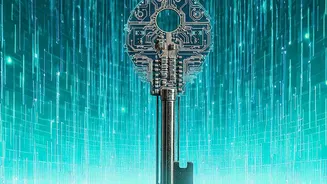
Passwords: The Key to the Front Door
Think of your
email account as a secure room. A password is the key you use to unlock the front door. Its primary job is 'authentication' — proving you are who you say you are. When you enter your password, the email service checks it against its records. If it matches, the door swings open, and you're granted access. This is why having a strong, unique password is the first line of defense; a weak password is like leaving a flimsy lock on your door that's easy for intruders to pick. A strong password should be long (at least 12 characters), complex (mixing upper and lowercase letters, numbers, and symbols), and unique to that account. However, a password only protects the point of access. Once someone is inside the room—or if they find another way in—whatever is inside is exposed.
Encryption: The Safe Inside the Room
If a password is the key to the door, encryption is the locked safe inside the room where you keep your valuable information. Encryption is the process of taking your readable email content (plaintext) and scrambling it into an unreadable, coded format (ciphertext). This is done using complex mathematical algorithms and a 'key'. Anyone who intercepts an encrypted email without the correct key will only see gibberish. Only the intended recipient, who has the corresponding key, can unscramble the message and read its contents. This process ensures confidentiality, protecting the information itself from being read by anyone who is not authorized, even if they manage to get past the initial password protection.
The Core Difference: Access vs. Content
The fundamental difference lies in what each one protects. A password protects access to your account (authentication). Encryption protects the content of your data (confidentiality). One verifies your identity, while the other makes your data unreadable to prying eyes. An attacker who steals your password can log in to your account and read all your unencrypted emails. However, if your emails are encrypted, that same attacker, even after logging in, would be unable to decipher the scrambled messages without the separate decryption key. They are two distinct layers of security.
How They Work Together for Better Security
Passwords and encryption are most powerful when used together. In a secure email setup, you use your password to authenticate yourself and log in to your email service. Then, the service might use encryption to protect your messages in two primary ways. The first is 'encryption in transit', often using Transport Layer Security (TLS). Think of this as an armored truck delivering your mail; the connection between email servers is secure, but the message might be readable once it arrives at the server. The second, more secure method is 'end-to-end encryption' (E2EE). With E2EE, the message is scrambled on your device and only unscrambled on your recipient's device. No one in between, not even your email provider, can read the content. This provides the highest level of privacy for sensitive communications.
Why This Matters for Your Security
Understanding this distinction helps you make smarter security choices. Relying only on a password means that if your account is ever compromised, all your communications are exposed. By using an email service that offers encryption, particularly end-toend encryption for sensitive information, you add a crucial layer of protection. It ensures that even if an unauthorized person gains access to your account or if a message is intercepted on its journey across the internet, the content of your emails remains private and secure. Your password acts as the gatekeeper for your account, while encryption acts as the ultimate safeguard for the messages themselves.