






The Challenge of Festival Fasting
The nine days of Navratri are a period of spiritual discipline, often observed with a 'vrat' or fast. This means abstaining from grains, lentils, and certain spices. While the intention is to cleanse the body and mind, the go-to snacks can often be heavy
and deep-fried. Think sabudana vadas, kuttu ke pakode, and fried potato chips. While delicious, these options can leave you feeling lethargic and bloated, working against the very purpose of a sattvic diet. Finding snacks that are both compliant with fasting rules and genuinely nourishing can feel like a challenge, especially by the fourth or fifth day when food fatigue sets in.
Why Sweet Potato is a Fasting Superfood
This is where the humble shakarkandi, or sweet potato, comes in. It's a root vegetable widely permitted and enjoyed during Navratri fasts across India. Unlike regular potatoes, sweet potatoes are a fantastic source of complex carbohydrates and dietary fibre, which provide sustained energy and keep you feeling full for longer — a huge plus during fasting. They are packed with essential nutrients like vitamins A, C, and B6, and minerals such as potassium. Despite their natural sweetness, their high fibre content helps slow down digestion, preventing the sharp energy spikes and crashes associated with many other high-carb foods.
Anatomy of the Perfect Vrat Chaat
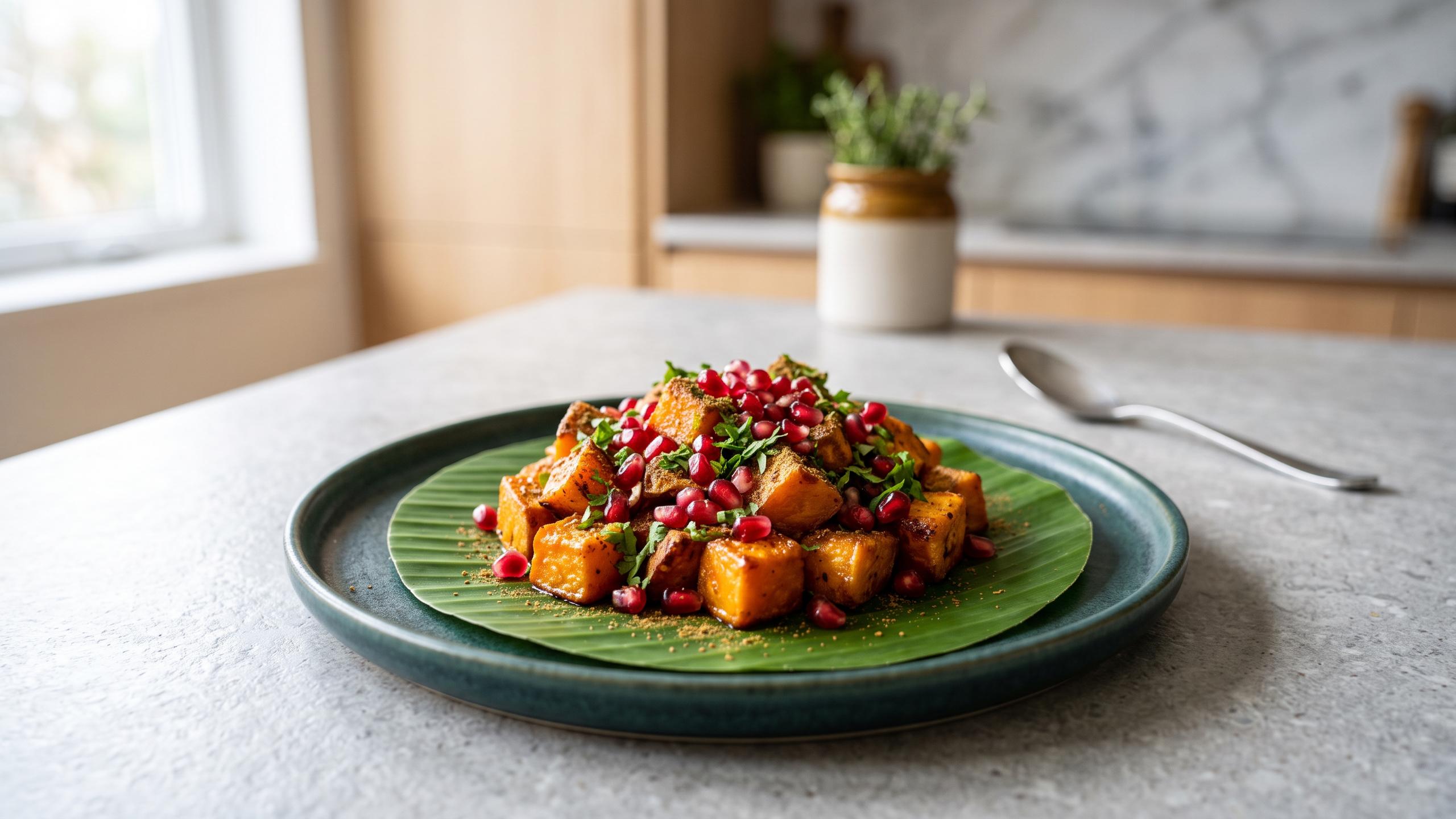
What makes sweet potato chaat so special is its incredible blend of flavours and textures, all achieved with vrat-friendly ingredients. The foundation is the sweet potato itself, which can be boiled or, for a superior smoky flavour and firmer texture, roasted. The magic then happens with the seasonings. Since regular table salt is avoided, sendha namak (rock salt) is used. A mix of roasted cumin powder and black pepper powder provides a gentle warmth and earthy aroma. A generous squeeze of lemon juice adds a zesty, tangy kick that cuts through the sweetness of the potato. Finally, fresh garnishes like chopped coriander leaves, green chillies, and vibrant pomegranate seeds add freshness, a bit of heat, and a delightful crunch.
Easy Step-by-Step Recipe
Making this delicious chaat at home is incredibly simple. First, wash two or three medium-sized sweet potatoes thoroughly. You can boil them in a pressure cooker for two to three whistles or roast them in an oven or air fryer until tender. Once they have cooled down enough to handle, peel and cut them into bite-sized cubes. Place the cubes in a mixing bowl. Sprinkle with sendha namak to taste, about half a teaspoon of roasted cumin powder, and a quarter teaspoon of black pepper powder. Add one or two finely chopped green chillies for spice. Squeeze the juice of half a lemon over the top. Toss everything together gently until the sweet potato cubes are evenly coated. For an extra layer of texture and flavour, you can add two tablespoons of roasted peanuts. Garnish with fresh coriander and pomegranate seeds before serving immediately.
Creative Twists and Variations
The beauty of this chaat lies in its versatility. For a creamier, more substantial version, you can top the spiced sweet potato cubes with a dollop of whisked yoghurt (dahi). Some recipes even call for adding both green mint-coriander chutney and tangy tamarind chutney, as long as they are prepared with vrat-compliant ingredients. For added crunch, consider adding roasted makhana (fox nuts) alongside the peanuts. Another popular technique is to pan-fry the boiled sweet potato cubes in a little ghee until they are crispy and golden brown on the outside before tossing them with the spices. This adds a wonderful textural contrast between the crispy exterior and the soft interior.