



An Unexpected Cloud Factory
Scientists have long known that clouds play a dual role in the Arctic, either reflecting sunlight back to space (a cooling effect) or trapping heat near the surface (a warming effect). What has remained a mystery is exactly how these clouds form in the pristine
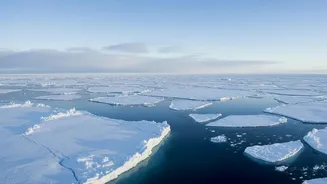
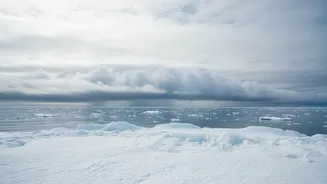
Arctic air, which lacks the dust and pollution particles that typically seed clouds elsewhere. A new study from an international team led by the University of Birmingham provides a compelling answer. Researchers have discovered that the boundary where sea ice meets the open ocean acts as a surprisingly potent factory for cloud-forming particles.
The Life-and-Sunlight Recipe
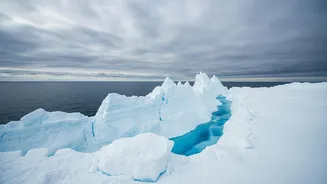
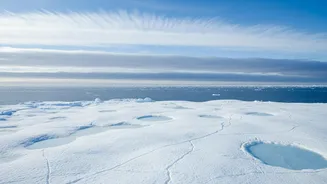
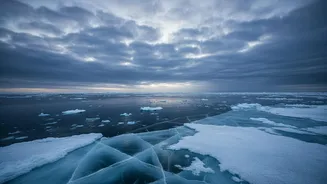
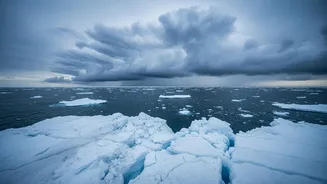
The process is a fascinating intersection of biology and chemistry. As the sea ice melts, it exposes a highly productive zone known as the marginal ice edge. Marine life, such as algae, in this zone releases a cocktail of chemical compounds into the water, including iodine and sulphur. When these compounds are released into the air through sea spray and other processes, sunlight triggers a chemical reaction. This reaction creates a dramatic surge in new atmospheric particles, which act as seeds, or cloud condensation nuclei, around which water vapour can condense to form cloud droplets. The study observed the concentration of these particles increasing by as much as fifty-fold in a single day under sunny conditions.
A Complex Climate Feedback Loop
This discovery highlights a complex feedback loop that is not currently accounted for in climate models. On one hand, more melting ice exposes more of this productive ocean edge, which in turn could create more clouds. Over the dark, open ocean, these clouds would be highly reflective, bouncing sunlight back into space and creating a localized cooling effect. However, the overall picture is complicated. Scientists have also found that in other situations, such as over large openings in the ice called polynyas, clouds can trap heat and slow down the refreezing of sea ice. The net effect—whether this process ultimately slows or accelerates Arctic warming—is a critical question for future research.
Why the Arctic Matters for India
What happens in the Arctic does not stay in the Arctic. The region acts as the planet's refrigerator, and its rapid warming—at a rate three times the global average—has profound consequences thousands of kilometres away. Multiple studies from institutions like India's National Centre for Polar and Ocean Research (NCPOR) have established a direct link between melting Arctic sea ice and India's monsoon. Research shows that reduced sea ice in the early summer can influence the intensity and location of rainfall during the latter half of the monsoon season in August and September. Specifically, declining Arctic sea ice has been linked to a westward shift in monsoon rainfall, bringing more intense rain to northwestern India. These changes have significant implications for agriculture, water management, and flood risk across the subcontinent.
Improving Our Climate Future
The new findings on cloud particle formation are a vital step toward refining global climate models. By not including this newly understood chemical pathway, current models may be missing a key piece of the puzzle that governs Arctic climate dynamics. Understanding these teleconnections, or long-distance climate links, is crucial for better predicting how changes in the polar regions will affect India's weather patterns, sea levels, and overall climate stability. The more accurately we can model these processes, the better prepared we can be for the cascading effects of climate change.