



It Thrives on Neglect
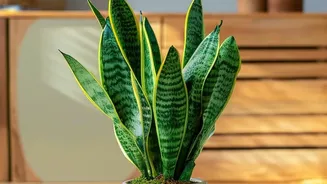
Perhaps the biggest reason for the snake plant's popularity is that it's incredibly easy to care for. Officially known as Dracaena trifasciata (and formerly as Sansevieria), this hardy plant is a succulent, meaning it stores water in its leaves. This
makes it extremely drought-tolerant. You can forget to water it for weeks, and it will likely be just fine; in fact, overwatering is one of the few ways to actually harm it. It needs watering only every 2-6 weeks, when the soil is completely dry. This forgiving nature makes it the perfect plant for beginners, frequent travellers, or anyone who claims not to have a 'green thumb'.
A Flexible Friend of Light
Finding the right light for a houseplant can be tricky, but snake plants are exceptionally adaptable. While they do best in bright, indirect sunlight, they are famous for their ability to tolerate low-light conditions. This versatility means you can place them in a bright living room, a darker hallway, or an office with fluorescent lighting, and they will manage. In lower light, their growth may slow down, but they remain a steady, green presence. This flexibility allows them to fit into virtually any room, regardless of window placement.
A Natural Air Purifier
Beyond its good looks, the snake plant is known for its air-purifying qualities. A famous 1989 NASA study identified it as a plant capable of removing common household toxins like formaldehyde, benzene, and xylene from the air. What makes it unique is its ability to perform a type of photosynthesis that allows it to convert carbon dioxide into oxygen at night. This quality has made it a popular choice for bedrooms, as it helps to freshen the air while you sleep.
Striking and Sculptural Style
The snake plant is as much a piece of decor as it is a living thing. Its leaves are stiff, upright, and sword-like, creating a strong architectural silhouette that complements many interior design styles, from minimalist and modern to bohemian and traditional. The clean, vertical lines can add a sense of height to a room and serve as a dramatic focal point. Whether grouped together or standing alone, its bold form makes a stylish statement without creating clutter.
A Surprising Amount of Variety
While the classic snake plant with yellow-edged leaves ('Laurentii') is the most recognizable, there are over 70 different varieties. These come in a range of sizes, shapes, and colours. Some, like the 'Moonshine', have pale, silvery-green leaves. Others, like the 'Cylindrica', have round, spear-like leaves that you can braid. There are also compact, bird's nest varieties like 'Hahnii' that stay small and are perfect for desks and shelves. This wide selection means you can find a snake plant to fit almost any space and aesthetic preference.
Resilience and Symbolism
This plant is built to last. It's resilient against pests and diseases and, as mentioned, can handle a fair bit of neglect. This durability has also given it a symbolic meaning. In some cultures and in Feng Shui, the snake plant is associated with positive energy, protection, and good fortune. Its tough, upward-growing leaves are seen as a symbol of strength and resilience. While you might just be buying it for its looks, it’s a nice thought that it’s also considered a bringer of good vibes.