









Meet the Little Blue Penguin
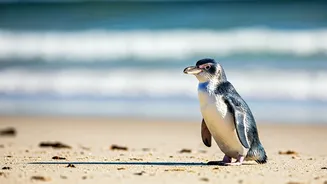
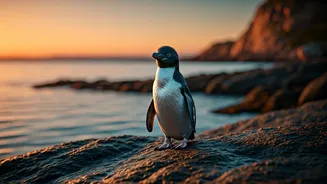
Known officially as Eudyptula minor, which translates to "good little diver," this creature goes by many names. In Australia, it's often called the Fairy Penguin, while in New Zealand, it is known by its Māori name, kororā. Standing at just 25-35 cm tall
and weighing about one kilogram, it officially holds the title of the world's smallest penguin. They are native to the coastlines of southern Australia and New Zealand, swapping icy landscapes for sandy shores, rocky outcrops, and even caves.
A Unique Shade of Blue
One of its most striking features is its plumage. Instead of the typical black and white, the Little Blue Penguin sports a coat of indigo-blue feathers on its head and back. This isn't just for show; the unique colour provides excellent camouflage from predators in the ocean. When viewed from above, their blue backs blend with the sea, and their white bellies blend with the bright surface when seen from below, a clever defence mechanism known as countershading.
So What Makes Them Fierce?
The "fierce" label isn't about aggression towards humans, but rather their remarkable resilience and surprisingly bold behaviour for such a small bird. Little Blue Penguins are incredibly vocal, especially at night in their colonies. Their communication includes everything from grunts and brays to loud, trumpet-like calls used to attract mates and defend their territory. They exhibit over a dozen different aggressive displays when intruders approach their nests, which can involve spreading their flippers, staring down the threat, and letting out a loud warning. This territorial nature is crucial for protecting their burrows and raising their young.
A Day in the Life
Little Blue Penguins are strictly nocturnal on land, spending their days foraging at sea and returning to their colonies under the cover of darkness. They are impressive swimmers, using their flipper-like wings to propel themselves through the water at speeds of up to 6 km/hr. Their diet consists mainly of small fish like anchovies and sardines, as well as squid and crustaceans. In some popular viewing locations, their nightly return to shore has become a famous "penguin parade," as they waddle in groups from the water to their burrows.
Dedicated Parents and Partners
These penguins are known for forming monogamous pairs that often last for life, returning to the same nest year after year. Both the male and female share the duties of incubating the one or two eggs they lay and raising the chicks. For the first few weeks, one parent always stays with the chicks while the other forages for food. After about three weeks, the chicks are old enough for both parents to head to sea to gather enough food for their growing family.
Tough Bird, Modern Threats
While the global population is considered stable, many local colonies are in decline and listed as 'At Risk.' The biggest threats are not from natural predators at sea, but from those on land. Introduced predators like dogs, cats, and foxes are a major danger. Coastal development also leads to habitat loss, and they face dangers from becoming entangled in fishing nets, oil spills, and being hit by cars as they cross roads to reach their nests.