






A Discovery That Forced a Reckoning
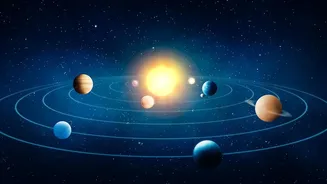
The conversation about Pluto's status didn't begin in 2006. It started brewing in the 1990s as astronomers discovered numerous icy bodies in the Kuiper Belt, a region beyond Neptune that Pluto also occupies. The tipping point came in 2005 with the discovery
of Eris, a distant object that appeared to be the same size as, or even larger than, Pluto. This created a dilemma: if Pluto was the ninth planet, was Eris the tenth? What about the other large bodies being found? The informal, historical definition of a planet was no longer sufficient. Science needed clear, consistent rules.
The Three Rules of Planethood
In August 2006, the International Astronomical Union (IAU), the organisation responsible for cosmic naming conventions, met in Prague to settle the debate. After intense discussion, they established three criteria that a celestial body must meet to be officially classified as a planet in our solar system. First, it must orbit the Sun. Second, it must have sufficient mass for its own gravity to pull it into a nearly round shape (a state known as hydrostatic equilibrium). Third, it must have "cleared the neighbourhood" around its orbit.
Why Pluto Was Reclassified
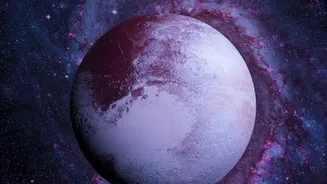
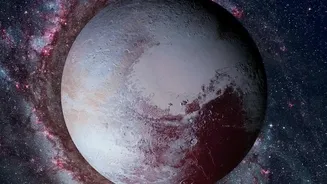
Pluto successfully meets the first two criteria. It orbits the Sun, and it is massive enough to be spherical. However, it fails the third and final test. "Clearing the neighbourhood" means the object must be the dominant gravitational force in its orbital path, having swept up or flung away other large objects. Pluto has not done this. It shares its orbital space with many other Kuiper Belt objects, meaning its neighbourhood is far from clear. Because it only met two of the three criteria, the IAU reclassified Pluto as the prototype of a new category: the "dwarf planet."
The Debate and the Public Reaction
The decision was, and remains, controversial. Some prominent scientists, including Alan Stern, the principal investigator for NASA's New Horizons mission, strongly disagree with the IAU's definition. Critics argue the "clearing the neighborhood" rule is ambiguous and that no planet, including Earth, has a perfectly clear orbit. The public reaction was one of surprise and nostalgia, with many feeling a sentimental attachment to the ninth planet they grew up with. The word "plutoed," meaning to devalue or demote something, was even named the American Dialect Society's Word of the Year in 2006.
A New Appreciation for a Complex World
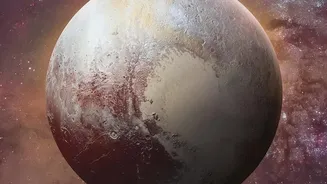
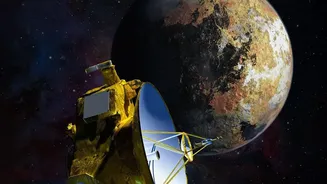
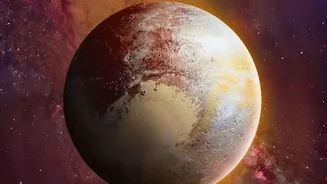
While the debate over its label continues, Pluto the world has become more fascinating than ever. In 2015, the New Horizons spacecraft flew past Pluto, revealing a stunningly complex and active world. Instead of a simple, frozen rock, we saw vast nitrogen-ice glaciers, towering water-ice mountains, a potential subsurface ocean, and a thin blue atmosphere. These discoveries have solidified Pluto's importance in planetary science. The reclassification wasn't an insult; it was a reflection of our growing understanding of the solar system's diversity. It showed us that there are many kinds of compelling worlds out there, regardless of the titles we give them.