




The Galaxy's Ghosts
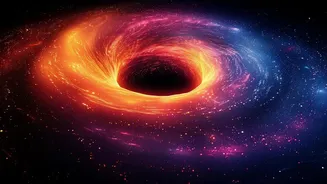
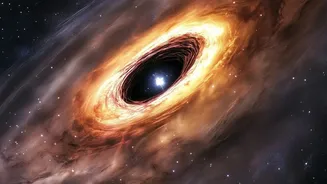
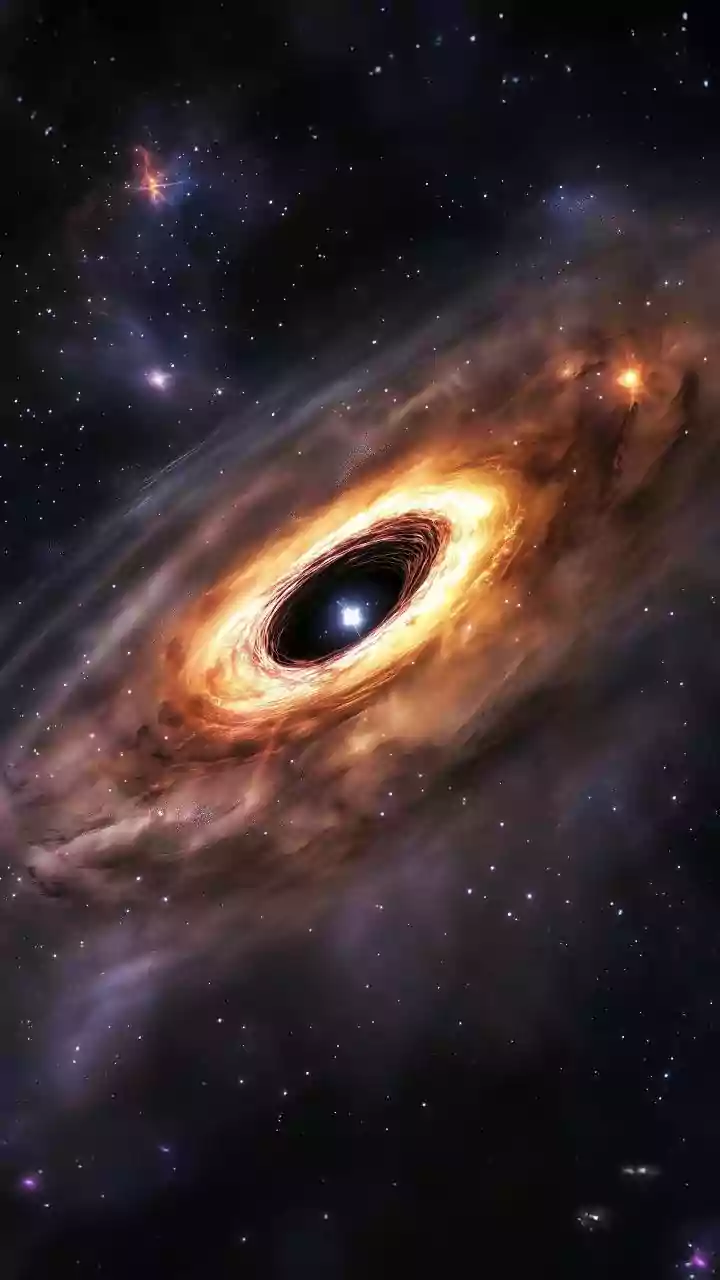
When a star more than 20 times the mass of our sun dies, it can collapse under its own gravity into an object so dense that nothing, not even light, can escape. This is a stellar-mass black hole. While astronomers have found dozens of them, these are
typically in binary systems where the black hole is 'feeding' on a companion star, a messy process that releases detectable X-rays. The vast majority, however, are thought to be isolated and invisible, roaming the galaxy like cosmic ghosts. Because they don't emit any light, they can't be seen directly, which makes finding them incredibly difficult. To hunt these dark objects, astronomers need a different kind of clue—one written in the light of other stars.
A Trick of Gravity
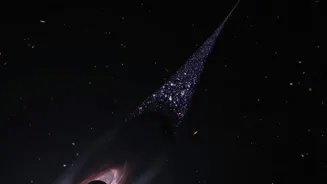
The key to finding these invisible objects is a phenomenon called gravitational microlensing. According to Einstein's theory of general relativity, massive objects warp the fabric of spacetime around them. Think of it like a bowling ball placed on a trampoline. Light travels in a straight line, but if it passes through this warped spacetime, its path is bent. If a wandering black hole passes almost directly in front of a distant star from our point of view, its intense gravity acts like a natural magnifying glass. It bends and focuses the light from the background star, causing it to appear to brighten temporarily and then fade as the black hole moves on. This change in brightness provides a telltale signature of the massive, dark object that passed by.
Meet the Black Hole Hunters
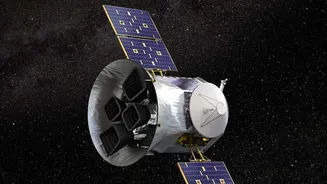
This clever detection method is being put to use by projects like 'Black Hole Hunters', a citizen science initiative that enlists volunteers to search for these lensing events. Hosted on the Zooniverse platform, the project asks the public to analyze graphs of stellar brightness from NASA's Transiting Exoplanet Survey Satellite (TESS). By sifting through millions of stars, volunteers help astronomers spot the characteristic brightening pattern that computers might miss, flagging potential black hole candidates for closer study. The first unambiguous discovery of a rogue black hole using this technique was confirmed in 2022, proving the method works and opening a new window onto these hidden objects.
A Telescope for the Hunt
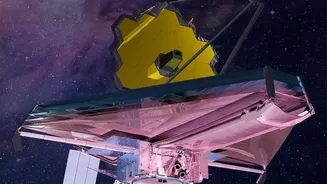
The search is about to get a major upgrade. NASA's Nancy Grace Roman Space Telescope, set to launch by 2027, will be a revolutionary tool for black hole hunters. One of its primary missions, the Galactic Bulge Time Domain Survey, will monitor hundreds of millions of stars toward the dense center of our galaxy, providing an unprecedented opportunity to catch microlensing events. Roman's precision and wide field of view are expected to find hundreds of isolated black holes, dramatically increasing our known population. The duration of a lensing event helps determine the mass of the object; longer events point to more massive lenses like black holes, while shorter ones might indicate a rogue planet or a small star. Roman's survey will be sensitive enough to distinguish between these objects and build the first real census of the galaxy's dark inhabitants.