







A Dream and a LinkedIn Message
In 2018, the Indian space industry was the domain of the government. For a private company to dream of designing, building, and launching its own rockets was considered science fiction. Yet, two former ISRO scientists, Pawan Kumar Chandana and Naga Bharath
Daka, decided to take that leap. After seeing a draft of a bill suggesting the sector might open up, they resigned from their stable government jobs to found Skyroot Aerospace in Hyderabad. Their ambition was monumental, but their resources were not. They faced a significant hurdle: convincing investors to fund a high-risk, capital-intensive venture in a field that wasn't even fully regulated for private players. In a move that would prove pivotal, Chandana sent a cold message on LinkedIn to seasoned entrepreneur Mukesh Bansal, founder of Myntra and Cult.fit. The message outlined their audacious goal, and Bansal, intrigued, agreed to meet them that very weekend.
The First Cheque is Belief
Mukesh Bansal was not a typical deep-tech investor; his expertise was in consumer internet and fitness. However, he saw the passion and vision in Skyroot's founders. At a time when most venture capitalists were wary of long-gestation hardware projects, Bansal made a contrarian bet. In 2018, he became Skyroot's first angel investor, writing a cheque for around ₹10-12 crore. This was nearly two years before the Indian government formally opened the space sector in 2020 and institutional funding began to flow. For Skyroot, this initial investment was more than just capital. As co-founder Pawan Kumar Chandana later noted, "The first cheque is never just capital. It is belief." Bansal’s support was a powerful validation of their mission when few others were willing to take the risk. He provided the crucial runway the company needed to survive its earliest, most vulnerable days.
More Than Just Money
Bansal’s involvement extended far beyond his initial investment. He continued to support the company through multiple funding rounds, including a critical infusion of ₹2 crore during the COVID-19 pandemic that helped Skyroot retain its engineering team when money was tight. He became a mentor, providing strategic guidance but giving the founders the autonomy to execute their vision. This model of 'smart money'—combining capital with mentorship and industry access—was vital. Bansal’s vote of confidence helped attract other investors once the regulatory landscape cleared. By the time Skyroot launched its first rocket, it had raised significant capital from a wide range of backers, including Singapore's sovereign wealth fund GIC, but Bansal’s initial, solitary bet laid the groundwork for all that followed.
From Blueprint to Blast-Off
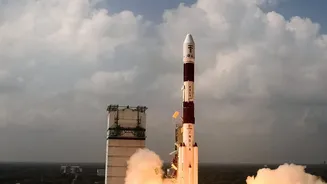
With secure funding and strategic support, Skyroot’s engineering work accelerated. The company focused on innovative technologies like 3D printing and carbon-composite structures to build its Vikram series of rockets, named after Dr. Vikram Sarabhai, the father of India's space program. The first major milestone came in November 2022 with the successful suborbital launch of Vikram-S. This mission, named Prarambh ('The Beginning'), marked India’s first-ever rocket launch by a private company and reached an altitude of 89.5 km. This success was a powerful proof of concept, demonstrating Skyroot's technical capabilities. The journey culminated on July 18, 2026, with the launch of Vikram-1. This was a far more complex, multi-stage orbital mission that successfully deployed its payloads, making India only the third country, after the US and China, with a private company capable of orbital flight.
A 60x Return and a New Era
For Mukesh Bansal, the high-risk bet paid off spectacularly. His initial investment of approximately ₹12 crore has reportedly yielded a return of nearly 60 times, with his remaining stake and partial exits valued at over ₹700 crore. But the true return is measured in more than just financials. The success of Skyroot, which became India's first space-tech unicorn in 2026, has ignited the country's private space ecosystem. It has proven that patient capital invested in ambitious, deep-tech ventures can generate immense value and build strategic national capabilities. The partnership between Bansal and Skyroot serves as a powerful case study for entrepreneurs and investors alike, showcasing how early, courageous support can help a daring idea move from a design on paper to a historic launch that reaches for the stars.