




From Gridlock to Gondolas
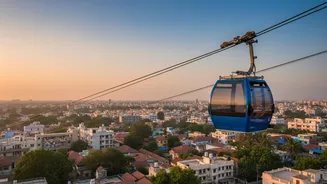
In Varanasi, one of the world's oldest and most congested cities, a new chapter in urban mobility is about to begin. The city is set to launch India's first urban ropeway system designed for public transport, not just tourism. This isn't a metro or a bus,
but a network of aerial gondolas designed to ferry commuters over the city's notoriously narrow and crowded streets. The project promises to be a game-changer, connecting the busy Varanasi Cantonment railway station to Godowlia Chowk, a key hub near the Kashi Vishwanath Temple. The goal is to solve a problem that road widening couldn't: providing fast, efficient transport without demolishing the city's ancient heritage.
Slashing a 60-Minute Commute to 16
For the daily commuter, pilgrim, and tourist, the primary benefit is time. A journey that currently takes 45 minutes to an hour by road during peak traffic will be reduced to just 15 to 16 minutes. The system, spanning approximately 3.8 kilometres, will feature five stations. With around 150 modern, 10-seater cabins running, the ropeway is expected to handle a massive capacity of nearly one lakh passengers daily. Operating 16 hours a day, it offers a reliable and climate-controlled alternative to the stressful and unpredictable journey on the roads below. This aerial route completely bypasses traffic bottlenecks, promising a significant reduction in congestion on one of the city's most critical corridors.
An Eco-Friendly Blueprint for Other Cities?
Beyond convenience, the Varanasi ropeway is being hailed as a model for sustainable urban development. As an electric-powered system, it generates significantly lower emissions than conventional road transport, contributing to cleaner air. Its construction has a smaller physical footprint than a metro line, preserving the urban landscape and requiring minimal land acquisition. The project is being implemented by a subsidiary of the National Highways Authority of India (NHAI), with ropeway technology provided by a renowned Swiss firm. Its success could provide a template for other congested Indian cities, especially those with challenging terrain or dense heritage zones where traditional infrastructure projects are difficult to execute.
What’s Next on the Horizon?
After a construction phase that began in early 2023, the project has been undergoing extensive trials since late 2025 to ensure it meets global safety standards. With construction and testing now in their final stages, officials are eyeing a full public launch in mid-2026. The total project cost is estimated at around ₹800 crore, which importantly includes operations and maintenance for 15 years, ensuring long-term viability. As Varanasi prepares to take to the skies, other Indian cities are also exploring advanced air mobility solutions, from similar ropeway projects under the national 'Parvatmala' scheme to next-generation electric air taxis (eVTOLs).