


The Allure of the Algorithm
Hollywood's love affair with technology is nothing new, but its current obsession with Artificial Intelligence is a different beast. For studio executives, the promise of generative AI is dazzlingly simple: speed and savings. In an era of billion-dollar
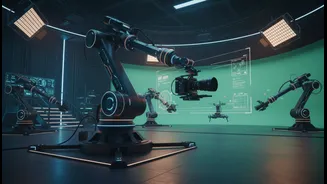
streaming content wars and skyrocketing production costs, the idea of using AI to generate scripts, create visual effects, or even edit entire sequences is incredibly tempting. AI tools can streamline workflows, automate laborious tasks, and analyse data to predict what audiences want to see next, potentially de-risking massive financial investments. Some new ventures, like Staircase Studios AI, even claim they can produce near-studio-quality films for a fraction of the traditional cost, aiming to pump out dozens of AI-assisted projects. This relentless push towards automation is framed as innovation—a way to make more content, more efficiently than ever before.
The Ghost in the Machine
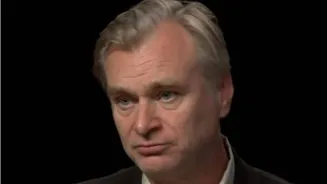
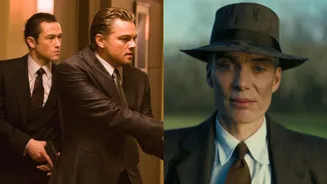
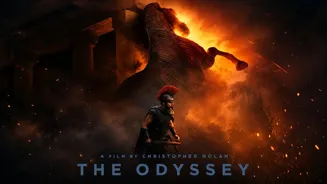
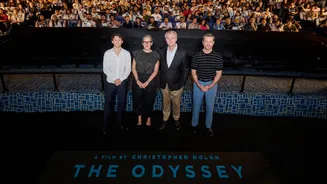
This is where the director's warning comes in. For many of cinema's most respected voices, this efficiency comes at an unacceptable cost: the human soul of filmmaking. Esteemed directors like Christopher Nolan have become prominent critics, arguing that the idea of AI replacing human creativity is "a nonsense." He and others fear a future of homogenous, formulaic content—what's been dubbed "AI slop" by younger generations who can spot its soullessness from a mile away. The concern is that filmmaking thrives on happy accidents, unique perspectives, and the messy, emotional input of human artists. From the writer's nuanced script to the actor's lived-in performance and the director's singular vision, a movie is the sum of countless, deeply human choices. An algorithm, by its nature, "regresses to the mean," averaging its training data, which critics like Ben Affleck argue leads to inherently mediocre creative work.
Art vs. Automation in Action
This isn't a far-off futuristic debate; it's happening now. The 2023 Hollywood strikes were a direct response to studios' plans for AI, with writers and actors fighting for, and winning, crucial protections against being replaced by digital replicas or AI-generated scripts. The Writers Guild of America (WGA) established that AI cannot be credited as a writer and that studios must disclose when AI-generated material is used. Yet, the push continues. Even A24, a studio celebrated for championing independent, director-led films, sparked controversy with a research partnership with Google to develop AI tools, prompting fears from its own stable of young, anti-AI directors like Kane Parsons. These skirmishes reveal the frontline of a larger battle over the definition of creative work.
A Tool, Not a Creator?
Proponents, including some creators, argue that AI can be just another tool in the filmmaker's kit, much like CGI or digital cameras before it. The legendary Martin Scorsese, while a champion of film as art, has expressed interest in how technology can evolve storytelling, suggesting we must be open to how the medium can change. The argument is that AI can augment, not replace, human creativity. It can be used for pre-visualisation, helping to design sets and costumes, or handling tedious VFX tasks, freeing up filmmakers to focus on the bigger creative picture. Some startups are even positioning their platforms as a way to produce ambitious, "unfilmable" scripts that were previously too expensive or complex. The key difference, they argue, is keeping the human artist in control, using AI to serve the vision, not dictate it.