



A New Digital Moon Map
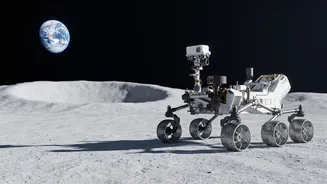
NASA and IBM have jointly launched the NASA-IBM Lunar Foundation Model, a powerful artificial intelligence system designed to accelerate our understanding of the Moon. This isn't just another piece of software; it's what's known as a "foundation model,"
a versatile AI that has been pre-trained on a massive amount of data. In this case, the model has digested decades of scientific information, primarily from NASA's Lunar Reconnaissance Orbiter (LRO), which has amassed more data than all other NASA planetary missions combined. It also incorporates data from other missions, including those from Japan's space agency, JAXA. The goal is to turn petabytes of raw data into actionable insights, making it easier for scientists to explore and understand the Moon's surface without having to build specialised algorithms from scratch for every single task.
From Data Overload to Actionable Insight
For years, scientists have had to manually sift through countless images and datasets from different instruments to piece together a picture of the Moon. The new AI model changes that. It can rapidly analyze vast quantities of information to spot patterns and features that are difficult to see in isolation. NASA has identified several key tasks for the model, including mapping craters to find safe landing zones for future missions, identifying potential deposits of water ice in shadowed polar regions, and locating unusual volcanic features known as irregular mare patches. Finding water ice is particularly critical for establishing a long-term human presence, as it could provide drinking water, breathable oxygen, and rocket fuel. The model has already proven to be more efficient than previous methods, outperforming other models in identifying key features by a significant margin.
The Power of Open Source in Space
Crucially, NASA and IBM have made the Lunar Foundation Model open-source, available on the popular AI platform Hugging Face. This decision is a strategic move to foster global collaboration. Instead of keeping the powerful tool proprietary, they are inviting the entire scientific community—from academic institutions to international space agencies—to use and even improve upon the model. This open approach aligns with a broader strategy for AI in science, democratizing access to cutting-edge tools and accelerating the pace of discovery. It allows any researcher to adapt the model for their specific questions about the Moon with relatively little effort and computing cost. This collaborative spirit is seen as essential for tackling the complex challenges of the Artemis program, which aims to establish a sustainable human presence on the Moon.
Fueling the Artemis Generation
This lunar AI is part of a growing family of foundation models developed through the NASA-IBM partnership. The collaboration has previously produced the "Prithvi" models (from the Sanskrit word for Earth), which are trained on Earth observation data to monitor things like floods, wildfires, and crop yields. By extending this concept to the Moon, NASA is building a digital toolkit for the Artemis generation of astronauts and mission planners. The ability to quickly create detailed, high-resolution maps of resources and hazards is fundamental to planning surface operations and ensuring astronaut safety. As Kevin Murphy, NASA's Chief Science Data Officer, stated, collecting data is only part of the job; making it easier for scientists to use is where AI provides a real opportunity for new discoveries.