



A Sweet Signal From the Stars
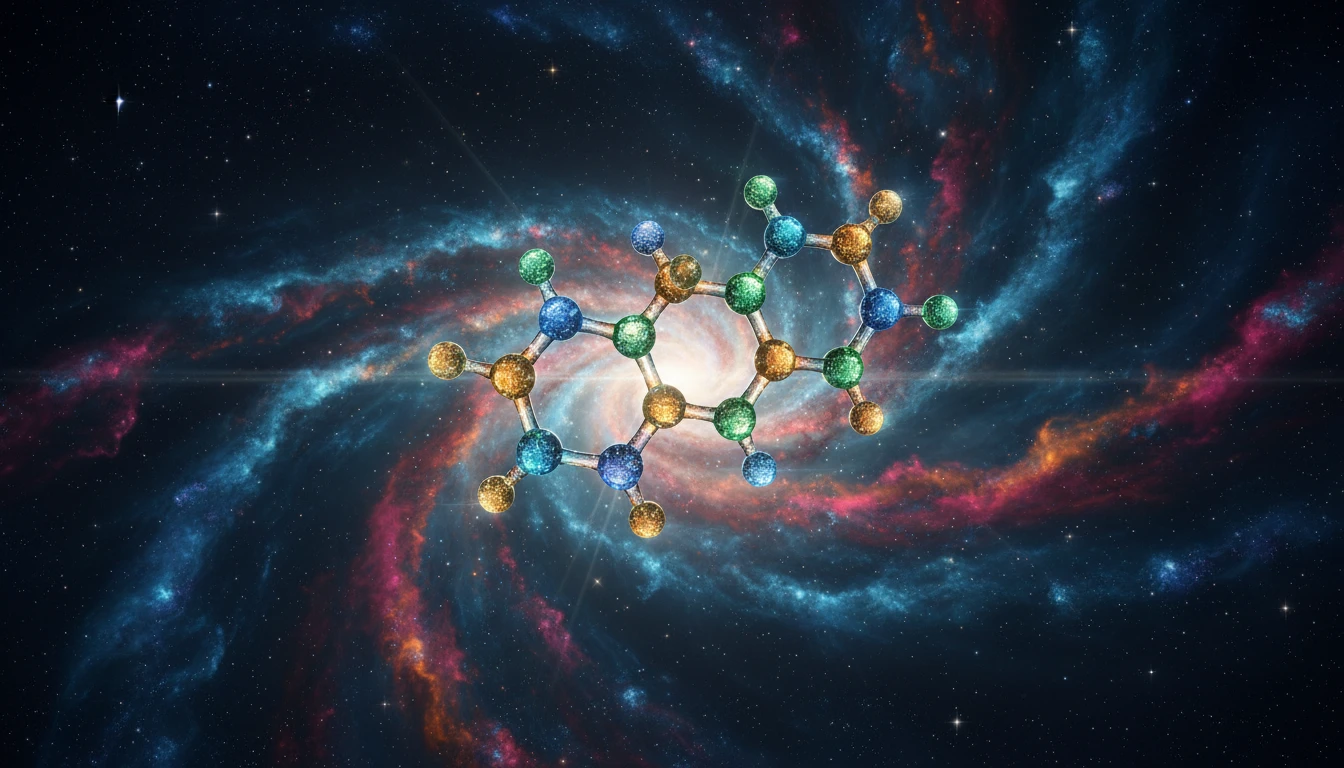
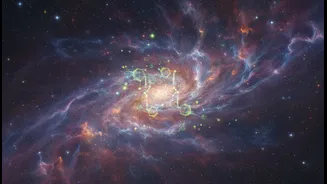
An international team of astronomers has announced the first-ever detection of a true sugar, called erythrulose, floating in a vast cloud of gas and dust near the center of the Milky Way. Using powerful radio telescopes in Spain, researchers identified
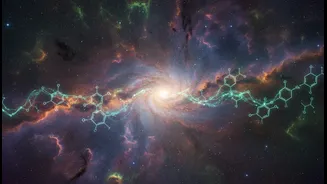
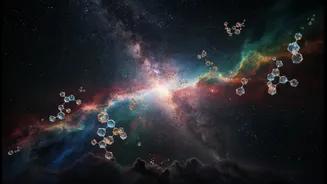
the distinct chemical fingerprint of this four-carbon sugar in a molecular cloud known as G+0.693-0.027, located roughly 27,000 light-years from Earth. These molecular clouds are frigid, dense stellar nurseries where stars and planets are born. While scientists have found hundreds of complex organic molecules in space before, this is the first time a true sugar has been identified in the interstellar medium, the raw material from which solar systems are made.
What Exactly is Erythrulose?
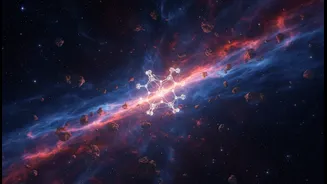
Erythrulose isn't the kind of sugar you'd put in your morning coffee. It's a four-carbon monosaccharide, a simple sugar that on Earth is found in things like red raspberries and is used in sunless tanning products. But its significance in space is far greater. Sugars are fundamental to life as we know it; they are used for energy and form the structural backbone of our genetic material, RNA and DNA. Erythrulose itself is not a direct component of RNA or DNA, but it is a close chemical relative and a potential precursor. In water, erythrulose can transform into other sugars, including threose, which is linked to a hypothetical ancestor of RNA. This makes it a key intermediate player in the story of prebiotic chemistry.
A Boost for the 'RNA World' Hypothesis
This discovery provides a significant boost to a leading theory on the origin of life known as the “RNA World” hypothesis. This theory proposes that before the evolution of DNA and complex proteins, life was based on simpler RNA molecules that could both store genetic information and act as enzymes to catalyze chemical reactions. A major challenge for this hypothesis has always been explaining where the building blocks for RNA, particularly the ribose sugar, came from on early Earth. Lab experiments have struggled to create these sugars in the messy, “prebiotic soup” conditions of our young planet. Finding a sugar like erythrulose, which can lead to the formation of RNA components, in space suggests an alternative source.
A Cosmic Delivery Service
The presence of erythrulose in an interstellar cloud suggests these vital ingredients for life can form long before planets even exist. This strengthens the idea that the raw materials for life weren't necessarily made on Earth but were instead delivered from space. Scientists have previously found sugars like glucose and ribose in meteorites and samples from asteroids, such as Bennu. Those findings hinted that space rocks could have been a delivery service. The discovery of erythrulose in the interstellar medium pushes the origin of these ingredients even further back in time, to the very clouds from which asteroids, comets, and planets coalesce. It suggests that the universe may be widely seeded with the potential for life's chemistry.
The Search Continues
This discovery is not the final answer in the search for life's origins, but a crucial and exciting new chapter. Researchers are thrilled because it validates their search methods and opens the door to finding even more complex molecules. The ultimate prize would be the detection of ribose—the five-carbon sugar that forms the backbone of RNA—in interstellar space. The detection of erythrulose proves that complex chemistry is happening in the dark, cold corners of our galaxy, creating the fundamental ingredients needed for biology. The hunt is now on to see just how far this cosmic bakery goes and what other life-giving molecules are waiting to be found among the stars.