


Embrace the Energy of Afrobeats
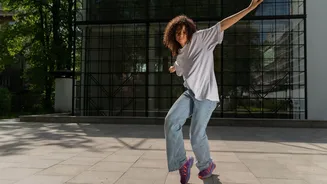
You've likely heard the music, but have you tried the moves? Afrobeats isn't a single traditional dance but a modern, dynamic fusion of various West African dance styles with contemporary influences like hip-hop. Popularised globally by artists from Nigeria
and Ghana, this style is all about high energy and personal expression. For a home workout, you don't need complex choreography. Start by finding a good Afrobeats playlist and let the rhythm guide you. Focus on basic steps like the leg-over move of Gwara Gwara, shoulder shimmies, and energetic step-touches. The constant motion provides an excellent cardio workout that can burn between 400-500 calories an hour, while the focus on isolated and full-body movements engages your core, legs, and arms. It’s a workout that feels more like a party.
Find Your Rhythm with Kuku
Originating from the forest region of Guinea, Kuku is a celebratory dance traditionally performed by women after returning from fishing. It’s a dance of joy and community, making it a perfect mental and physical boost for a solo workout. Kuku is characterised by earthy, grounded movements. Think wide arm swings, energetic jumps or kicks, and rhythmic stomps that connect you to the ground. For a fitness adaptation, focus on keeping a soft bounce in your knees and a strong, engaged core. Incorporate movements like crossing one leg over the other while circling your arms, or extending your arms while twisting your knee on the ball of your foot. These actions enhance coordination, build lower body strength, and offer a fantastic release of energy.
Master the Footwork of Sabar
If you're looking for a challenge that combines grace with power, explore Sabar. This is the national dance of Senegal, a high-tempo, energetic style performed to the beat of the Sabar drum. It's known for its intricate and powerful footwork, high knee lifts, jumps, and expressive arm swings. For a home workout, you can simplify the movements while retaining the spirit of the dance. Start with the foundational 'Ndior' step, which acts as the spine for many other movements. Focus on a basic pattern of lifting your thighs and stomping, keeping your movements sharp and in time with an upbeat rhythm. Sabar is an incredible workout for building lower body power, endurance, and agility. Because the dance is a dialogue between the dancer and the drummer, it also trains you to be present and listen intently to the music.
Flow with Agbadza
For a lower-impact yet deeply engaging option, turn to Agbadza. This is a social and recreational dance of the Ewe people of Ghana and Togo that evolved from an older war dance called Atrikpui. It’s often performed at festivals and social gatherings, and its movements are accessible to everyone. The dance has two main phases: a slow step and a fast step. For a workout, begin with the slow phase as a warm-up. It involves shuffling steps with the arms extended and moving back and forth. The main movement involves contracting and releasing the torso while flapping the arms, like a bird's wings. This engages the core and upper body while the constant, gentle bounce in the knees provides a light cardiovascular workout. Agbadza is excellent for improving flexibility, coordination, and connecting with a sense of history and storytelling through movement.
Isolate and Celebrate with Soukous
Hailing from the Congo Basin, Soukous is a musical genre and dance style that will get your hips moving. The music is known for its intricate, flowing guitar melodies, and the dance is characterised by its fluid and mesmerising hip movements. This makes it a fantastic workout for improving hip mobility, core control, and finding a smoother, more fluid way of moving. To incorporate Soukous into your routine, start with the basics. Stand with your knees slightly bent and focus on making smooth circles and figure-eights with your hips. Keep your upper body relatively still to isolate the movement in your core and pelvis. This targeted motion is not only a great, low-impact way to strengthen your abdominal and lower back muscles, but it's also a joyful and expressive form of movement that can help release tension.