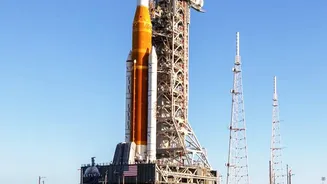





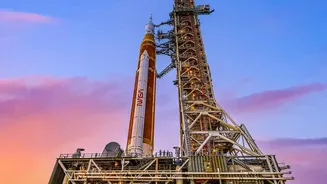

Artemis III's New Mission
Originally slated to be the historic mission that would land astronauts on the Moon for the first time since 1972, Artemis III has been officially redefined. Now targeting a summer 2027 launch, the mission will be an ambitious, 14-day test flight in low-Earth
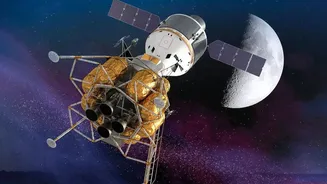
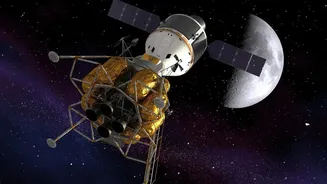
orbit. Instead of a lunar landing, four astronauts will launch in the Orion spacecraft to practice the crucial manoeuvres of rendezvousing and docking with test versions of the human landing systems (HLS) being developed by commercial partners Blue Origin and SpaceX. This change allows NASA to test these brand-new, complex landers in the relative safety of Earth orbit before attempting a landing hundreds of thousands of kilometres away. It's a risk-reduction strategy that echoes the Apollo program, which tested its Lunar Module in Earth orbit during Apollo 9 before the historic Moon landing.
Artemis IV: The Next Giant Leap
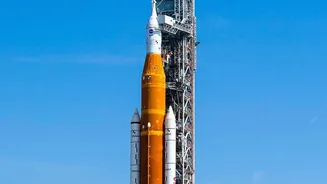
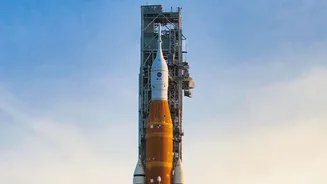
With Artemis III now serving as an orbital dress rehearsal, Artemis IV is set to become the mission that actually returns humans to the lunar surface. Currently scheduled for no earlier than early 2028, this mission is significantly more complex than the original plan for Artemis III. Not only will it involve the second crewed landing in the Artemis campaign, but its first major task is to deliver the International Habitation Module (I-HAB) to the Gateway, humanity's first space station in orbit around the Moon. Artemis IV astronauts will be the first crew to inhabit the Gateway, docking their Orion capsule with the lunar outpost before two of them descend to the Moon's south pole. This mission requires a more powerful version of the Space Launch System (SLS) rocket, known as Block 1B, to carry both the crew and the heavy I-HAB module.
How Parallel Plans Keep the Program Moving
The ability to push forward with Artemis IV despite changes to III highlights the modern, layered approach to space exploration. Unlike the linear path of Apollo, Artemis is designed with multiple, parallel development tracks. The work on the Gateway station, the I-HAB module, the more powerful SLS Block 1B rocket, and the development of multiple commercial landers all proceeds on separate but interconnected timelines. The long lead times required for this advanced hardware mean that planning and construction must continue years in advance. According to NASA officials, the revised schedule for Artemis III actually helps to streamline development, giving commercial partners like Blue Origin and SpaceX more clearly defined goals for their landers while work on the ambitious hardware for Artemis IV continues unabated.
The Gateway: A Staging Post for Deep Space
The centerpiece of Artemis IV and all subsequent missions is the Lunar Gateway. This small space station, an international collaboration between NASA, the European Space Agency (ESA), and other partners, is essential for establishing a longterm, sustainable human presence onthe Moon. It will serve as a command centre, a science laboratory, and a staging point where crews can dock, transfer to landers, and prepare for surface expeditions. The first components ofthe Gateway,the Power and Propulsion Element (PPE) andthe Habitation and Logistics Outpost (HALO), are scheduled to launch together on a Falcon Heavy rocket ahead ofthe Artemis IV mission. The arrival ofthe crew withthe I HAB module on Artemis IV will markthe true beginning ofthe station's operational life, enabling more extensive exploration ofthe lunar South Pole and, eventually, serving as a stepping stone for missions to Mars.