


The Billion-Dollar Connectivity Problem
Modern cars, especially high-tech electric and autonomous vehicles, are essentially powerful computers on wheels. They generate enormous amounts of data every second, monitoring everything from battery health to the performance of their self-driving sensors.
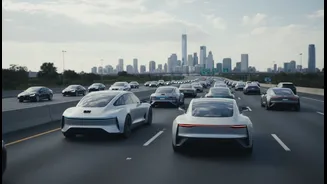
Traditionally, this data is sent back to headquarters over standard mobile networks. For a single consumer vehicle, a temporary loss of signal is an inconvenience. But for a company like Tesla planning to operate a massive, coordinated fleet of thousands of driverless robotaxis, it’s a potential disaster. A Cybercab that loses its connection in an area with poor 4G or 5G coverage becomes a ghost in the machine. It can’t be easily rerouted, its status is unknown, and if it encounters a problem it can't solve on its own, it’s effectively stranded. This is a critical challenge for scaling any autonomous fleet, particularly in regions with inconsistent mobile service, from rural highways to dense urban canyons where signals can be patchy.
Enter Starlink: The Ultimate Fallback
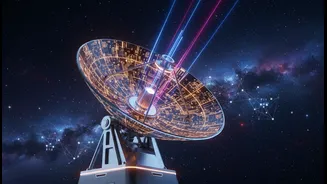
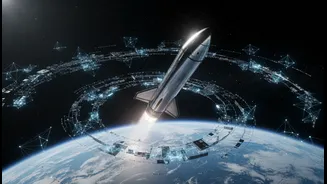
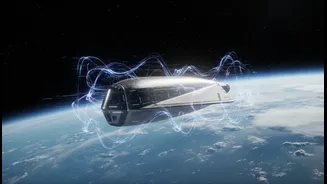
This is where the synergy between Elon Musk’s companies comes into play. Tesla has officially confirmed that its purpose-built Cybercab will come factory-equipped with an integrated Starlink V5 terminal. Starlink, a division of SpaceX, operates a constellation of thousands of low-Earth orbit satellites to provide high-speed internet to nearly anywhere on the planet. While most people think of it for homes in rural areas, SpaceX has been pushing into mobile applications. By building a Starlink dish directly into the Cybercab, Tesla ensures the vehicle has a constant, reliable data link, independent of ground-based cellular towers. While the car also has 5G for primary connectivity, Starlink acts as a powerful backup, ensuring the fleet management system can always communicate with its assets. This isn't just for emergencies; it's for continuous operational oversight.
More Than Just an SOS Signal
The term “diagnostics” barely does justice to the depth of information a Tesla can transmit. It’s not just about sending an error code. With a high-bandwidth connection like Starlink, the Cybercab can stream terabytes of telemetry data in real-time. This allows Tesla’s remote service teams to see exactly what the car’s sensors are seeing, analyze software performance, and monitor the health of every critical component, from the battery cells to the Autopilot computer. This capability transforms vehicle maintenance from a reactive to a proactive model. Instead of waiting for a part to fail and a robotaxi to go offline, engineers can detect signs of wear or predict a potential issue days or weeks in advance. They could even deploy a remote software fix over the air, potentially resolving an issue without the vehicle ever needing to visit a service centre.
The Unseen Engine of Profitability
For a robotaxi service, uptime is everything. Every minute a vehicle is offline for maintenance or stranded without a connection is lost revenue. By ensuring constant connectivity, Starlink becomes a crucial enabler of the entire business model. The ability to remotely diagnose and fix issues maximises the time each Cybercab spends on the road, earning fares. While Elon Musk has highlighted the consumer benefit of being able to stream 4K video during a ride, the real value for Tesla is operational resilience. This constant link allows for smarter fleet management, dynamic rerouting based on real-time data, and a level of remote oversight that would be impossible with cellular-only vehicles. It's a key piece of the puzzle for making a driverless ride-hailing network not just functional, but highly profitable and scalable.
A Blueprint for the Future
Tesla's AI chief, Ashok Elluswamy, has clarified that the self-driving system itself doesn't require a constant connection to operate safely. However, the Starlink integration is a game-changer for managing the fleet. This model of pairing terrestrial autonomous technology with space-based connectivity is a blueprint for the future. It’s not just about robotaxis. Imagine agricultural equipment operating in vast fields, long-haul autonomous trucks crossing remote landscapes, or delivery drones servicing rural communities—all areas where cellular coverage is often unreliable. By solving the connectivity problem, the Tesla and SpaceX collaboration demonstrates a path forward for large-scale autonomous systems. It ensures that no matter where the technology goes, it never has to be truly alone, creating a more robust and reliable autonomous future for everyone.