





The Heart of the Ritual
Karwa Chauth is a festival steeped in symbolism, where married women fast from sunrise to moonrise for the well-being and longevity of their husbands. While the fast itself is an act of immense discipline, the spiritual core of the observance lies in the 'vrat
katha', the story that is narrated in the evening before the moon is sighted. This oral tradition is considered essential; it is believed that the fast only bears fruit once the story has been heard. The most prominent of these tales is the poignant legend of a queen named Veeravati, whose experience serves as both a guide and a cautionary tale.
The Tale of Queen Veeravati
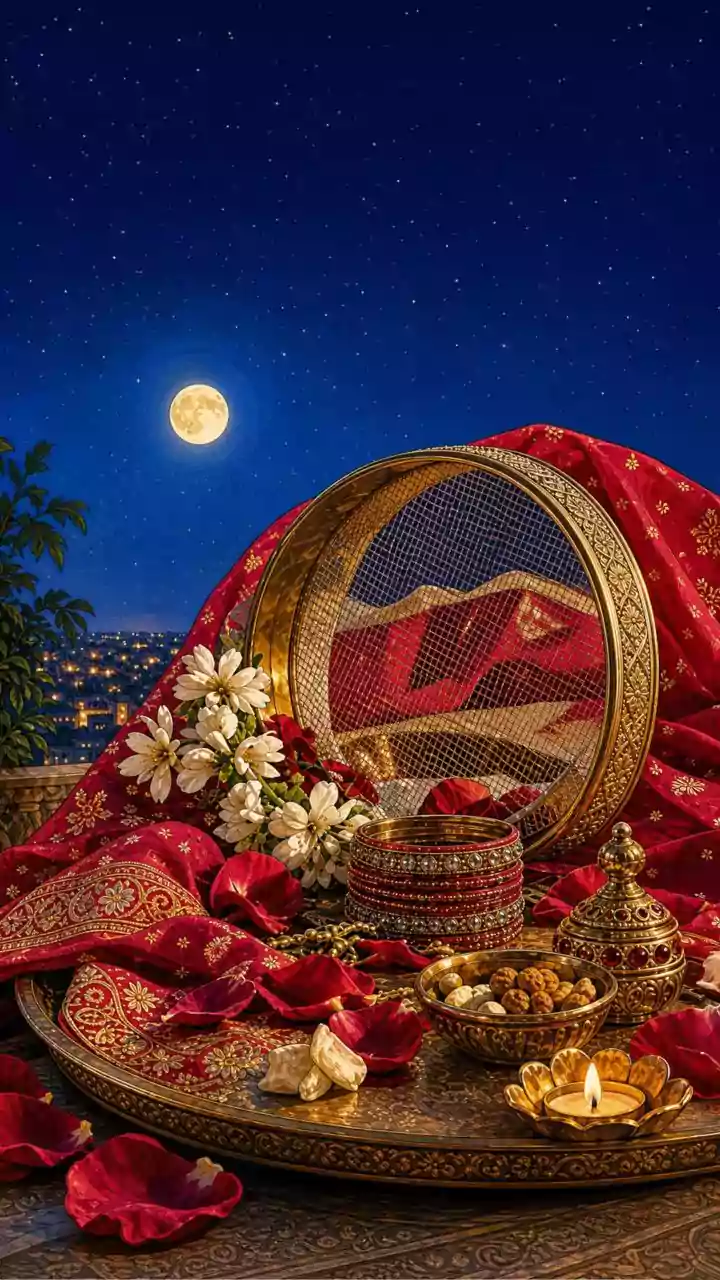
The story goes that a beautiful queen, Veeravati, was the only sister to seven loving brothers. For her first Karwa Chauth after marriage, she was at her parents' home and observed the strict, waterless fast. Being unaccustomed to such hardship, by evening she was overwhelmed with hunger and thirst, and fainted. Her brothers, unable to see their beloved sister suffer, hatched a plan out of love and concern. They climbed a distant Pipal tree and created an illusion of the moon using a mirror or a lamp behind a sieve. They convinced their sister that the moon had risen, and she, in her innocence, broke her fast.
A Test of Patience and Devotion
The moment Veeravati took a morsel of food, the consequences were immediate and dire. Word arrived that her husband, the king, was either dead or gravely ill. Heartbroken, she rushed towards her husband's kingdom. On her journey, she encountered Goddess Parvati (or Indrani in some versions), who revealed the truth: she had broken her fast by praying to a false moon, which was the cause of her misfortune. This part of the story underscores a crucial message: the ritual is not merely about abstinence but about the sincerity, patience, and correct completion of the observance. Her brothers' love, though well-intentioned, had inadvertently led to disaster.
The Path to Redemption
Upon hearing the truth, Veeravati was inconsolable and begged for forgiveness. The Goddess, seeing her genuine remorse, advised her on the path to redemption. She instructed Veeravati to observe the fast again, this time with unwavering devotion and adherence to all rituals. In some tellings, she has to observe monthly fasts for an entire year before the next Karwa Chauth. Veeravati followed these instructions faithfully. Through her renewed dedication and sincere penance, she was able to reverse the tragedy. When she completed the fast correctly the following year, Yama, the god of death, was pleased with her devotion and restored her husband's life and health.
A Lesson for Generations
The story of Veeravati is retold every year because it encapsulates the spirit of Karwa Chauth. It serves as a powerful reminder of the values the festival champions: the strength of devotion, the importance of patience, and the triumph of faith over adversity. It highlights that the fast is more than a physical act; it is a spiritual commitment that requires discipline and sincerity. By narrating her mistake and eventual redemption, the katha warns against impatience and reinforces the idea that true devotion can overcome even the gravest of challenges. It transforms a personal act of fasting into a shared cultural lesson on love, sacrifice, and the profound power of unwavering faith.