

The Route: Connecting Economic Powerhouses
The first bullet train project in India is the Mumbai-Ahmedabad High-Speed Rail (MAHSR) corridor. Spanning a distance of approximately 508 kilometres, the line connects two of India's most significant financial centers. The route passes through Maharashtra,
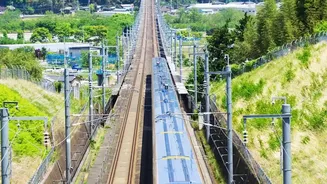
Gujarat, and the Union Territory of Dadra and Nagar Haveli. Twelve stations are planned along the corridor: Mumbai (BKC), Thane, Virar, Boisar, Vapi, Bilimora, Surat, Bharuch, Vadodara, Anand, Ahmedabad, and Sabarmati. Most of the corridor is elevated, reducing the land footprint and avoiding ground-level obstacles. A noteworthy engineering feature is a 2 km undersea tunnel section in the Thane Creek.
The Timeline: When Can You Ride It?
While the project has faced delays, primarily due to land acquisition and construction challenges, it is now progressing rapidly. According to recent statements from Railway Minister Ashwini Vaishnaw, the first section of the corridor is expected to become operational in 2027. Specifically, the Surat-Bilimora section in Gujarat is targeted for commissioning in August 2027. Construction on the Vapi-Surat section is expected to be completed by December 2026. The first indigenously manufactured trainset is scheduled to begin track testing by May or June of 2027, which will run for two to four months before inauguration. While a phased rollout is confirmed, the completion date for the entire 508 km corridor remains further out, with some estimates suggesting 2029 for the full Mumbai link.
The Speed and Technology: A Shinkansen for India
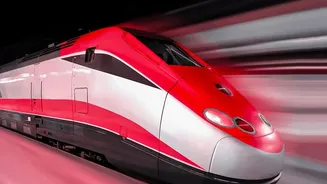
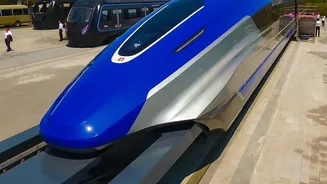
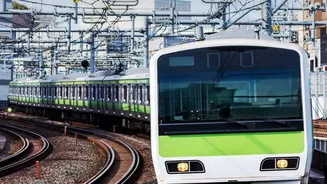
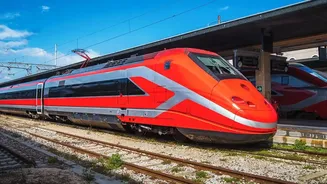
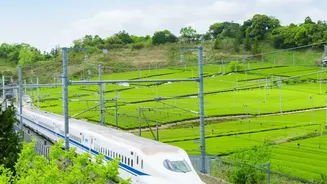
The project is being executed with technical and financial assistance from the Government of Japan, utilizing its world-renowned Shinkansen (bullet train) technology. The trains are designed to operate at a maximum speed of 350 kmph, with an operational speed of 320 kmph. This will drastically cut travel time between Mumbai and Ahmedabad to just under two hours for limited-stop services. While Japan is providing the core technology, a significant 'Make in India' component is also in play. An indigenous bullet train, with a design speed of 280 kmph, is being developed by the Integral Coach Factory (ICF) and Bharat Earth Movers Limited (BEML) for future use and is expected to start trials in 2027.
The Cost and Funding: A National Investment
The Mumbai-Ahmedabad High-Speed Rail project is a monumental undertaking with a significant cost, estimated at around ₹1.1 lakh crore. The funding model is a collaborative effort. A substantial portion, approximately ₹88,000 crore, is financed through a soft loan from the Japan International Cooperation Agency (JICA) at a very low interest rate of 0.1% over a 50-year term, with a 15-year grace period. The remaining investment is shouldered by the Government of India and the state governments of Maharashtra and Gujarat. Despite challenges like land compensation disputes which have threatened cost escalations, the project has achieved 100% land acquisition, a critical milestone for its execution.
The Impact: More Than Just a Fast Train
The bullet train is more than just a transportation upgrade; it is positioned as a catalyst for economic growth and technological advancement. The National High Speed Rail Corporation Ltd (NHSRCL), the agency implementing the project, highlights benefits like enhanced connectivity, job creation, and a boost to manufacturing. The construction phase itself has reportedly created over one lakh jobs. The project also serves as a template for future high-speed corridors in India, with standardized designs and construction methods being developed. There are already plans for seven other high-speed rail corridors, indicating that the Mumbai-Ahmedabad line is seen as the first step in a national high-speed rail network.