
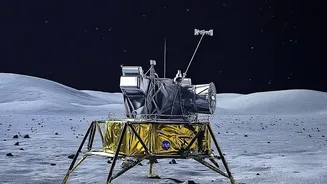

NASA is turning to the brightest young minds to help humanity build a permanent home on the Moon. A new challenge invites students to design habitats and the crucial systems needed to survive and thrive on the lunar surface.
A Million-Dollar Question
As part of its ambitious goal
to establish a sustained human presence at the Moon's South Pole, NASA has launched the Moon Base Student Challenge. With up to $1 million in prize money, the competition asks high school and post-secondary students in the U.S. to tackle the real-world problems of living on another world. This isn't just a theoretical exercise; it's a call to action for the 'Artemis Generation' to contribute directly to the future of space exploration. NASA Administrator Jared Isaacman emphasized that students don't need to wait until graduation to contribute, stating that their creativity and willingness to solve hard problems are needed now.
The Ultimate Design Brief
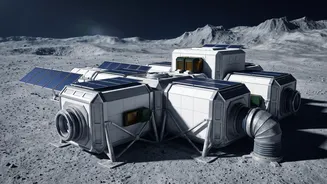
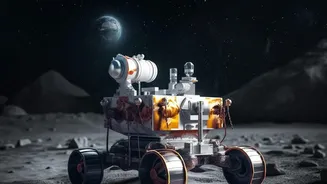
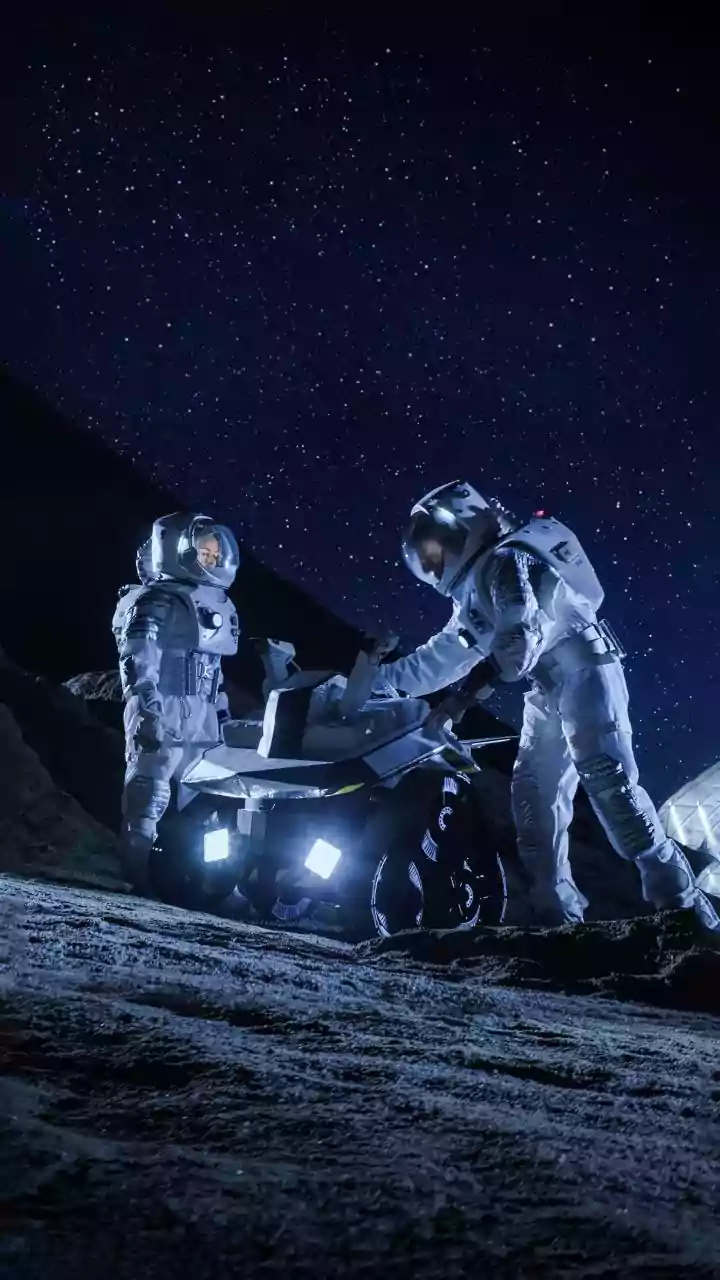
Participants are invited to develop solutions across six critical categories essential for a functioning lunar outpost. These areas include power generation and storage to survive the two-week lunar night; construction of habitats, possibly using local lunar materials; and life-support systems to manage air and water. Further challenges involve designing systems for surface mobility to transport people and cargo, creating robust communications networks, and ensuring astronaut safety from hazards like radiation and abrasive moon dust. The goal is to develop concepts that are resilient, autonomous, and not overly dependent on supplies from Earth.
Who Can Build the Future?
The challenge is open to teams of students from eligible U.S. high schools and post-secondary institutions. This includes colleges, universities, and technical or vocational schools. NASA has made it clear that a background in engineering isn't a strict requirement, opening the door for students from various academic tracks to participate. Teams consist of two to five students and an adult coach. The registration deadline is January 25, 2027, with initial concept papers due in February. Foreign citizens can participate if they are full-time students at an eligible U.S. school. This structure is part of a broader NASA strategy that includes multiple Artemis Student Challenges, such as the RASC_AL competition, Lunabotics, and the Human Exploration Rover Challenge, all designed to foster aerospace talent.
More Than Just a Contest
While the prize money is a significant incentive, the opportunity extends far beyond that. The challenge is structured to mirror real_world aerospace projects, giving students invaluable hands_on experience. Finalists will develop their concepts further, create video pitches, and present their ideas to panels of NASA and industry experts. According to Carlos García_Galán, the Moon Base Program Manager, the agency is looking for the bold ideas that students bring, emphasizing that the lunar base is ultimately for them. Participating in such a high_profile challenge is a significant career boost, providing a direct link to the space industry and a chance to contribute to one of humanity's greatest endeavors.