





A New Way to Practice
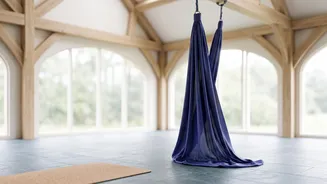
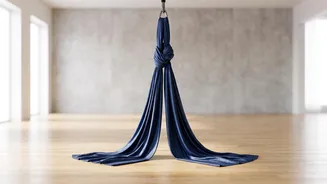
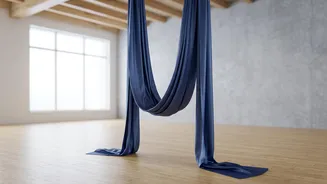
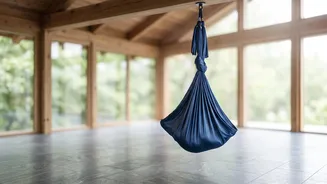
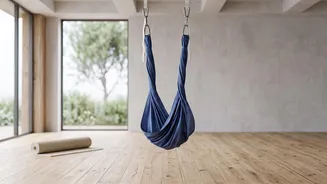
Aerial yoga is a hybrid practice that blends traditional yoga principles with aerial arts. Using a soft, supportive fabric hammock suspended from the ceiling, practitioners explore yoga poses (asanas) in a new dimension. The hammock can support your full
body weight, allowing you to hang completely, or it can be used to support specific body parts, helping with alignment and stability. This isn't just about performing acrobatics; it's about using the silk as a partner to explore movement, reduce strain on joints, and discover a different kind of physical awareness. The practice is designed to be accessible, with many classes focusing on the therapeutic benefits of gentle suspension and decompression.
Finding Stability in the Air
The most immediate challenge in aerial yoga is balance. Unlike a solid floor, the silk hammock is an unstable surface. From the moment you lift your feet, your body is forced to constantly seek stability. This engages the small, stabilizing muscles throughout your core, arms, and legs that are often underused in ground-based exercises. Holding even a simple pose requires deep core engagement and intense focus. This constant micro-adjustment sharpens your body's awareness of its position in space, a sense known as proprioception. By challenging your balance in this unique way, aerial yoga enhances your coordination and mental focus, as you must remain fully present to control your movements.
The Hammock as a Breath Coach
While you might think that concentrating on not falling would make you hold your breath, aerial yoga often has the opposite effect. The practice demands controlled, conscious breathing. In many poses, the fabric cocoons or gently presses against the body, providing tactile feedback that can bring your attention directly to the rise and fall of your chest and abdomen. Furthermore, the support of the hammock allows you to relax more deeply into stretches. When the body isn't fighting gravity to hold a position, you can release tension and create more space for full, diaphragmatic breathing. The gentle, rhythmic swaying motion in some poses can also soothe the nervous system, making it easier to slow down your breath and enter a meditative state.
The Calming Power of Inversions
One of aerial yoga's signature features is its ability to make inversions (poses where the heart is higher than the head) accessible to more people. Hanging upside down, fully supported by the silk, helps decompress the spine without putting pressure on the neck or shoulders. These supported inversions have a powerful effect on the nervous system. They can stimulate the parasympathetic nervous system, which is the body's "rest and digest" mode, helping to reduce stress and anxiety. Being upside down changes your perspective, both literally and figuratively, which can help clear the mind and improve mental clarity. The release of endorphins during these poses can also elevate your mood, contributing to a sense of well-being.
A Moving Meditation
Ultimately, aerial yoga encourages attention to breath and balance by uniting them in a single, mindful experience. You cannot maintain your balance in the hammock without focus, and you cannot maintain focus without a steady breath. This creates a feedback loop where physical stability and mental calm are intrinsically linked. The practice forces you to be in the here and now, concentrating on how your body feels as it's suspended in the air. This intense mindfulness draws your attention away from daily stressors and helps quiet a racing mind. It becomes a form of moving meditation, where the challenge of the pose, the support of the silk, and the rhythm of your breath all work together to strengthen your mind-body connection.