



The 'Doomsday Glacier' Explained
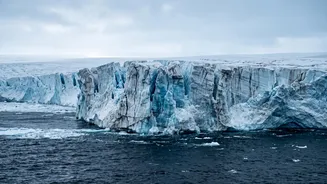
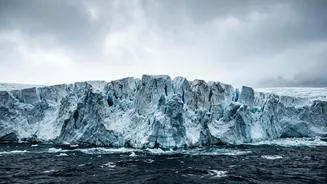
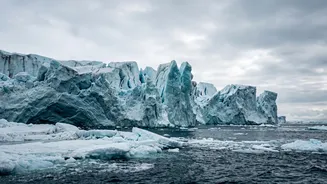
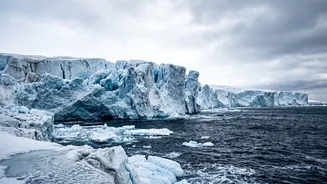
Thwaites Glacier, located in West Antarctica, is one of the widest and fastest-melting glaciers on Earth. Roughly the size of Florida or Great Britain, it acts like a colossal cork, holding back the vast West Antarctic Ice Sheet. Its ice already contributes
about 4% of annual global sea-level rise. Scientists have nicknamed it the 'Doomsday Glacier' because its total collapse would be catastrophic. By itself, Thwaites holds enough ice to raise global sea levels by over two feet (about 65 cm). More critically, its disintegration could destabilise the entire ice sheet behind it, which contains enough water to raise sea levels by a devastating 10 feet.
What We Thought We Knew
For years, scientists have been closely monitoring Thwaites, alarmed by its rapid retreat. Previous computer models tried to predict its future by focusing on the 'grounding line'—the specific point where the glacier lifts off the seabed and begins to float. These models, while useful, struggled to fully replicate the speed of melting and retreat that satellites have observed in recent decades. Projections based on this understanding estimated that Thwaites would contribute around 15 millimetres to sea-level rise by the year 2100. While significant, new research suggests this may have been a major underestimate.
A More Unstable Future
Updated simulations from researchers at the University of California, Irvine, and NASA's Jet Propulsion Laboratory paint a more urgent picture. According to their new model, published in the journal Nature Communications, Thwaites could contribute up to 30 millimetres (1.2 inches) to sea-level rise by 2100. That's double the amount previously projected, even without any additional global warming. The new simulations also suggest a 60% probability that the glacier will detach from a crucial underwater stabilising ridge before the end of the century, which would dramatically accelerate its flow into the ocean.
The Science Behind the Shift
The key to the new predictions lies in a better understanding of how warm ocean water interacts with the glacier's base. Instead of a simple, fixed 'grounding line', the new models account for a much wider 'grounding zone'. In this zone, which can be several kilometres wide, salty and relatively warm ocean water is able to penetrate far beneath the ice. This creates 'vigorous melting' from below, weakening the glacier's foundation and causing it to lift off the seabed during tidal cycles. This process was not fully captured in older models, which explains why they underestimated the rate of ice loss. The new model, by incorporating this grounding zone dynamic, matches the glacier's observed changes over the last two decades four times more closely than previous versions.
Why a Melting Glacier Matters to India
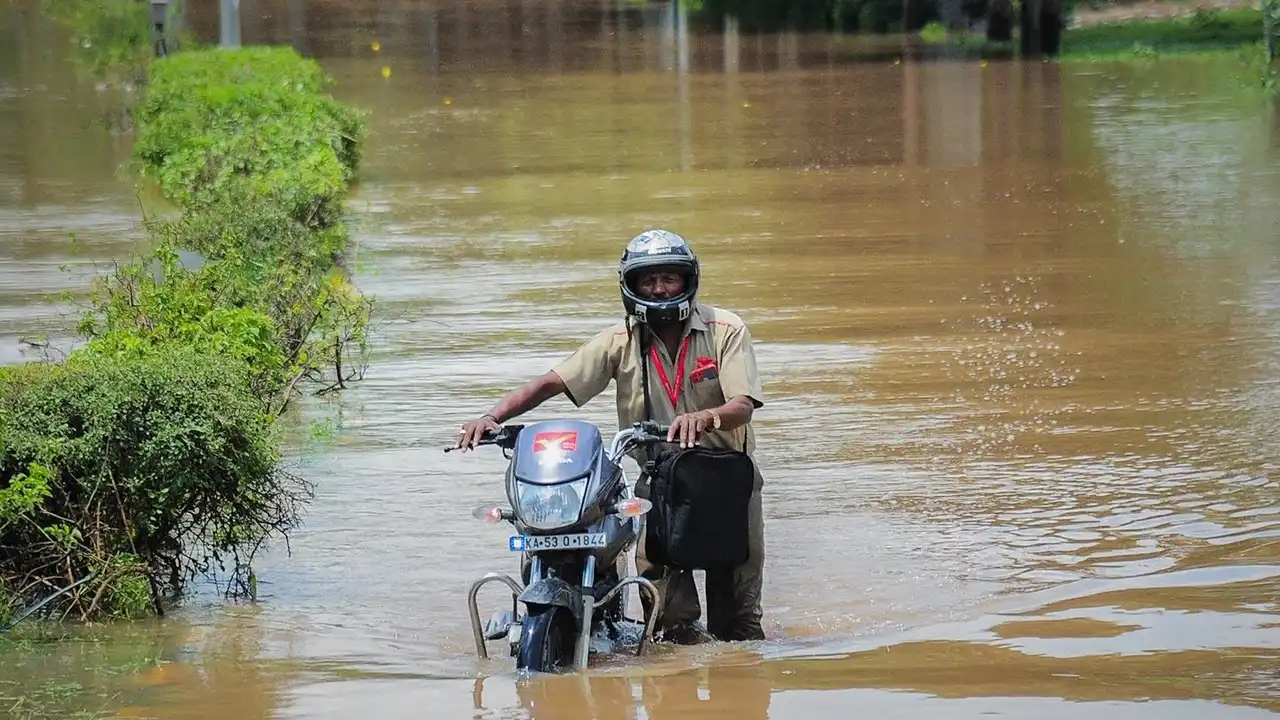
A melting glacier thousands of kilometres away in Antarctica might seem like a distant problem, but its consequences are global and dire, especially for India. With a coastline stretching over 7,500 kilometres and home to major coastal megacities like Mumbai, Chennai, and Kolkata, India is highly vulnerable to sea-level rise. Even a few centimetres can significantly increase the frequency and intensity of coastal flooding, threatening homes, infrastructure, and freshwater resources. The accelerated melt from Thwaites acts as a powerful amplifier for these existing threats. Other studies from the British Antarctic Survey have shown that even if ocean warming were to stop completely, Thwaites is already committed to significant ice loss for at least the next 150 years due to past changes. The updated simulations confirm that the risk is not only real but potentially arriving faster than we had prepared for.