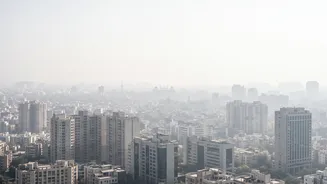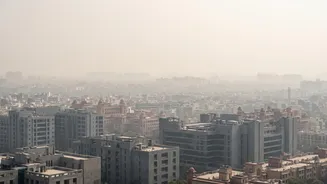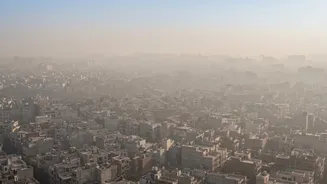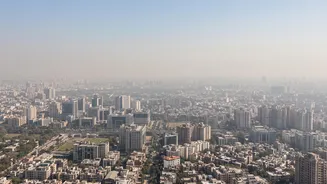








A Conditional Promise of Cleaner Air
A major new report backed by the UN Environment Programme (UNEP) and the Climate and Clean Air Coalition (CCAC) has put a number on a long-held hope for Delhi's residents. The study, titled 'Hidden Assets: The Economic and Health Case for Climate and Clean Air Action',
projects that Delhi can reduce its cumulative PM2.5 exposure burden by a substantial 20% by the year 2040. This isn't just a vague aspiration; it's a calculated outcome based on a specific condition: the timely and complete implementation of India's national air quality standards, starting from 2026. The report serves as both a roadmap and a warning. It suggests a tangible future where the air is healthier to breathe, but underscores that this positive outcome is entirely dependent on immediate and sustained action.
The High Cost of Delay
The report's optimistic projection comes with a stark warning about procrastination. If the implementation of these clean-air actions is delayed by eight years—which the report notes is the expected global average delay, largely due to institutional barriers—the potential benefits are slashed in half. An eight-year delay would mean the reduction in PM2.5 exposure burden would only be 10% by 2040, not 20%. This translates directly into more pollution-related illnesses and a greater public health crisis over the next decade and a half. The message is unequivocal: every year of inaction carries a significant, measurable cost in terms of health and well-being for the city's millions of residents. The economic argument is just as compelling, with the report noting that each year of delay forfeits over $1.5 trillion in potential benefits globally.
Understanding PM2.5 'Exposure Burden'
The term 'PM2.5 exposure burden' may sound technical, but its meaning is deeply personal. PM2.5 refers to fine particulate matter smaller than 2.5 micrometres—so tiny they can penetrate deep into the lungs and even enter the bloodstream. These particles are a toxic mix from sources like vehicle exhaust, industrial emissions, and burning waste, and are linked to severe health issues, including heart and lung disease, strokes, and cancer. The 'exposure burden' is a measure of the total health impact on a population over time from breathing this polluted air. A 20% reduction, therefore, doesn't just mean a few clearer days; it signifies a major decrease in the number of premature deaths, hospital visits for respiratory and cardiovascular issues, and chronic illnesses plaguing the city.
The 25-Point Blueprint for Action
So, how can this 20% reduction be achieved? The UNEP report identifies a package of 25 specific, feasible measures that tackle both air pollution and climate change simultaneously. These solutions span multiple sectors. Key recommendations include a rapid transition to renewable energy, improving energy efficiency in industries and homes, and scaling up clean cooking and heating solutions. For Delhi's notorious traffic, the report calls for stricter vehicle emission standards, robust inspection and maintenance programs, and a continued push towards electrifying vehicles. Other critical actions include better management of agricultural waste to prevent crop burning, improved handling of solid and wastewater, and eliminating routine venting and flaring in industrial processes. These measures are not new ideas, but the report frames them as an integrated, high-impact strategy with massive economic co-benefits.
From Report to Reality on Delhi's Streets
While the UNEP report provides a global framework, action on the ground in Delhi is already underway, reflecting some of the recommended strategies. The Delhi government recently launched a seven-month public awareness campaign, "Saath Nibhayein, Pradushan Ghataayein," to engage citizens and industries directly in pollution control. This initiative focuses on everything from ensuring vehicles have valid Pollution Under Control (PUC) certificates to managing construction dust and industrial emissions. Authorities are also reviewing mitigation measures ahead of the winter season, when pollution typically spikes due to weather patterns and increased instances of waste burning. The focus is on strengthening the Graded Response Action Plan (GRAP), a set of emergency measures triggered by worsening air quality, and addressing known traffic congestion hotspots. The challenge, as highlighted by the UNEP report, will be to ensure these efforts are not just seasonal or reactive, but are sustained and scaled up to meet the national standards on schedule.