




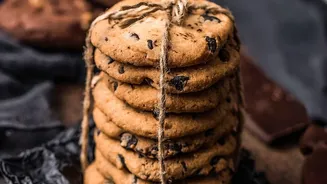
What Exactly Are µBites?
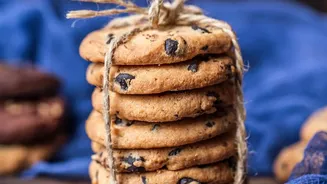
µBites, pronounced "microbites," are a novel food product created by scientists at Southern Illinois University. The project, which was part of NASA's Deep Space Food Challenge, uses a cutting-edge process to transform waste materials—including certain
plastics and agricultural biomass—into edible proteins and other nutrients. The technology relies on genetically engineered microbes, specifically strains of yeast, which are programmed to break down these waste materials and convert them into a dough-like substance. This substance is then enriched with fiber and sweeteners and can be extruded through a 3D printer to create small, protein-rich snacks. The goal is to create a sustainable food source for extreme environments like deep space missions or disaster relief zones.
The Science of Safety
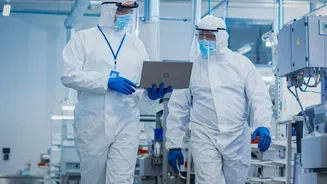
Before any new food can even be considered for public consumption, it must undergo rigorous safety testing. The announcement that data supports the safety of µBites is a major milestone. This process, known as a novel food safety assessment, involves a deep dive into the product's composition. Scientists generate extensive data to prove the product is not toxic, does not cause allergic reactions, and has a sound nutritional profile. For a product derived from precision fermentation—the technology that powers µBites—this also means demonstrating that the genetically modified microorganisms used in the process are safe. Passing this stage is critical; without scientific validation of safety, a novel food has no future. The positive data suggests the core science behind µBites is sound, moving it one step closer from a lab curiosity to a potential food source.
The Ultimate Judge: Your Taste Buds
While scientific approval is a mandatory first step, it guarantees nothing in the marketplace. The single biggest barrier for many novel foods is consumer acceptance, which hinges almost entirely on taste, texture, and appeal. Studies on similar food innovations, like cultivated meat, show that a perception of "unnaturalness" is a major hurdle. Even with proven environmental or ethical benefits, if a product doesn't taste good, consumers won't buy it. The researchers behind µBites are aware of this and are awaiting institutional approval to conduct formal taste tests. This is where the product will face its moment of truth. The challenge is not just to be edible, but to be enjoyable. It must overcome what some call the "yuck factor" and deliver a sensory experience that can compete with conventional foods.
The Path to Your Plate
With promising safety data in hand, the journey for µBites is far from over. Beyond the pending taste tests, the next phase involves navigating a complex regulatory landscape. In most parts of the world, including Europe and the US, novel foods require pre-market authorisation from government bodies like the European Food Safety Authority (EFSA). This involves submitting a detailed dossier of the safety data for official review. Simultaneously, the developers will need to address scalability. Producing a few cookies in a lab is one thing; manufacturing them at a cost-effective scale for commercial markets is another monumental challenge. This process involves moving from lab-scale fermenters to industrial-sized bioreactors, a transition that requires significant investment and engineering expertise.
The Bigger Picture for Food Innovation
The story of µBites is a compelling snapshot of the broader revolution happening in food technology. Driven by concerns over sustainability, food security, and environmental impact, scientists are exploring innovative ways to produce nutrients. Technologies like precision fermentation are at the forefront, promising to create proteins, fats, and vitamins with a fraction of the resources required by traditional agriculture. In India, the food processing and technology sector is also poised for significant growth, with a focus on leveraging science for a more resilient food system. While the idea of eating something derived from plastic may seem extreme, it represents a radical rethinking of waste and nutrition. These innovations challenge us to consider what food is and where it can come from, pushing the boundaries of what’s possible for a sustainable future.