


You may never get to visit Saturn's largest moon, but your name can. NASA is offering a unique opportunity to send your name on a billion-mile journey to Titan, an alien world with rivers, lakes, and a thick atmosphere.
Your Name on a Message in a Bottle
In a tradition that connects the
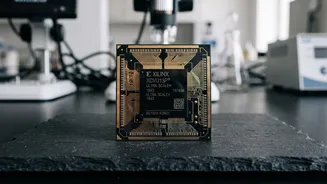
public with the grand adventure of space exploration, NASA has invited people worldwide to add their names to a microchip that will travel aboard the Dragonfly spacecraft. This 'Message in a Bottle' campaign allows your name to become a symbolic passenger on one of the most ambitious science missions ever conceived. The names will be etched onto a chip and attached to the car-sized rotorcraft, which is currently being assembled at the Johns Hopkins Applied Physics Laboratory. To join, you can visit NASA's official website, and in return for signing up, you'll receive a personalized digital 'boarding pass' as a souvenir of your part in this historic expedition. The deadline for submissions is January 15, 2027.
What is the Dragonfly Mission?
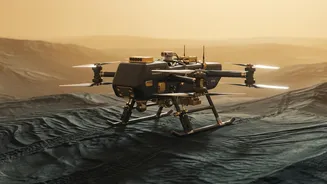
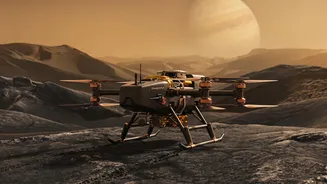
Scheduled to launch in July 2028, Dragonfly is a revolutionary mission to explore Saturn's largest moon, Titan. Instead of a stationary lander or a wheeled rover, Dragonfly is a nuclear-powered, dual-quadcopter—essentially a drone the size of a small car. After a long voyage through the solar system, it is expected to arrive at Titan in 2034. Once there, its true mission begins. Taking advantage of Titan's thick atmosphere, which is denser than Earth's, Dragonfly will be the first vehicle to perform powered, controlled flight on another moon. It will fly from one scientifically interesting location to another, sometimes traveling miles at a time, landing to collect samples and analyze the complex chemistry of this unique world.
Why Explore an Alien Moon?
Titan is one of the most Earth-like worlds ever discovered, making it a prime target in the search for life. It is the only other body in our solar system known to have stable liquid on its surface in the form of rivers, lakes, and seas. However, these are not filled with water, but with liquid methane and ethane that rain from the sky, mimicking Earth's water cycle. Beneath its hazy, nitrogen-rich atmosphere, Titan boasts a landscape of sweeping organic sand dunes and a surface rich in complex carbon-based molecules. Scientists believe Titan's environment may be similar to that of early Earth, before life emerged. Studying this 'prebiotic' chemistry could provide crucial clues about the ingredients and conditions necessary for life to begin, not just on Titan, but anywhere in the universe.
An Ambitious Scientific Journey
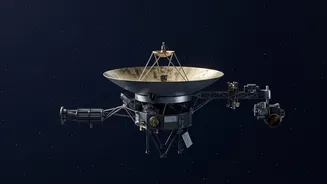
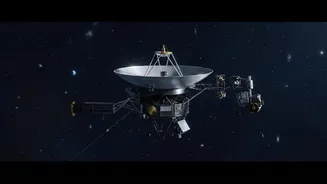
The Dragonfly mission builds on the legacy of previous explorers like the Cassini-Huygens mission, which orbited Saturn and landed a probe on Titan in 2005, revealing a complex and active world. Dragonfly's primary goal is to search for 'biosignatures'—the building blocks of life. Over its multi-year primary mission, the rotorcraft will visit diverse environments, from sand dunes to the floor of an impact crater, where liquid water may have once mixed with the abundant organic material on the surface. By drilling for samples and analyzing them with its onboard instruments, Dragonfly will investigate how far the chemistry of life has progressed in this alien environment and assess its overall habitability. This mission represents a bold new chapter in planetary science, seeking answers to some of humanity's oldest questions about our place in the cosmos.