





A Crucial Shake, Rattle, and Roll
Before astronauts can journey to the Moon and beyond, their ride must prove it can withstand the journey. NASA is conducting a series of critical ground tests known as SOLVE, which stands for Stack-Level Vibration and Liftoff Acoustics. This testing campaign
is designed to put the Orion crew module—the capsule that will carry astronauts on Artemis missions—through the intense, bone-jarring conditions of a launch. By subjecting a test version of the capsule to ferocious vibrations and deafening noise on the ground, engineers can verify that every component, from the crew's seats to the sophisticated computer systems, can survive the chaotic first few minutes of a trip to space. It's a fundamental step to identify any potential workmanship defects or design flaws that could lead to failure during a real mission.
Inside the Orion Capsule
The Orion spacecraft is the cornerstone of NASA's Artemis program, designed to take humanity back to the Moon and eventually to Mars. It's more than just a capsule; it's a sophisticated vehicle comprising a crew module built by Lockheed Martin and a European Service Module (ESM) that provides power, propulsion, and life support. The crew module is designed to house four astronauts for up to 21 days, protecting them from the vacuum of space, extreme temperatures, and radiation. After the successful uncrewed Artemis I flight and the crewed Artemis II lunar flyby, every subsequent vehicle must be rigorously validated. These SOLVE tests are a key part of that validation for future Orion capsules, ensuring they are ready for missions like Artemis III and beyond.
Simulating the Violence of Liftoff
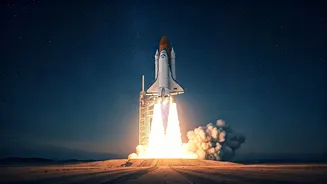
So, what are "flight-like conditions"? During the launch of NASA's massive Space Launch System (SLS) rocket, the Orion capsule is subjected to two primary forces: intense vibrations transmitted through the rocket's structure and overwhelming acoustic energy, or sound waves, that batter the spacecraft's exterior. A rocket launch can generate sound levels approaching 200 decibels, and this acoustic pressure can cause lightweight structures and large panels to vibrate violently. The SOLVE tests replicate these dual environments. Powerful shakers simulate the low-frequency vibrations, while a wall of specialized speakers creates a direct field of acoustic noise to mimic the high-frequency environment. This combination ensures the spacecraft is tested against the full spectrum of launch stresses.
Why This Ground Test Is So Important
Conducting these punishing tests on the ground is non-negotiable for astronaut safety. Finding a weakness in a structural weld, a loose bolt, or a vulnerable computer board in a test facility on Earth is a problem to be solved; discovering it minutes into a launch could be catastrophic. Vibroacoustic testing is one of the most effective ways to screen for hidden workmanship issues and to validate that the spacecraft’s design can handle the immense loads of launch. It verifies that everything from the spacecraft's primary structure to its delicate instruments and the life support systems will perform as expected. By pushing a full-scale test article to its limits, NASA gathers critical data to confirm their analytical models and build confidence that the flight-ready Orion is one of the most reliable machines ever built.