




Meet the Solar System's Giant Moon
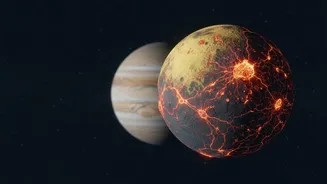
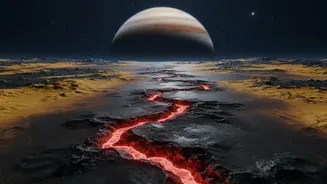
Ganymede is not just any moon; it is the largest moon in our entire solar system. With a diameter of over 5,260 kilometres, it surpasses both the planet Mercury and the dwarf planet Pluto in size. If it were orbiting the Sun instead of Jupiter, it would
almost certainly be classified as a planet. It’s one of the four so-called Galilean moons, discovered by Galileo Galilei in 1610, and it orbits the gas giant every seven Earth days. But its impressive size is just the beginning of its story. For decades, scientists have gathered evidence pointing to an even more remarkable feature: a colossal body of liquid water hidden beneath its frozen surface.
The Telltale Signs of a Hidden Sea
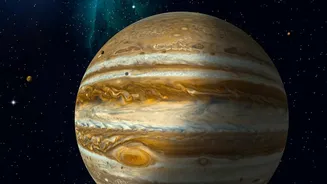
The evidence for Ganymede's ocean is compelling, yet indirect. A key clue lies in its unique magnetic field; Ganymede is the only moon in the solar system known to generate its own. This field creates beautiful, shimmering auroras near its poles, similar to Earth's northern and southern lights. Because Ganymede is embedded within Jupiter’s much more powerful magnetic field, its auroras “rock” back and forth as Jupiter rotates. Using the Hubble Space Telescope, scientists observed that this rocking motion was significantly dampened. The best explanation is a vast, electrically conductive layer beneath the surface acting as a stabiliser. The most likely candidate for this layer is a massive saltwater ocean. More recent data from NASA's Juno spacecraft, which flew by Ganymede in 2021, detected salts and organic compounds on the surface, which may have bubbled up from this subterranean sea.
An Ocean Larger Than All of Earth's
The scale of Ganymede's potential ocean is difficult to comprehend. Scientific models estimate that this subterranean sea could be around 100 kilometres deep—10 times deeper than Earth's oceans. It's thought to be buried under a thick crust of ice about 150 kilometres deep. In terms of sheer volume, this means Ganymede's ocean might contain more water than all of Earth's surface oceans combined. Some models even suggest a complex internal structure, like a cosmic club sandwich, with multiple layers of ocean separated by different forms of high-pressure ice. This structure arises because the immense pressure deep inside Ganymede can compress water into solid forms denser than its liquid state.
How Can a Frozen Moon Have Liquid Water?
Ganymede orbits Jupiter far from the Sun, where surface temperatures plummet to around minus 171 degrees Fahrenheit. So how can liquid water exist? The answer lies in a combination of factors. Heat is generated internally by the decay of radioactive elements within its rocky mantle. More importantly, Ganymede is subjected to immense gravitational forces from the colossal planet it orbits. This constant push and pull from Jupiter generates tidal forces that flex and warm the moon's interior, providing just enough energy to keep a vast body of water from freezing solid. The presence of salts in the water would also lower its freezing point, further helping it remain liquid.
The Missions to Uncover the Truth
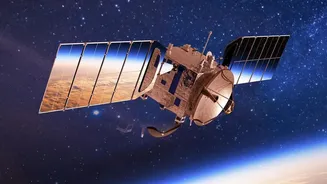
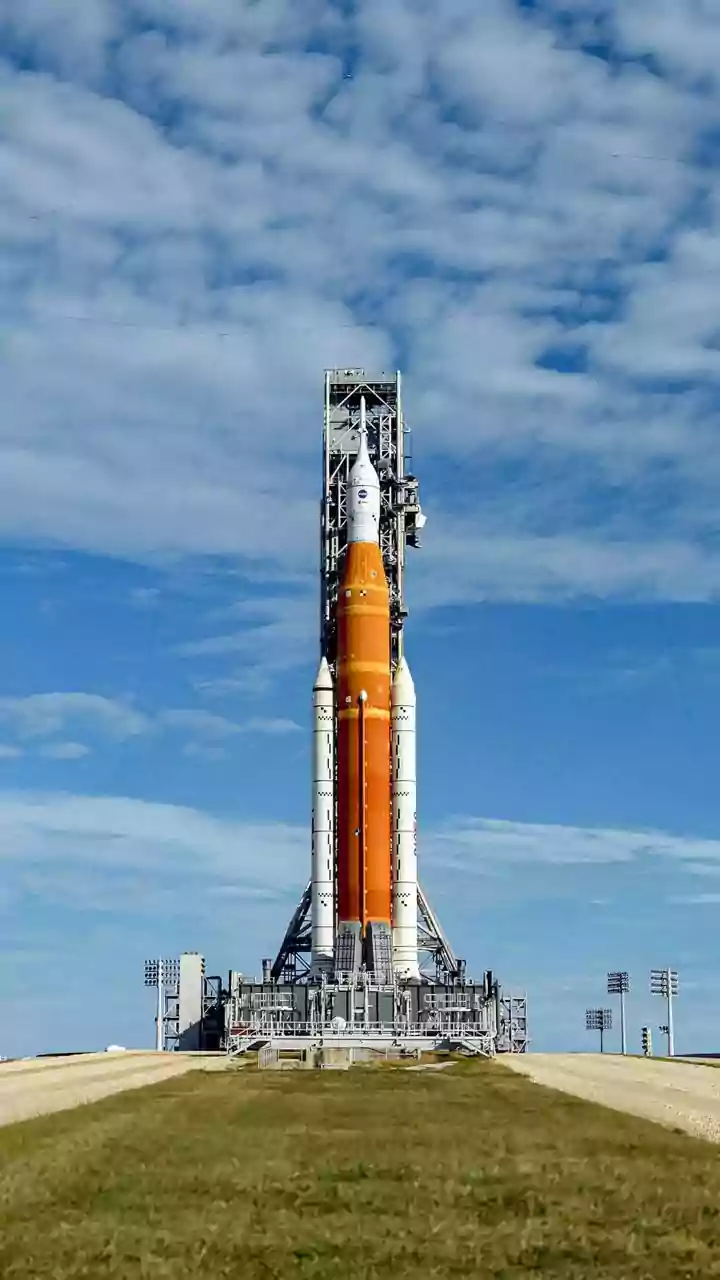
Confirming and characterising this hidden ocean is a top priority for space exploration. NASA's Juno mission has already provided tantalising new data during its flybys. But the most detailed investigation is yet to come. The European Space Agency's (ESA) Jupiter Icy Moons Explorer (JUICE) mission, which launched in 2023, is on its way to the Jovian system. After arriving in 2031, JUICE will perform numerous flybys of Ganymede before becoming the first spacecraft in history to orbit a moon other than our own. Its instruments will map the icy crust, measure the magnetic field with incredible precision, and use radar to peer deep beneath the surface, aiming to confirm the ocean's existence, determine its depth, and assess its potential for harbouring life.