





The Making of a Mushroom Capital
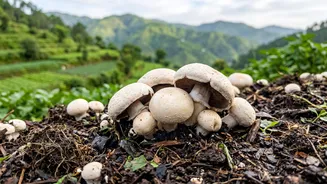
Solan didn't stumble upon its famous title; it earned it through decades of dedicated research and cultivation. The journey began in the 1960s when the Indian Council of Agricultural Research (ICAR) initiated a mushroom development program. The region's
favourable climate provided the perfect conditions for growing various types of mushrooms, particularly the white button mushroom. This early effort culminated in Solan being officially declared the 'Mushroom City of India' on September 10, 1997, recognizing its immense contribution to the country's mushroom industry. At the heart of this success is the ICAR-Directorate of Mushroom Research (DMR), a premier institute established in 1983. It serves as the national centre for research, training, and technology development, drawing farmers and entrepreneurs from across India to learn the science of mushroom farming.
The City of Red Gold
While mushrooms gave Solan its most famous moniker, another agricultural product paints the town red—literally. Solan is also known as the 'City of Red Gold' for its bulk production of high-quality tomatoes. The fertile soil and temperate climate allow for a bountiful harvest that supplies markets across North India. This dual agricultural prowess is a core part of Solan's identity. The tomato trade is a significant driver of the local economy, complementing the mushroom industry. Recently, local women's self-help groups have even started tomato processing units to create products like puree and ketchup, adding another layer to this thriving sector and preventing distress sales when market prices fall.
A Foundation in Faith and History
Long before it became an agricultural hub, Solan's identity was rooted in spirituality. The town is named after the goddess Shoolini Devi, an incarnation of Durga, who is considered the region's presiding deity. The Shoolini Mata Temple is a major pilgrimage site, and the annual Shoolini Mela, held in June, transforms the town with vibrant celebrations. The city's history is also deeply connected to its past as the capital of the princely state of Baghat and later as a British cantonment town. This colonial legacy is visible in its planned areas and heritage buildings, including one of India's oldest breweries, established in 1855. The Kalka-Shimla Railway, a UNESCO World Heritage Site, passes through Solan, further cementing its historical importance as a key stop in the Himalayan foothills.
An Educational and Commercial Hub
Unlike many hill stations that are purely for tourism, Solan is a functional, thriving city. It serves as an important educational centre, most notably home to the Dr. Yashwant Singh Parmar University of Horticulture and Forestry. This institution has been pivotal in advancing agricultural and forestry sciences in the region, supporting the very industries Solan is famous for. The university is a key resource for research and extension services, reinforcing the city's role as a knowledge hub for Himalayan agriculture. Its strategic location on the national highway connecting the plains to Shimla has also made it a busy commercial centre, blending the charm of a mountain town with the dynamism of a developing city.
Beyond a Simple Hill Station
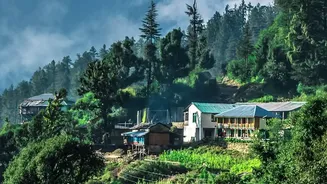
While tourists often see Solan as a convenient stopover on the way to Shimla or Kasauli, it offers a more grounded and authentic experience than its more famous neighbours. It's not a town built solely for tourists but a living, breathing city with a multi-layered identity. Its reputation is not just about its scenic setting but about its productive land, its historical roots, and its forward-looking institutions. The true character of Solan lies in this rich blend—the smell of pine in the air mixed with the earthy aroma of mushrooms, the sight of crates of red tomatoes ready for market, and the sound of temple bells echoing through a town that is both ancient and modern. It is a city that produces, educates, and worships, offering a different kind of mountain experience.