








A Detective on Mars
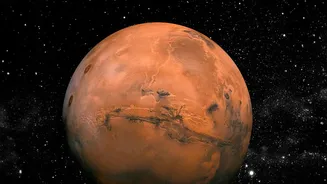
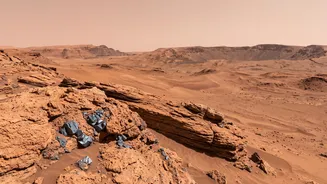
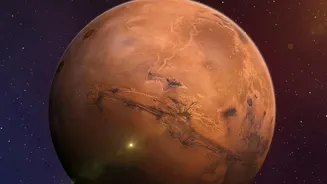
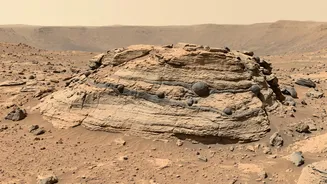
For over a decade, NASA's Curiosity rover has acted as a geologist and detective, slowly climbing Mount Sharp within the vast Gale Crater. Its mission is to read the rock layers, which serve as a timeline of the planet's environmental history. Scientists
have long known that Mars was once a warmer, wetter world with lakes and rivers, but the big question has always been: for how long? The transition to the cold, dry desert we see today was a pivotal moment, and pinpointing when and how it happened is crucial for understanding if life ever had a chance to take hold.
The Telltale Mineral
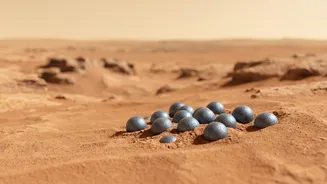
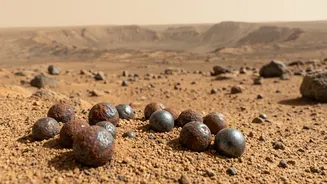
Enter hematite, a form of iron oxide—essentially, rust. On Earth, hematite is a key indicator of past water activity, as it often forms when iron-rich minerals are exposed to water over time. Its discovery on Mars was a major breakthrough, providing compelling evidence that the planet wasn't always a sterile desert. But a recent study has shown that hematite can tell us more than just whether water was present; it can tell us about the conditions of that water, including its temperature and duration.
A Surprising Discovery in the Crystals
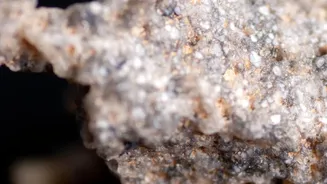
By analyzing 20 different rock samples drilled by Curiosity at various elevations, scientists have uncovered a fascinating pattern. Using the rover's CheMin instrument, which analyzes mineral composition, they found that the size of hematite crystals changes with depth. In the older, deeper rock layers of Gale Crater, the hematite crystals were significantly larger—up to 65 nanometers—while crystals in the younger, upper layers were much smaller, less than 10 nanometers. This wasn't a random variation; it was a clue written in stone about the planet's evolving climate.
Rewriting Martian History
This difference in crystal size is a game-changer. The larger crystals found in the lower, older rock layers could only have formed through a process called Ostwald ripening, which requires the presence of warm, liquid water for an extended period. This allowed smaller crystals to dissolve and contribute to the growth of larger ones. The smaller crystals in the upper layers, by contrast, suggest that by the time those rocks formed, the water was colder or present for much shorter periods. The findings indicate that warm groundwater may have persisted deep within Gale Crater for as long as 4.7 million years, even as the surface was getting colder and drier.
What This Means for Life
This discovery doesn't prove that life existed on Mars, but it significantly expands the window of opportunity for it. The presence of long-lasting, warm groundwater creates a much more stable and potentially habitable environment than a surface that was freezing over. Subsurface water would have been shielded from the harsh radiation that bombards the Martian surface today. These extended periods of chemical activity mean that the necessary ingredients and conditions for life could have been present for millions of years longer than previously thought. It tells scientists that the most promising places to look for signs of past life might not be on the surface, but deep within the planet's rock record.