



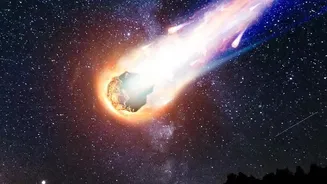
More Than a Streak of Light
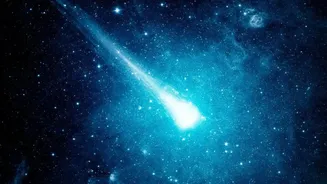
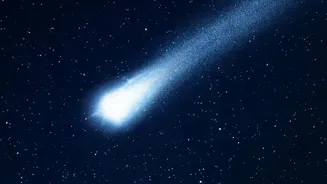
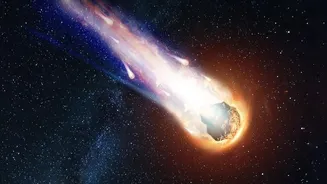
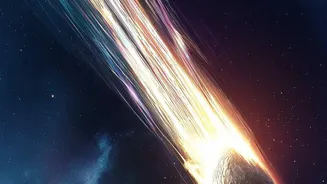
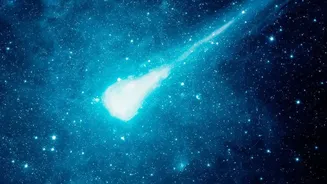
NASA's Astronomy Picture of the Day for August 3, 2026, captured a brilliant meteor streaking through the sky. While the image itself is breathtaking, its true value lies in the subtle shifts in colour along the meteor’s path. What appears as a single
flash to the naked eye is, in fact, a vibrant display that holds clues to the meteoroid's composition. These are not random colours; they are the direct result of a violent, fiery process that turns solid rock and metal into a glowing gas, offering a momentary window into the chemistry of our solar system.
The Science of a Shooting Star
A meteor's glow comes from the incredible heat generated as a particle from space, called a meteoroid, slams into Earth's atmosphere. Travelling at speeds up to 70 kilometres per second, the friction and compression of air in front of the object create immense temperatures. This intense heat does two things: it heats the surrounding atmospheric gases, like nitrogen and oxygen, causing them to glow, and more importantly, it vaporises the meteoroid itself. The tiny rock or dust particle is turned into a superheated plasma, and it’s the elements within that plasma that create the distinct colours we see.
A Rainbow of Cosmic Clues
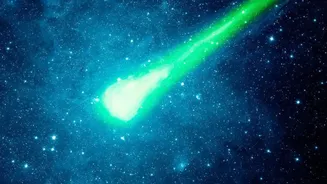
Think of it like a flame test in a chemistry lab, where different chemicals burn with different colours. The same principle applies tens of kilometres up in our atmosphere. The specific elements within the vaporising meteoroid emit light at characteristic wavelengths. A flash of orange-yellow indicates the presence of sodium, while a yellow glow points to iron. Green hues are very common and are typically caused by vaporising nickel and magnesium. Rarer violet or purple glows come from calcium. Even the air itself gets involved; the reddish glow often seen is from the heating of nitrogen and oxygen in the atmosphere. By analysing this light, a technique known as spectroscopy, scientists can determine what the meteor was made of without ever touching it.
Decoding Our Solar System's Past
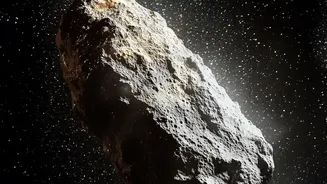
So why does it matter what a tiny speck of space dust is made of? Because these meteoroids are primordial leftovers from the formation of our solar system some 4.6 billion years ago. They are fragments of asteroids and comets, essentially time capsules preserving the original recipe of the planets. By studying their composition, scientists can piece together the history of how planets formed, what materials were present in the early solar system, and how those materials were distributed. For example, the upcoming Perseid meteor shower, which peaks in mid-August, is known for bright meteors rich in nickel and magnesium, reflecting the composition of its parent comet, Swift-Tuttle. Each flash of colour provides another data point in the grand story of our cosmic origins.
NASA’s Watchful Eye
NASA doesn't just wait for lucky photo opportunities. The agency actively studies meteors to understand their composition and trajectory. Networks like the NASA All Sky Fireball Network use a system of cameras to automatically detect and analyse bright meteors, calculating their path and potential origin. Furthermore, experiments like the Meteor Composition Determination (Meteor) project aboard the International Space Station were designed to capture high-resolution video and spectroscopic data from above the distortions of the lower atmosphere, providing an even clearer view of this mineral vaporisation process. By combining ground-based observations with space-based research and even lab experiments that bake meteorites to release their gases, scientists are building a comprehensive library of these cosmic fingerprints.