





An Aging Workhorse in Trouble
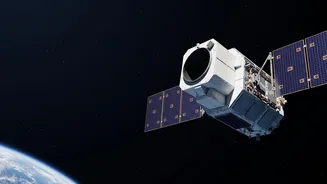
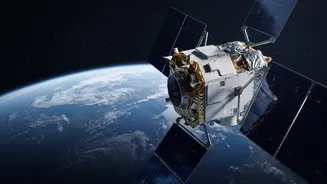
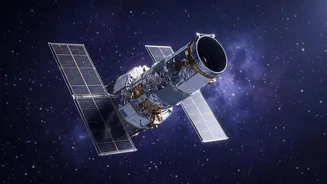
Launched in 2004, the Neil Gehrels Swift Observatory was a game-changer in astrophysics. Its primary mission was to study gamma-ray bursts (GRBs), the most powerful explosions in the universe, often linked to the birth of black holes. Swift exceeded all
expectations, observing nearly 2,000 GRBs over two decades and providing rapid alerts for other telescopes to follow up on cosmic events. However, after 21 years, the observatory's orbit began to decay faster than anticipated. Unexpectedly strong solar activity in late 2024 caused Earth's atmosphere to expand, creating more drag on the satellite and pulling it downward. Without a boost, NASA projected Swift would burn up upon re-entry into the atmosphere by the end of 2026.
The Ambitious Rescue Plan
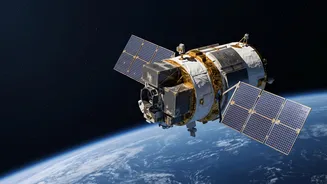
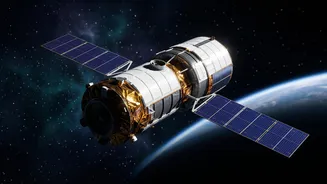
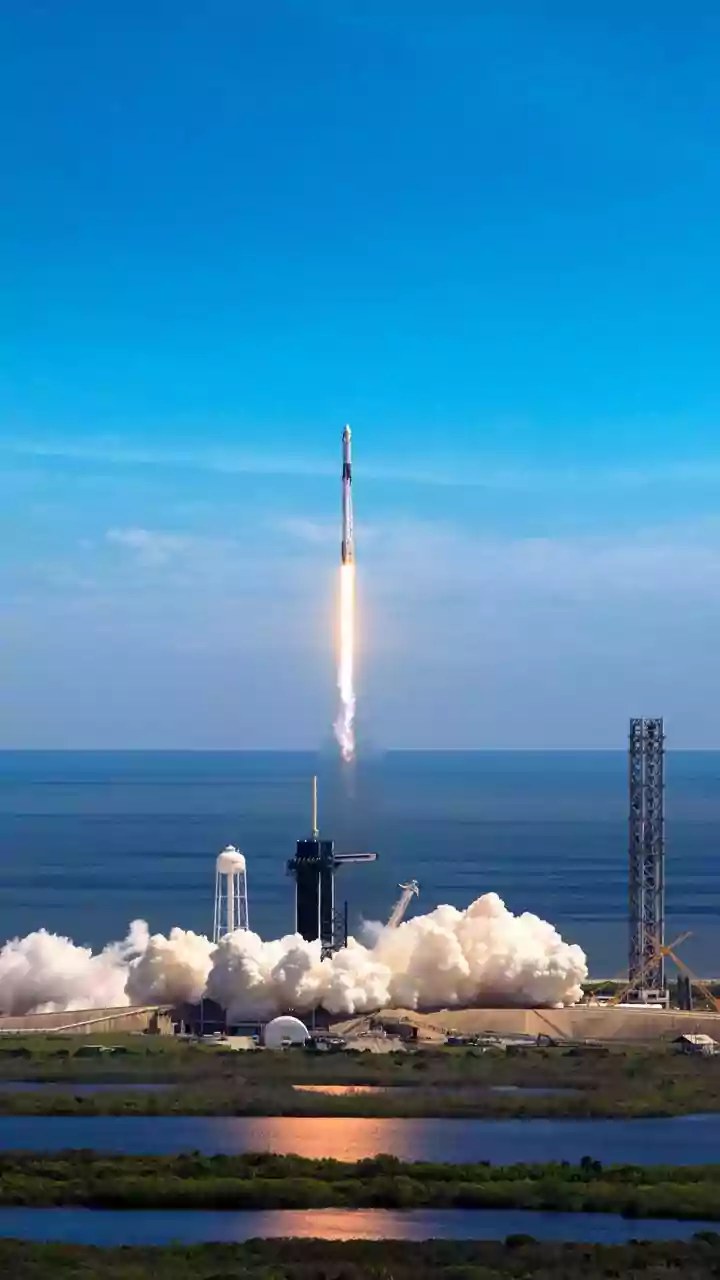
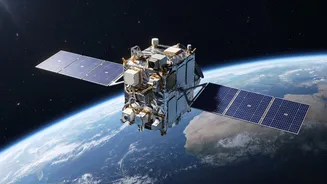
To save the valuable observatory, NASA initiated a daring and unprecedented plan. In September 2025, the agency awarded a $30 million contract to a private company, Katalyst Space Technologies, to design, build, and launch a rescue mission. The resulting spacecraft, named LINK, was developed on an incredibly tight timeline of less than a year. Launched on July 3, 2026, the robotic tug was designed to perform a complex series of maneuvers. It was intended to autonomously rendezvous with Swift, a satellite never designed to be serviced, grab it with robotic arms, and use its own thrusters to push the observatory into a higher, more stable orbit, extending its life by years.
What Went Wrong?
The high-stakes mission ran into trouble about three weeks after launch. The LINK spacecraft began experiencing severe attitude control issues, causing it to enter an uncontrollable spin. Ground teams reported that two of its three reaction wheels, devices used to orient the craft, had failed, along with issues in its thruster system. Engineers at Katalyst raced to regain control, managing to slow the spin but ultimately could not stabilize the vehicle. On August 19, NASA and Katalyst officially announced that due to the persistent control problems, the LINK spacecraft would be unable to capture and boost the Swift telescope.
The End of an Era for Swift
With the rescue mission unsuccessful, the fate of the Swift Observatory is sealed. The telescope is now expected to re-enter Earth's atmosphere and burn up later in 2026. While the spacecraft itself remains functional for now, it cannot escape the inevitable orbital decay. For over two decades, Swift has been a cornerstone of multi-wavelength astronomy, providing crucial, rapid-response data on transient cosmic events. Its loss will create a significant gap in observational capabilities, and NASA has stated it will use other existing missions to try and fill the void while exploring future options for rapid event response.
A Lesson for Future Space Servicing
Though the primary goal was not achieved, NASA does not consider the LINK mission a total loss. Officials emphasized that the attempt was a calculated risk worth taking. The mission has been repurposed into an experiment. If possible, the LINK spacecraft will still attempt to perform a close fly-by of Swift to test rendezvous and proximity operations. The data gathered from these maneuvers will provide invaluable lessons for the future of in-orbit servicing, assembly, and manufacturing (ISAM)—a key technological area for extending the life of satellites and managing space debris. The experience, though disappointing, is seen as a crucial learning step toward creating a more sustainable infrastructure in space.